dianadarke

Syria and Turkey commentary

Archive for the category “Syria”

Syria – a book to help you understand it differently

http://www.timeoutistanbul.com/en/books/189/My-House-in-Damascus-An-Inside-View-of-the-Syrian-Revolution

Full text of review in Time Out Istanbul by Pat Yale below:

My House in Damascus: An Inside View of the Syrian Revolution

Diana Darke was one of the first foreigners to buy a house in Damascus, offering her a unique view into the Syrian conflict.

Three years of increasingly savage fighting. More than 150,000 dead. Many thousands more injured. Nearly three million people turned into refugees. Another 6.5 million displaced inside their own country.

 The bald statistics for the damage done to its citizens by the Syrian conflict are utterly shocking, but for most people the initial “Something Must Be Done” attitude has gradually been replaced by a grim acceptance that nothing probably can be done in a situation that lacks clear goodies and baddies. And so we tune out the horror of it all, unable to focus on so much human suffering day by day.

 Into the void left by those who have turned away has stepped Syria guidebook writer Diana Darke, one of the first (if not the first) foreigners to buy a house in the country. Darke offers just the sort of first-person account of what has been going on that makes it possible for people to re-engage with the story. Her book ‘My House in Damascus’ describes how the chance sighting of an open door in the old city in 2005 brought her into contact with an architect engaged in the then-blossoming business of restoring the lovely old mansions.

 “You realize that you can buy property here,” he tells her, thus triggering a search for the perfect bolthole. It turns out to be the lovely if dilapidated house of Bait Baroudi just round the corner from the great Umayyad Mosque.

This is no story of love lost and refound against a Middle Eastern background. Darke was no ingénue, stumbling uncertainly into a country about which she knew little. Instead, she was an old hand with form in this part of the world, a fluent Arabic speaker whose research for the Bradt Guide to Syria had taken her to every corner of the country. Read her description of exploring the great Byzantine “Dead Cities” north of Aleppo and weep for what has almost certainly been lost.

But the heart and soul of the book is always Bait Baroudi, a courtyard house that still retained its lovely original decorations, albeit partially obscured, when she bought it. Darke poured her savings into a gentle restoration aimed at preserving the building’s heritage; when the work was completed after three years “the house looked and felt as if the inhabitants of earlier centuries had only just left.” But as she skips over the bureaucracy she encountered and revels in every detail of the restoration process, always lurking in the background is the knowledge of what is to come: the day when she will no longer be able to live in the house and its courtyard will have to be turned into a mini-refugee camp for some of those with whom she had worked over the years.

Despite the book’s subtitle, ‘An Inside View of the Syrian Revolution’, Darke doesn’t bother with the finer details of which armed group is doing battle with which other one. Instead she introduces us to a roll call of colorful characters – Ramzi the Philosopher, her state-imposed guide in the early days, Maryam the Christian bank manager, Marwan the lawyer, and Bassim the architect – all of whose lives are irrevocably changed as the conflict intensifies.

All books eventually come to an end but of course the story of the Syrian civil war has yet to reach its conclusion. As you turn the last page of the book you know that you can go straight online to continue reading on Darke’s blog, dianadarke.com. Tragically Darke herself is no longer able to get a visa to enter Syria, but in her blog she recounts the ultimate absurdity of when she travels to Sidon in Lebanon and meets up with Marwan. He hands her some rental agreements that she must sign to ensure that the refugees now living rent-free in Bait Baroudi will not be booted out by the authorities.

War may ravage and destroy people’s lives, it seems, but the wheels of the bureaucracy will keep on turning until the end.  Pat Yale
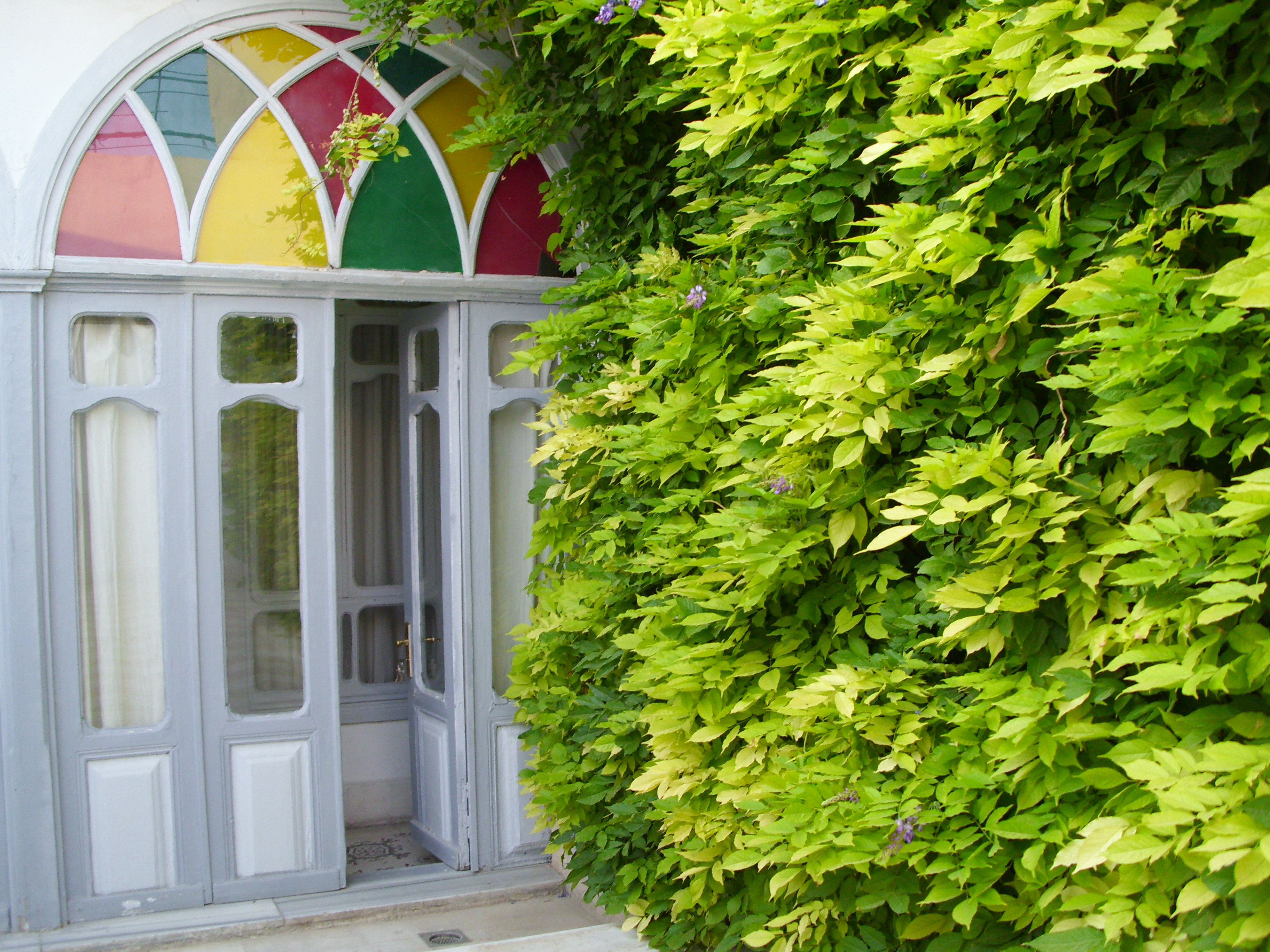
Damascus June 2011 061

Living in the eye of Syria’s storm

Book Review of My House in Damascus, An Inside View of the Syrian Revolution

by Mary Russell, The Irish Times, 28 June 2014

Diana Darke’s account of her life in the ancient city glows with an understanding of and affection for its people.

While so many commentators and journalists write about Syria the victim, and zoom in on the death and destruction of that great country, Darke affords the Syrians she meets the dignity of being individuals.

Click here for the full review:

http://www.irishtimes.com/culture/books/living-in-the-eye-of-syria-s-storm-my-house-in-damascus-1.1846142

My House in Damascus

Dreams of a better #Syria


Refreshment for passers-by, Souk Al-Hamadiye, Damascus  [DD]

Refreshment for passers-by, Souk Al-Hamadiye, Damascus [DD]

Review as published in The Times Literary Supplement June 20, 2014 by Gerald Butt

http://www.the-tls.co.uk/tls/public/article1423819.ece

“Diana Darke’s My House in Damascus: An Inside View of the Syrian Revolution is written with the pace of a novel and the colour of the best travel writing. The book hangs on the author’s purchase and refurbishment of a house with a courtyard in the Old City of Damascus in 2005 – and all the insights that the legal and bureaucratic battles gave her into Syrian society, echoing in this sense Lawrence Durrell’s Bitter Lemons. But the book offers much more than a personal memoir: it is an eclectic but learned encyclopedia of Syrian history, of the Arabs and their language and traditions, of Islamic art and architecture, and more.

Darke, fluent in Arabic and an authority on Syria, befriends Syrians who, well before 2011, are surviving as best they can in an atmosphere of fear, of “plainclothes policemen, the dreaded mukhabarat, looking grim and brutal in their black leather jackets”. A Syrian tells her: “You must understand. They can arrest me any time they want, throw me in prison. My family would never even know where I was or whether they would ever see me again.”

In the face of such repression, one can understand why the revolution against  Ba’athist rule erupted. But that does not make it easy to predict how it will end. Some of the most insightful passages of Darke’s book describe the dilemma faced by the silent majority of Syrians whose views are least represented in the foreign media. They feel unable or unwilling to choose between the two extremes on offer: the regime or the rebels. This partly explains why, she writes, so many Syrians felt compelled to flee the country: “Had there been a moderate alternative in the middle, a carrot so obviously juicier and bigger than the others, all parties would surely have chosen it long ago.” Instead, the distance between the two extremes is growing. The worsening violence and intimidation in Damascus eventually forced the author, too, to give up her beloved house and leave the country. Since September 2012 the building has served as a refuge for her displaced friends.

Darke muses finally on what must happen for Syria to emerge from the current nightmare. She imagines, for example, a second revolution to secure the middle ground. But for this to succeed, she says, everyone must forget that the first revolution began with peaceful protests, and they must forgive regime troops for gunning down unarmed protesters. “Maybe I am a hopeless dreamer”, she concludes. Hopeless or not, she is right in her assessment that a solution to the Syria crisis still resides only in the realm of dreams.”

Carefree child playing the courtyard of the Umayyad Mosque, June 2010 [DD]

Carefree child playing the courtyard of the Umayyad Mosque, June 2010 [DD]

Refutation of Mother Agnes Mariam’s narrative on #Syria

As submitted to The Tablet, published 21 June 2014
“Abigail Frymann tries hard to present both sides of the narrative in her feature interview (“The rebels want my head”, 7 June) with Mother Agnes Mariam of the Cross. Sadly, in so doing she falls hook, line and sinker for the controversial nun’s take on matters inside Syria. The view that ‘the majority of anti-Assad fighters in Syria are foreign’ is presented as ‘widely accepted’, yet all reputable media outlets like The Financial Times and the BBC regularly report that whilst there are indeed now many foreign fighters inside Syria, they began in small numbers and only started expanding a year after the uprising began. Even now they account for less than 25% of the total opposition. Assad himself has of course brought in far greater numbers of foreign fighters – from the Lebanese Shia group Hizbullah and the Iranian Revolutionary Guard – to defend his own regime, but no mention is made of that. 
Certainly matters ‘are not black and white’. But the ‘more complicated reality’ to which Mother Agnes refers is that Assad, under the guise of a general amnesty in early 2012, released al-Qaeda affiliated prisoners from his jails, knowing full well they would regroup and pursue their extremist ideology. Again, no mention is made of that. Now, two years later, the proof is before us, as ISIS, untargeted by regime airstrikes, was allowed to consolidate itself in Ar-Raqqa, from where it has swept into Iraq and taken large swathes of territory. Assad and ISIS should be mortal enemies ideologically – why is it that they have yet to fight each other?
The ‘reconciliation’ initative of which Mother Agnes is part, so loudly trumpeted by the Assad regime that well-meaning people like Mairead Maguire are fooled into nominating Mother Agnes for the Nobel Peace Prize, is a naked attempt to deceive the world that Assad is keen to forgive and forget. Had ‘reconciliation’ been his message at the outset in March 2011 instead of savage crushing of peaceful demonstrations, ISIS extremists could never have thrived on Syrian soil. As to her assertions on the chemical weapons attack,  Human Rights Watch has systematically dismissed the basis for her arguments.
Only when Assad, no doubt amply aided by Hizbullah and Iran, finally orders his forces to drop barrel bombs on ISIS headquarters, instead of on moderate rebel headquarters in Aleppo and Dera’a, will his narrative that he is fighting ‘extremism and terrorism’ become true. Maybe then we can nominate him for the Nobel Peace Prize.”
Diana Darke
Author of My House in Damascus, An Inside View of the Syrian Revolution
All that remains of St Simeon Stylites' pillar in St Simeon's Basilica west of Aleppo, thanks not to the current fighting, but to Christian pilgrims harvesting 'souvenirs' across the centuries [DD]

All that remains of St Simeon Stylites’ pillar in St Simeon’s Basilica west of Aleppo, thanks not to the current fighting, but to Christian pilgrims harvesting ‘souvenirs’ across the centuries [DD]

Assad and ISIS – the ‘marriage of convenience’ is over

By the end of the 15-year Lebanese Civil War, nearly every party had allied with and subsequently betrayed every other party at least once. The age-old pattern is the same: groups like ISIS began in Syria by ingratiating themselves with the local population, as they are doing in Mosul now, offering free fuel, electricity supplies and appearing to restore security to the streets. Next they will provide food and medical services. At first, in such charm offensives, they seem to be a godsend, then in stages, the reality reveals itself and their hard-line Islamist agenda comes to the fore, with compulsory Quranic schools, summary public executions and enforced veiling of women. But just as this was not the real Syria, neither is this the real Iraq. Women will pull their headscarves out of their handbags to put them on at black-bannered checkpoints, then stuff them away again.

In the early months of the Syrian Revolution extremist rebel groups like Jabhat al-Nusra accounted for no more than 3-4 per cent of the rebels overall, maybe reaching 10 per cent around Aleppo. While most fighters in Al-Nusra are from Syria, the extremist group ISIS which appeared over a year later than Al-Nusra in April 2013 is both foreign-led (by an Iraqi) and foreign-dominated. Its fighters come mainly from Saudi Arabia, Libya and Tunisia, though there are also Chechens, Kuwaitis, Jordanians and Iraqis as well as a few Pakistani Taliban and even Chinese. Dressed in their Pakistani-style tunics and menacing black balaclavas, brandishing their weapons, they form a stark contrast to the conservative but moderate Sunni Muslims who make up 74 per cent of Syria’s resident population. Typical communiqués use language like: ‘Our army is full of hungry lions who drink blood and eat bones.’ It is hard to imagine their ideology ever taking root in Syria, despite their ceaseless propaganda videos on YouTube and their thousands of tweets – all the rebel groups have their own highly active Twitter accounts.

Many Syrians told me long before the revolution that the Syrian brand of Islam is close to the tolerant Sufi Islam of Ibn Arabi and Al-Ghazali – open to all and with no coercion. Yet groups like ISIS are so intolerant they even started to ban tobacco as un-Islamic in areas they controlled in Syria’s north, not just alcohol and what they called ‘immoral entertainment’.  The kind of Syria they are trying to usher in would end up destroying the country’s very identity, its tolerant character. Moderate Syrians have begun social media campaigns against them with slogans like: ‘DAESH [Arabic for ‘ISIS’] GO OUT. Bashar and DAESH are one. We didn’t have a revolution against a tyrant for another tyrant to come and control us in the name of religion!  Those who belong to Syria, Syria is for all of you. Those who belong to Al-Qaeda, go to Afghanistan!’ Dozens of Arabic language Facebook pages have been set up rejecting ISIS, its Islamic credentials and its brutal tactics.

The rebel group ISIS now controls the oil fields in Syria’s north eastern provinces. They have broken the pipelines, creating environmental disasters, then welded on crude taps from which they fill queues of tankers. The valuable cargo is then trundled mainly into Turkey and sometimes even into regime-held areas of Syria, where prices rocket. It is a money-making exercise, free of overheads, that has turned the bearded chiefs into millionaires. Thousands of amateur refineries have sprung up, converting the crude oil to petrol, diesel and mazout heating oil, sold in smaller canisters to anyone who has the money. None of them will give that up without a fight. As the ISIS accounts captured in recent days have revealed, the rebels have accumulated huge funds from this oil and from looted Syrian antiquities, enabling them to pay good salaries to new recruits and to acquire proper weaponry for them. From their Syrian headquarters in Al-Raqqa on the Euphrates, they have in recent days swept east into Iraq and taken the second city of Mosul along with vast tracts of adjoining territory, capturing along the way much heavy weaponry from the American-supplied Iraqi army.

So now the equation has changed. Assad and ISIS should be mortal enemies ideologically, yet they have never fought each other. ISIS militants have slept sound in their beds without fear of regime air strikes and barrel bombs. Whereas the Assad regime was before quite happy to turn a blind eye to ISIS and its atrocities in the north and in Al-Raqqa, content that its energies were being directed towards fighting the more moderate rebels, now ISIS has become a real threat.

Therefore it should come as little surprise that as The Times today reported, Syrian government forces for the first time bombed ISIS bases in eastern Syria and Al-Raqqa ‘acting in co-ordination with the Iraqi government’. The Assad regime has re-done its calculations, and is now banking on the expectation that its air-strikes against ISIS will also earn it grudging gratitude from the West. Bashar al-Assad must even be thinking this is his chance to become rehabilitated in the eyes of the international community, and undergo a transformation from ‘murderous dictator’ to ‘saviour from Islamist barbarians’.

The UN Chemical Weapons deal last autumn only happened because there was a rare consensus in the international community and no blame was attributable. Maybe such a consensus can be found again, this time to rid both Syria and Iraq of the growing extremist groups like ISIS. Maybe moderate elements from the rebels too can find a common cause and unite against this greater Al-Qaeda-affiliated menace whose terrorist jihadi agenda threatens not just Syria and Iraq’s future but the future of the entire international community. Maybe it will be Syria’s second revolution, a revolution in which even the ‘silent majority’ may find its voice.

In the meantime we can expect more Syrian air strikes against ISIS bases – their ‘marriage of convenience’ is over.

[This post includes extracts from the book My House in Damascus: An Inside View of the Syrian Revolution ]

Related articles:

http://www.theguardian.com/world/2014/jun/15/iraq-isis-arrest-jihadists-wealth-power?CMP=EMCNEWEML6619I2

http://www.thetimes.co.uk/tto/news/world/middleeast/iraq/article4120205.ece

This post includes extracts from the book.

This post includes extracts from the book.

To vote or not to vote – Syria’s elections

Prophetic 2007 poster of Bashar in Damascus' Hijaz Railway with the caption: 'We pledge allegiance to you with blood forever.' Blood drips from the words 'with blood'.[DD]

Prophetic 2007 poster of Bashar in Damascus’ s Hijaz Railway Station with the caption: ‘We pledge allegiance to you with blood forever.’ Blood drips from the words ‘with blood’.[DD]

As published in The Guardian on 2 June 2014:

http://www.theguardian.com/commentisfree/2014/jun/02/syria-election-vote-for-assad-or-else

What an irony. Fear of the Syrian government and its many-tentacled security apparatus is greater now even than it was before the revolution began.  Why should that be? The government is generously offering ‘reconciliation’ deals across the country, with gracious amnesties like the one that enabled several hundred rebel fighters to leave the exhausted city of Homs with light weapons in early May. Yet anyone who knows Syria from the inside knows full well that the Assad regime’s generosity and grace is to be feared above all else.

When peaceful calls for dignity and reform were met in March 2011 by crushing violence from the outset, the protesters knew what awaited them if they were arrested. Their bravery in breaching the fear barrier even to take part in such demonstrations is beyond admirable. Tens of thousands have gone missing over the last three years, detained in prison, never seen again, or sometimes simply returned to their families in a body-bag as a warning, like the mutilated body of the 13-year old Hamza Al-Khatib, early icon of the revolution. Like so many, Hamza was not even demonstrating – he was simply in the wrong place at the wrong time.

As the presidential election is held on 3 June all over the country in regime-held areas only, Syrians know full well what it means. It is not so much an election – everyone knows the result after all – it is more like a census, a head count of government supporters. To vote anything other than for Bashar Al-Assad is to sign your own death warrant and that of your family, and not to vote at all means you are forfeiting your chance of any kind of future in Syria. Of Syria’s 23 million population some 4 million are estimated to have left and some 9 million are thought to be internally displaced. At least a further million have lost their identity papers in the fighting and are thereby disqualified. Only refugees outside the country who fled ‘legally’ – just 200,000 out of 3 million according to the Syrian Ministry of Interior’s own figures  –  are eligible to vote, thereby ensuring a situation cannot arise where one of Bashar’s two opponents might actually win abroad.  These ‘legal’ expatriate Syrians can vote in Syrian embassies in certain selected countries like Russia and Romania, and those living in a country where the embassy is closed, like the UK, have been cordially invited back  to Syria ‘to exercise their civil right’. Some have taken up the offer knowing that they must, if they ever wish to return to their country while the Assad regime still holds sway. In Paris I was reliably informed of one Syrian who went, not to vote since France has banned the embassy from participating, but to renew his passport. Known to be anti-regime, he had his passport torn up in front of him and was told: ‘There – now go and get yourself a new passport from your Friends of Syria.’

In this country we face no repercussions for not voting – in Syria it is very different. ‘If you are not for us, you are against us.’ We in the West may dismiss the Syrian election as an absurd process, a mockery of democracy. We have that luxury. But if you are Syrian it is a matter of life and death.

Fear is forcing thousands to vote for Assad, whose tender mercies are well known. Stories are circulating about the ways in which the regime seeks to take revenge on those whom it considers have betrayed it. Even those who have done nothing and never taken sides are at risk. All it takes is one report written by one security official who takes a dislike to you. It has already happened to several of my neutral Syrian friends.

Whilst western democracies will scoff at Syria’s election process, Russia and Iran will use it to their advantage. It plays beautifully into their narrative of supporting ‘whoever is elected by the Syrian people’ and legitimises their unwavering support of Assad.

Syria has lost c40% of its GDP since 2011 according to the Damascus-based Syrian Center for Policy Research in conjunction with the UN and the IMF.  Eleven million have lost their livelihood. Fear of losing their right ever to live in their country again is driving them to vote. Hard as it may be for us to grasp, for them it is a vote for life or death.

Christians in the Middle East, some thoughts

6th century murals at Mar Elian church in the Old City of Homs, possibly the oldest in Syria [2010, DD]

6th century murals at Mar Elian church in the Old City of Homs, possibly the oldest in Syria [2010, DD]

As Pope Francis conducts his tour of Jordan, the occupied Palestinain Territories and Israel, the moment seems right to consider some of the Christian communities of the Middle East and their ongoing role in the regional conflicts, especially the Melkite Greek Catholics and the Aramaic-speaking Syriac Orthodox.

It is refreshing to see that the Pope has been prepared to speak out about the 66-year impasse which has poisoned the Middle East since 1948. As the BBC reports this morning, “Speaking in Bethlehem on Sunday, the Pope said: “The time has come to put an end to this situation which has become increasingly unacceptable.” He talked of the “tragic consequences of the protracted conflict” and the need “to intensify efforts and initiatives” to create a stable peace – based on a two-state solution.”

On 20 May in St James’ Church, Piccadilly, London Gregorius III Laham, the Patriarch of the Church of Antioch and spiritual head of the Melkite Greek Catholic Church, gave a talk entitled ‘Syria – What Hope?’ The Patriarch is based in Damascus but makes regular officially-sanctioned trips abroad to give speeches and has frequently appeared in the media, notably last year when he was vocal about the happenings in the mixed Christian/Muslim town of Maaloula. No doubt the Patriarch has to be very careful what he says, but his speech in London on 20 May was deeply disturbing for what he did not say. In his assessment of the current situation in Syria and how it came about, he began by talking about how Syrian people came out peacefully in demonstrations asking for dignity and peace – so far so good. But then he launched straight into lambasting Muslim extremists who, he said, had come in and hijacked the Syrian revolution. He blamed Qatar, Saudi Arabia and Turkey for their support of jihadi extremists who, he said, were the cause of the problem. ‘We are the victims,’ he declared, ‘of terrorist groups and their supporters, and those who send them.’ The violence of the Syrian government regime in crushing the peaceful protesters was not mentioned at all. The regime’s role in thereby escalating the conflict was completely passed over, jumping straight from the peaceful protests to the jihadi extremists as if there was nothing in between. The Patriarch cannot really be so ingenuous. He knows full well that the time lapse between the start of the peaceful protests and the arrival on the scene of the jihadi extremists was over a year, but no mention does he make of that missing year in his narrative. On the ‘problem of Palestine’, he is on safer ground, having the reassurance that he is fully in tune with the Syrian regime when he calls for a resolution of that conflict.

On 18 May I returned from spending 10 days in the Tur Abdin region of southeast Turkey, homeland of the Syriac Christians whose communities have been divided by the artificial border imposed after World War One between Turkey’s southeast and Syria’s northeast region. 1915 will be the centenary of what they call the Sayfo, the massacre of tens of thousands of their community at the hands of Kurdish tribesmen encouraged by the Young Turks, a catastrophe that caused the flight of many south into what is now Syria. Because of the ongoing war in Syria, many Christians from Hassaka and Qamishli in Syria’s Jezira Province have fled over the last year or so across the border near Nusaybin and were taken some 50km north to a refugee camp exclusively for Syriac Christians in Midyat. The situation was explained in a piece I wrote for the BBC last August:

http://www.bbc.co.uk/news/magazine-23614968

Father Joaqim at Mor Augen Monastery, July 2013

Father Joaqim at Mor Augen Monastery, July 2013

This year however, the situation has changed. The camp is full instead with Syrian Kurdish families, as all the Syriac Christian families bar one have all left. All have been sponsored by local Syriacs to leave the camp and enter Turkey properly. Most have moved on to Istanbul, but some have stayed in local jobs in Midyat. The final remaining family is already half-way out, preferring to live in a squalid single room in town costing 150 Turkish lira a month than to live in ‘Guantanamo’ as they call it. A simple family, the father is a carpenter, but has no papers so cannot work. His five children have not been to school for the last two years, yet he tells me they feel comfortable in Midyat despite the cramped conditions because they are among their own community.

Right at the southern edge of the Tur Abdin, high on a ridge overlooking Syria and the Mesopotamian plain, the newly rebuilt Monastery of St Jacob of Qarno has just been connected to the water supply of the local village. Its solitary monk, Father Aho, dug the trench himself with the help of the local community who raised 400,000 euros for the monastery’s restoration thanks to remittances sent from Europe by members of the Syriac diaspora. At Father Aho’s ordination as a priest on 26 April 2014 over a thousand people attended from all over the world. In the monastery shop he sells commemorative mugs and T-shirts, and proudly shows me his multi-lingual library, his garden newly planted with potatoes, fruit trees and vines. All over the Tur Abdin members of the Syriac community are determinedly holding onto or rebuilding their heritage, fighting court cases against Kurds who occupied their empty properties and lands on the basis that they were the original owners, while the Kurds were merely squatters. They are gradually succeeding.

What does all this tell us about Christians in the Middle East? That they understand the plight of the displaced Palestinians very well, and are very good at looking after their own. It is to be hoped that the Pope’s readiness to speak out against injustice inspires a few more Middle Eastern Christians to do the same, be it injustice not just against their own but also  injustice against others.


The famous 5th century St Simeon Stylites' Basilica in the heart of a lawless area south of Aleppo [DD]

The famous 5th century St Simeon Stylites’ Basilica in the heart of a lawless area south of Aleppo [DD]

#Syria Death of a priest – What can be learnt from Father Francis’s murder in Homs?

6th century murals at Mar Elian church in the Old City of Homs, possibly the oldest in Syria [2010, DD]

12th century murals at Mar Elian church in the Old City of Homs [2010, DD]

After living peacefully in Syria for nearly 50 years and devoting his life to Christian/Muslim harmony, Father Francis van der Lugt, a Dutch-born Jesuit in his mid-70s, was dragged into his monastery garden and shot twice in the head. It happened on 7 April 2014 in the Old City of Homs, in front of two witnesses, a fellow Jesuit and a local Christian woman, who said it was carried out by a single masked gunman as a deliberate, premeditated act. A few days earlier he had been beaten up, supposedly by a rebel group. Father Francis had been instrumental in negotiating the UN-supervised ceasefire in Homs in February reported on by the BBC’s Lyse Doucet (see last of ‘Related articles’ below), but had himself refused to leave the devastated and besieged Old City, preferring to stay behind in solidarity with the 24 Christians who were either too old or too sick to leave. As leader of his flock, to leave would have felt to him like the captain abandoning ship while some of his passengers remained aboard. According to some reports he was, at the time of his death, again involved in negotiating for more besieged residents to be allowed out, something some rebel groups were said to be angry about. The siege of Homs’s Old City has become a symbol of resistance, a thorn in the side of the regime, and many rebels feel strongly that if all civilians are allowed out, the regime will simply flatten what remains in order to crush all remaining opposition.

In happier times Father Francis used to run two initiatives to help bring Syrians closer to nature and closer to each other. The first was called ‘Ard’ (Earth) and was an agricultural centre based on a hill outside Homs where young Syrians could camp, work on the land and talk freely among each other. The second was called ‘Maseer’ (Walking tour) and involved him guiding groups of young Syrians on 3 or 10 day hikes in the countryside, where they would sleep in orchards or in village schoolhouses, meeting local farmers and villagers. He was trained as a psychologist and understood well how to encourage open discussion and the free exchange of ideas. Among those who came on such hikes was the young film-maker Basil Shehadeh, whose funeral Father Francis helped organise in Homs in 2012 after the authorities refused to allow his body to be returned to his native Damascus. Father Francis’s own funeral was conducted by local Muslims who knew and loved him. He was closely integrated into the community, helping whoever was in need, Muslim and Christian alike, making no distinction.

Who stands to gain from the death of such a man? No one has claimed responsibility. The regime has blamed ‘terrorist groups’ while the rebel opposition groups have blamed the regime – the usual scenario. We will probably never know for sure who carried out this killing and on whose instructions. But one thing is sure – Father Francis himself, as a Jesuit priest, would not have wanted his death to be avenged. It would go against all he stood for. That would mean his death was simply one more death in the equation, allowing the never-ending spiral of revenge attacks to continue – and to what end? The inevitable destruction of the country.

Much more constructive – though of course much harder – would be to try to emulate what he strove to achieve all his life – bringing people closer together and treating all in need equally. Not long ago he was quoted as saying::

“The Syrian people have given me so much, so much kindness, inspiration and everything they have”.

The best way to honour his memory would be to remember this deep belief of his in the Syrian people. Revenge would have been alien to him.

Relic of the Virgin's Belt, Umm Al-Zinnar Church, Homs [2010, DD]

Relic of the Virgin’s Belt, Umm Al-Zunnar Church, Homs [2010, DD]

19th century church frescoes in Homs, Church of the Virgin's Belt (Al-Zunnar) [2010, DD]

19th century church frescoes in Homs, Church of the Virgin’s Belt (Al-Zunnar) [2010, DD]

Related articles:

http://www.telegraph.co.uk/news/worldnews/middleeast/syria/10751067/Dutch-priest-murdered-in-his-church-in-the-besieged-Syrian-city-of-Homs.html

http://www.bbc.co.uk/news/world-middle-east-26927068

http://www.theguardian.com/world/2014/apr/07/dutch-priest-shot-dead-homs-syria

http://www.huffingtonpost.com/2014/04/07/francis-van-der-lugt-dead-syria_n_5104676.html

http://www.bbc.co.uk/news/world-middle-east-26148194

http://www.bbc.co.uk/news/magazine-27155474


#Syria – Sidon and Damascus, Theatre of the Absurd in a Tale of Two Cities

Sidon's Crusader Sea Castle guards what was once the port of Damascus [DD, 2014]

Sidon’s Crusader Sea Castle guards what was once the port for Damascus [DD, 2014]

Marwan, my chain-smoking Syrian lawyer, has left his war-torn country for the day to meet me in the Lebanese port of Sidon. He wants to complete some paperwork and tell me news from Damascus.

The Syrian accents at the tables all around us suggest he is not the only visitor. We sit with a view of Sidon’s Crusader Sea Castle and try hard to strike a holiday mood. He has brought magnificent gifts of Damascene produce – dried apricots, almonds and seed-covered biscuits.


Sidon's souks are just like Damascus's - even the doves are the same. [DD 2014]

Sidon’s souks are just like Damascus’s – even the doves are the same. [DD 2014]

He refuses a meal, even though the journey has just taken him six hours thanks to overcrowding on the border. His only appetite is for tea and cigarettes.

“What news of Abu Khalil?” I ask. Last time it was he, my elderly caretaker, who came out to meet me, so proudly braving the checkpoints from his village east of Damascus. But that was where the massive chemical attack took place last summer.

“He’s been blockaded in his village since October,” says Marwan. “It’s easy to get money to him. We give it to someone going in on the special buses. But food is impossible. The soldiers search the buses and throw away whatever they find.”

We almost laugh at the absurdity, but more absurdity follows.

Marwan asks me to sign the rental contracts for the refugees living in my Damascus house. They pay no rent, but this is vital documentation they must show when regime soldiers call round unannounced. Without it, arrest and imprisonment will follow. Each street is cordoned off in turn, each person’s papers checked, each room searched for weapons.

I ask about the checkpoints inside the Old City. “Are the lijaan sha’bia (peoples’ committees) still guarding the neighbourhood?”

“Yes,” he replies, “but now they are all either very old or very young. The young ones are easily recruited because of the salary. Their families are desperate for the income, so they agree to it, thinking their sons will be just round the corner. But sometimes the boys are transferred with no warning to the frontline, lambs to the slaughter. They come back to their families in a body-bag labelled ‘shaheed’ (martyr) with a pittance as compensation, but no one dares say anything.”

We cannot laugh, but both of us sense more absurdity, not least because of where we’re sitting. Sidon is in some ways a mini Damascus-on-Sea, a tinderbox just 40 minutes’ drive south from Beirut. There are photos all over town of one of Sidon’s most famous sons, the former Lebanese prime minister Rafiq Al-Hariri, who was blown up on Valentine’s Day 2005. Sidon’s buildings bear the scars of Lebanon’s own 15-year-long civil war.

Banner of Rafiq al-Hariri adorns the Khan al-Franj, caravanserai of the Franks, restored by Rafiq al-Hariri to be a craft centre and tourist office, now empty [DD, 2014]

Banner of Rafiq al-Hariri adorns the 17th C Khan al-Franj, Caravanserai of the Franks, restored by the Hariri Foundation to be a craft centre and tourist office, now empty [DD, 2014]

Sidon's Khan al-Franj, once seat of bustling commerce, sits empty [DD, 2014]

Sidon’s Khan al-Franj, once seat of bustling commerce, now languishes unused [DD, 2014]

 Like Damascus it has a Sunni Muslim majority, a sizeable Christian minority and Palestinian refugee camps incorporated in its suburbs. The same blend of church towers and minarets rises from its bustling bazaars. But it also shares the increasing sectarian flare-ups, like the arson attack on a Sidon mosque that happened the very next day. The highly combustible city is surrounded on all sides by Hizbullah, the well-disciplined Lebanese  Shi’ite militia led by the cleric Hassan Nasrallah. We joke grimly about how in Damascus Hizbullah is considered not the enemy but the ally, openly fighting alongside President Bashar Al-Assad to keep him in power.

Marwan flicks his ash compulsively.

“God knows,” he says, “how Syria will ever get out of this swamp. Now the regime is preparing us for the June elections, being gentler with us at the checkpoints, announcing a policy of ‘musaalaha’ (reconciliation), freeing prisoners and doing deals to let people back into their homes in the suburbs. Their slogan is everywhere, ‘Bashar al-Assad ila al-Abad’ It’s a rhyme which means ‘Bashar al-Assad forever’.”

You realise,” Marwan continues, “that if he gets voted in a third time, like his father, the constitution says it is for life. Hafez Al-Assad was born in 1930 and ruled for 30 years; Qaddafi was born in 1942 and ruled for 42 years; Bashar was born in 1965 – so maybe he will rule for 65 years!”

We laugh uncontrollably.

“How do you feel about going back?” I ask, when I have recovered.

His laughter erupts again.

“I have the female Russian teachers to look forward to, now that Russian will become our first language. Farsi will soon become our second, there are so many Iranians on the streets. And Hassan Nasrallah is billed as our saviour, side by side with Bashar on the posters.

Damascus feels safer to me than Sidon!” Marwan insists. And he explains, “The regime’s control is so tight, nothing can happen there. Sidon might explode. Damascus cannot. The regime has taken out the fuse!”

First broadcast on Friday 28 March 2014:

http://www.bbc.co.uk/iplayer/episode/p01vzjqj/From_Our_Own_Correspondent_Cyprus_and_Lebanon/

Starts 4.12 mins in. Full text above. Identities changed.

Sidon's old souks are indistinguishable from the souks of Old Damascus [DD, 2014]

Sidon’s old souks are indistinguishable from the souks of Old Damascus [DD, 2014]

Interior of Sidon's Great Mosque, formerly Church of St John of the Hospitallers - Damascus's Great Mosque was formerly the Cathedral of Jhn the Baptist. [DD, 2014]

Interior of Sidon’s Great Mosque, formerly Church of St John of the Hospitallers. Damascus’s Great Mosque was formerly the Cathedral of John the Baptist. [DD, 2014]

Debbane Palace in Old Sidon, now restored as a museum. 200 refugees sheltered here for five years duing the Lebanese Civil War [DD, 2014]

18th C Debbane Palace in Old Sidon, now restored as a museum. Hundreds of refugees sheltered here for five years during the Lebanese Civil War [DD, 2014]

Entrance to Sidon's Great Mosque, once the Church of St John of the Knights Hospitaller, restored by Rafiq al-Hariri and winner of the 1989 Aga Khan Award for Architecture [DD, 2014]

Entrance to Sidon’s Great Mosque, once the Church of St John of the Knights Hospitaller, restored by the Hariri Foundation and winner of the 1989 Aga Khan Award for Architecture [DD, 2014]

Crusader vaulting in Sidon's Great Mosque [DD, 2014]

Crusader vaulting in Sidon’s Great Mosque [DD, 2014]

#Syrian Heritage – the world’s most perfect Crusader castle

Krak des Chevaliers and its aqueduct [DD, 2010]

Krak des Chevaliers and its aqueduct [DD, 2010]

“”Grace, wisdom and beauty you may enjoy, but beware pride which alone can tarnish all the rest” is the inscription carved in Latin on a window lintel of Krak des Chevaliers, Crusader castle par excellence. A simple sentiment, more apt today perhaps even than it was in the 12th and 13th century. It would have been composed by one of the Knights Hospitallers to whom the castle passed in 1144. Billeted there to bolster the Crusader presence, the knights were the invaders of the day who were as keen to maintain control of the strategic ‘Homs Gap’,  as the Assad regime is today.

As long ago as the 2nd millenium BC, the ancient Egyptians and the Hittites struggled here for control of the ‘Gap’ and Syria, culminating in the Battle of nearby Qadesh. It is the only flat route to the coast from inland Syria, a natural break in the north-south mountain chain. It also controls access to the Beqaa Valley.  Despite Ramses II’s propaganda machine, the battle was inconclusive, and the Egyptians and the Hittites ended up agreeing to a balance of power in which the Hittites controlled Aleppo and the coast from their Anatolian heartlands. Can we learn something from this, since none of the geography has changed, and the Assad regime has just retaken the castle stronghold after two years of rebel control?

No one talks of the cultural and spiritual loss inside Syria. It seems wrong maybe at a time when, on top of all the daily deaths that have become routine, polio, once eradicated, is making a comeback in Syria thanks to the war and its disastrous social health consequences. How can a Crusader castle compete with a devastating disease for attention?  Syria is being pushed out of the headlines by other crises like Ukraine and Crimea. One disaster at a time please. The human attention span is short, and getting shorter.

But as a wise friend expressed it recently, the wanton and careless destruction of a country’s heritage somehow makes it easier to destroy lives there too. Nothing is valued anymore, life and heritage become cheap in war.

At its peak in Crusader times, 2000 Knights Hospitallers lived inside Krak des Chevaliers, a bastion of Christianity in what was, and still is today, a region heavily populated with (Orthodox) Christians. The magnificent castle rebuffed two attempts by the indigenous Muslims, one under Nur Al-Din the other under Saladin, to capture it, but fell in the end thanks to a piece of Mamluk deception, a fraudulent letter supposedly from their garrison in Tripoli, telling them to surrender as there were no more reinforcements. They were offered safe passage to Tripoli on condition that they left Arab soil immediately after. They complied.

Under the Mandate the French cleared out the local civilians who had taken up residence inside and declared it a ‘monument of France’, but ceded it back to Syria to compensate for the damage done during their 1945 bombardment of Damascus. It was declared a UNESCO World Heritage site in 2006, (27 years later than the ancient city of Damascus in 1979) and has spent the last two years under rebel control, with the Syrian regime periodically shelling it to dislodge them. They finally succeeded a few days ago.

http://www.bbc.co.uk/news/world-middle-east-26696113

http://www.theguardian.com/world/2014/jan/26/syria-heritage-in-ruins-before-and-after-pictures

As the Parthenon is to Greek temples and Chartres to Gothic cathedrals, so is the Krak des Chevaliers to medieval castles, the supreme example, one of the great buildings of all time.” (TSR Boase, 1967)

Ribbed vaulting of the refectory Great Hall of the Krak [DD, 2010]

Ribbed vaulting of the refectory Great Hall of the Krak [DD, 2010]

Inside the Krak, a huge hall with kitchens, storage and latrines [DD, 2010]

Inside the Krak, a huge hall with kitchens, storage and latrines [DD, 2010]

Gothic loggia inside Krak's main courtyard: 'Apart from the cathedral of Tortosa, nothing of this period that survives in Syria can equal it in faultlessness of charm and elegance' (Boase, 1967) [DD, 2010]

Gothic loggia inside Krak’s main courtyard: ‘Apart from the cathedral of Tortosa, nothing of this period that survives in Syria can equal it in faultlessness of charm and elegance’ (Boase, 1967) Now it has been badly damaged.  [DD, 2010]

Post Navigation