Alabaster sarcophagus of Hafez being stroked in reverence
Far from being a homogenous grouping of devout Muslims, as the last 47 years of rule by the Islamic Republic would have us believe, Iran’s population of 93 million is a diverse multi-ethnic people. ‘We never did Islam the way they wanted us to,’ was the clear refrain I met from Iranians during my last tour of Iran. The empty mosques bore witness, serving largely as places for men to take a nap on the carpet during their lunch break. This was in September 2014, shortly after the UK and Iran announced their intention to resume diplomatic relations, broken off in 2011 following the storming of the British Embassy in Tehran by protesters chanting ‘Death to England.’ Decades of colonial interference in Iranian affairs, including the 1953 coup to install the Shah as absolute ruler (codenamed Operation Boot) to protect Britain’s oil interests, have left little love lost between the UK and Iran.
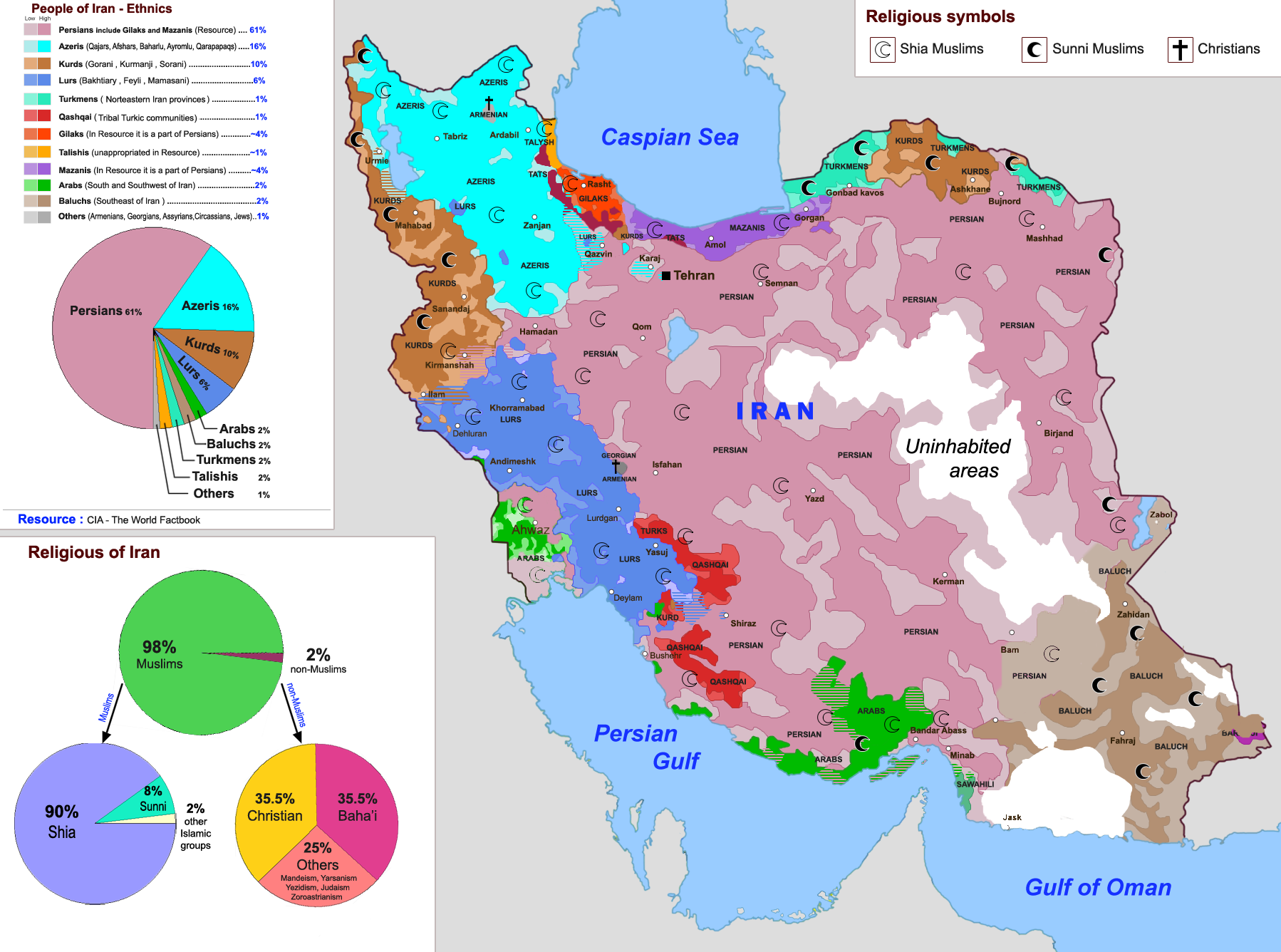
Today’s Iranian government officially registers all citizens born to Muslim parents as Muslim, an act which effectively masks the true personal beliefs of the younger generation. It does not, however, officially collect detailed ethnic data in its census, so figures are of necessity estimates, but the World Population Review 2026 gives a 51-61% core of Persians, 16-24% Azerbaijanis, 7-10% Kurds, 8% Gilaks and Mazandaranis, 2-6% Lurs, 2-3% Arabs, 2% Baluch and 2% Turkmen and other Turkic groups.
What these diverse multi-ethnic groups do, however, share, is a strong cultural identity. The joke runs that in every Iranian home there are two books, Hafez and the Qur’an. One is read and the other unread.
Hafez, the fourteenth century national poet, represents the rich complexities of Iran’s identity. His tomb in Shiraz, Iran’s most liberal city, is a place of pilgrimage day and night, with crowds of devotees stroking his alabaster sarcophagus. His poetry, besides lauding the joys of love and wine, also targets religious hypocrisy. “Preachers who display their piety in prayers and pulpit”, he wrote 600 years ago, “behave differently when they are alone. Why do those who decree repentance do so little of it?”
While the West remains obsessed with Iran’s nuclear enrichment, it is an open secret that well-connected clerics and businessmen enrich themselves through sanction busting. When I lacked the cash in Isfahan to buy a rug, the dealer simply rang a friend in Dubai and processed the supposedly banned credit card transaction. It duly appeared on my statement as a purchase made in Dubai.
Despite the mullahs’ best endeavours – or maybe because of them – there have been fundamental changes in Iranian society since the revolution in 1979. More women than men now graduate from university, leading to a well-educated female population that is refusing to breed, despite government incentives: ironically, a consequence of the mullahs’ own policy of spreading education.
Though the minorities are usually blended in the cities, many are concentrated in the border regions: the Kurds in the northwest, the Beluch in the southeast, the Turkmen in the northeast and the Arabs in the oil-rich southwest. If the central authority of the IRGC were to collapse, it could trigger a significant splintering in peripheral regions where historical grievances and armed movements are most deeply embedded. The Kurds in particular are the most potent ethnic opposition, and have a history of revolution against the Iranian regime, but also of disunity, frequently descending into infighting. The best organized are the PKK, Turkey’s nemesis, whom President Erdogan would be furious to see armed by the US, as Trump has hinted.
Given the lack of unified opposition to the IRGC, a power vacuum could see chaos, civil war and a resurgence of movements seeking independence. Deep divisions exist between the Persia-centric opposition royalists who would welcome the return of the Shah’s son, Reza Pahlavi, and the ethnic minorities.
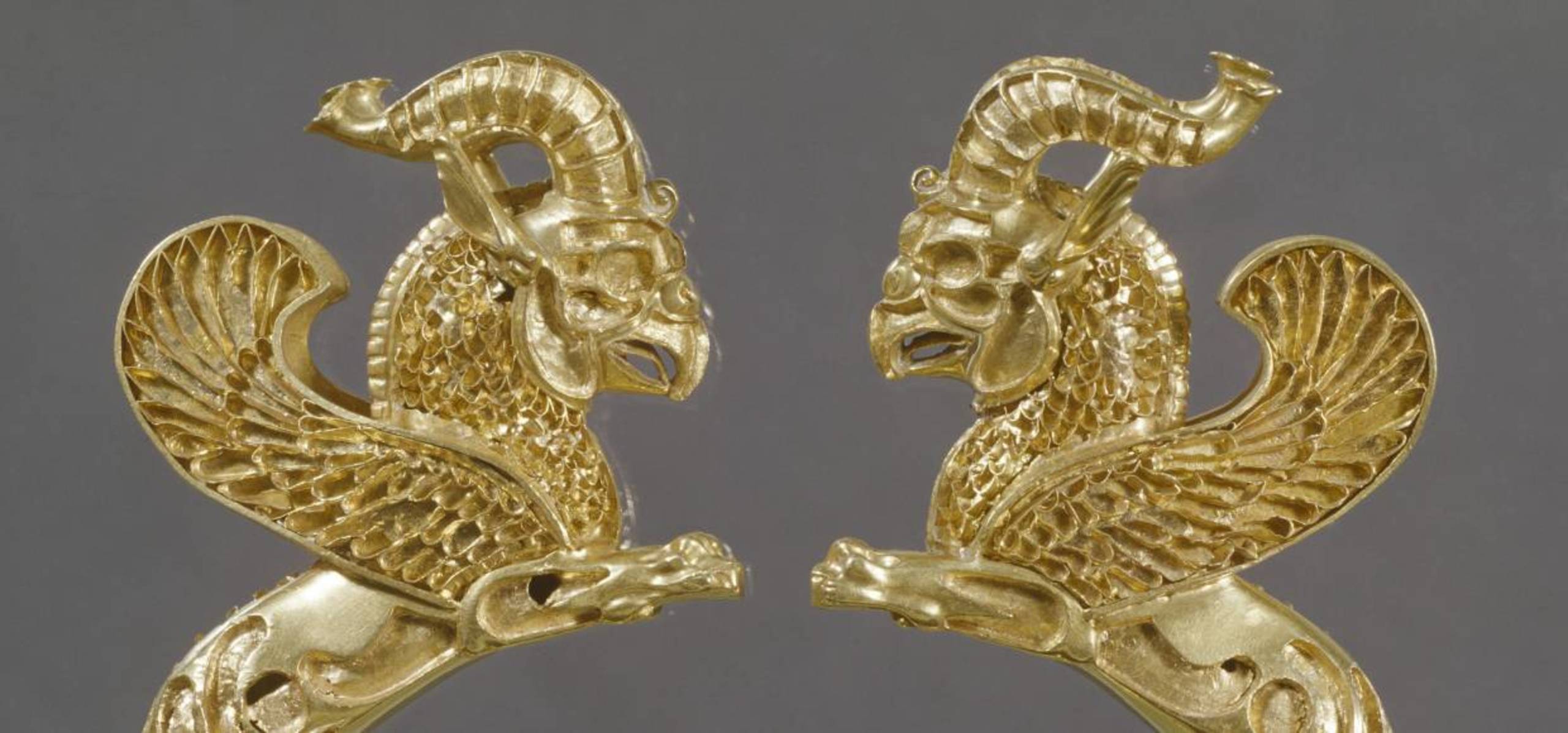
Recent independent surveys have found that Iranians are increasingly embracing their pre-Islamic heritage as another way of expressing anti-regime sentiment. There is immense pride in the unique Persian identity of their ancient Zoroastrian religion, almost as a kind of cultural nationalism. With origins to much earlier than 600BC, when Cyrus the Great adopted it as the state faith, it is one of the world’s first monotheistic religions, introducing the idea of a single supreme deity, Ahura Mazda, often represented as an eagle- winged disc with a human figure emerging from the centre. Scholars believe Zoroastrianism profoundly shaped the foundations of Judaism, Christianity and Islam, specifically its belief in the dualism of the eternal struggle between good and evil, the Final Judgement, angels and demons, the resurrection of the dead, and heaven and hell.
In 1979 the mullahs did a deal, allowing Zoroastrians one seat in Parliament if they did not oppose the regime. The fire temple in Yazd, spiritual heart of Zoroastrianism, has burned for over 1500 years, and the faith today is said to be experiencing a resurgence especially among young Iranians, among whom there is a marked trend away from traditional religious practice.
[Some elements of this article first appeared in a feature entitled ‘The ghosts of Iran’ published in The Tablet magazine, 12 March 2026, co-authored with John McHugo.]
How fitting it is that Iranian President Hassan Rouhani should have used his Twitter account to announce last month’s historic meeting with UK Prime Minister David Cameron: “1st meeting b/w UK & Iran heads of state in 35 years: 1 hour of constructive & pragmatic dialogue, new outlook #UNGA” the tweet boasted, attaching a photo to prove it, of the pair engaged in earnest dialogue. A week later the brief warming in relations was over, as Rouhani criticised Cameron for calling Iran ‘part of the problem in the Middle East’; Tehran headlines again referred to Britain as ‘the old fox.’
What is the Iranian leadership aiming for, in its apparent new accessibility, its seeming new willingness to talk and engage with western governments? How seriously should we take Iran’s ‘new outlook’, as the UK joins the US-led air strikes against ISIS in Iraq (and possibly Syria in future), a fight in which Iran’s help will, sooner or later, almost certainly be needed?
In Twitter-silent Iran, it was the silence of the ordinary Iranian people that struck me most. After the failed Green Revolution of 2009 in which around 100 protesters were killed and over 4,000 arrested, most Iranians learned to be silent – unlike the Syrians. Ordinary Iranians admire the courage of ordinary Syrians. “We gave up when we saw how the regime reacted, but they continued.”
The gulf between the Iranian people and their regime is striking. Rouhani’s smiling face and his carefully managed tweets project one image of Iran to the West, but conditions inside the country tell a very different story. Far from opening up, Iran is busily clamping down on its own people. Since Rouhani took office in August 2013 executions have been on the rise, more than 400 in the first half of 2014 alone according to the NGO Iran Human Rights (to give perspective, Saudi Arabia managed a mere 79 last year). Two gay men were publicly hanged in August for consensual sodomy; in recent weeks ’91 lashes’ were meted out to unveiled Iranians dancing in a YouTube video, and a British-Iranian woman was charged with ‘propaganda against the Iranian regime’ for attending a male volley-ball match. Iran’s hard-line ruling elite back home is determined to suppress any kind of resistance, fearful that, were they to allow greater freedoms in Iranian society, a wave of dissent might rise up and engulf them. Rouhani recently declared his view that internet controls and tight restrictions on women’s headscarves do not work – but will the anti-reformist clerics take any notice?
Iran is not a particularly religious country, given the power of the mullahs. The call to prayer is muted – it took three days till I heard the first one – and mosques are places more to sleep than pray.
Shrines on the other hand are crowded, thanks to a superstition that throwing a few notes or coins through the grille of a holy man’s tomb will resolve life’s problems. “We never did Islam the way the Arabs wanted us to,” grinned a helpful bystander inside the segregated women’s area, confirming what my Syrian friends in Damascus had always told me about the Iranian pilgrims who thronged the city in their all-black chadors. “They are pretending. Underneath they are just on holiday.”
Painted high on random buildings within view of the main highways the faces of Ayatollah Khomeini and the current Supreme Leader Khamenei smile down on their subjugated flock like a pair of benevolent dictators.
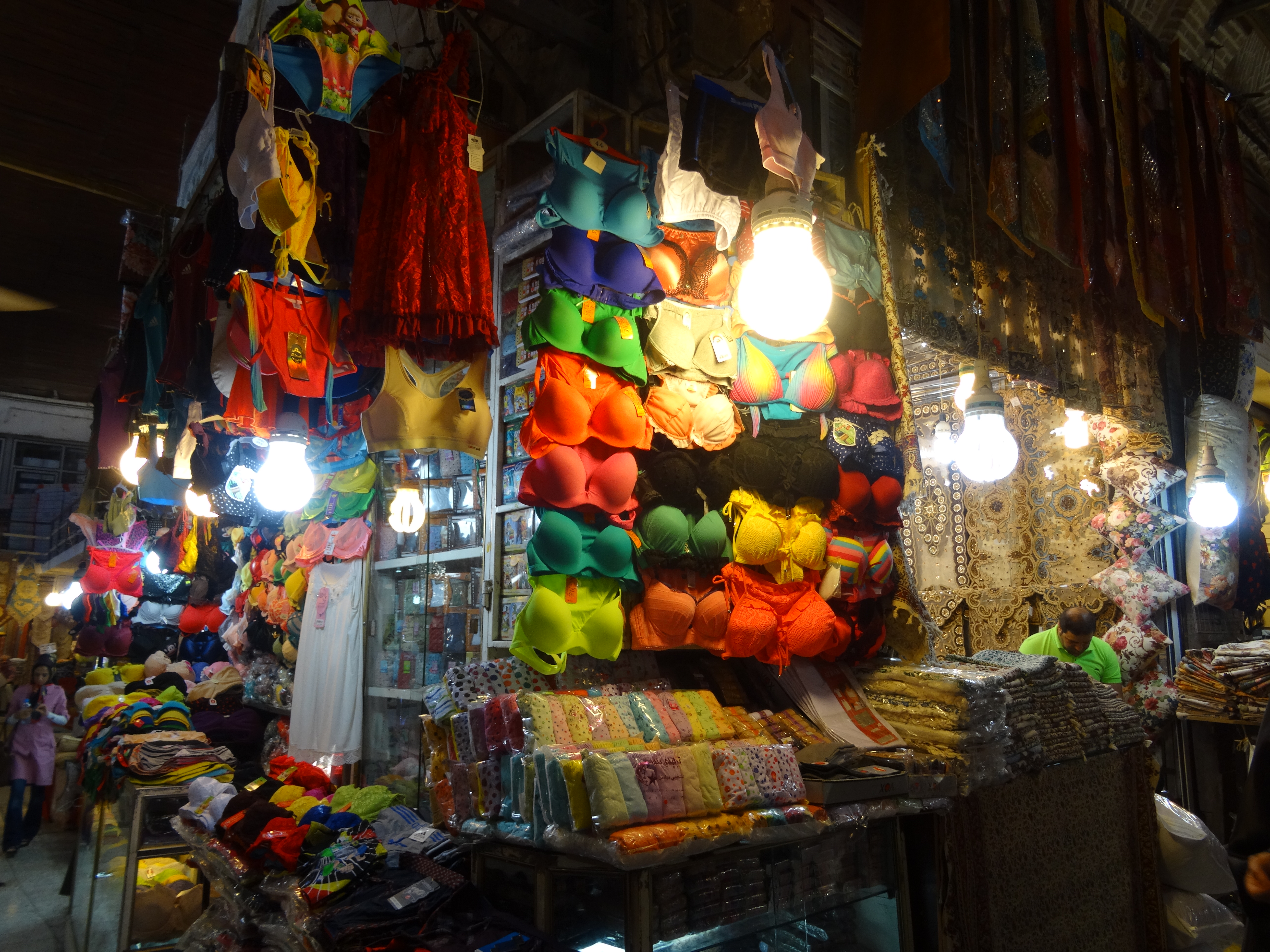
Closer questioning reveals that maybe some 10-15% of the population is tied into supporting the regime for their own economic reasons. Iran is at heart a trading nation. Its entire history has been built on centuries of skilful bartering. Visit any Iranian city and the bazaar is the central nervous system, the driver of the economy. The bazaaris and the clergy were enabled by the 1979 Iranian Revolution to preserve the traditional positions of power threatened by the Shah and his corruption. They do not want to lose this power now through relaxing their grip and allowing Western influence and culture to take over. They rail against the evils of the Western model – drug abuse, family breakdown, immoral behaviour – yet the paradox is that these have all increased on their watch inside Iran anyway, thanks to unemployment, poverty and their own corruption.
Iran is said to have one of the highest rates of drug addiction in the world at 5% of the population, the divorce rate is soaring in the cities where most people now live and prostitution is so rife that even the regime itself mentions it as a problem. And the solution of the hardline clerics? More floggings.
Iran’s demographic is suffering from a ‘Japanese curve’. After 1979 Khomeini encouraged everyone to have many children, resulting in a baby boomer generation. But the middle classes of that generation, now in their mid-30s, are the ones most excluded from influence, struggling with unemployment and deprivation. The average birth rate has plummeted to one child per family, partly because of women’s education, but also for affordability reasons. Worried that this is not enough to sustain the aging population, the regime is offering financial incentives for people to have more children, incentives which are not working: couples say it is still too expensive.
Most Iranians now live in cities, meaning that traditional barriers are breaking down as different groupings find themselves living side by side. Sunni-Shi’a intermarriage is becoming commoner, much to the horror of the mullahs. In schools the clergy controls the syllabus, with Islamic religious education forming a bigger element of the day’s lessons than any other country in the world, leaving less time for other subjects. Iran’s brightest and best are leaving the country.
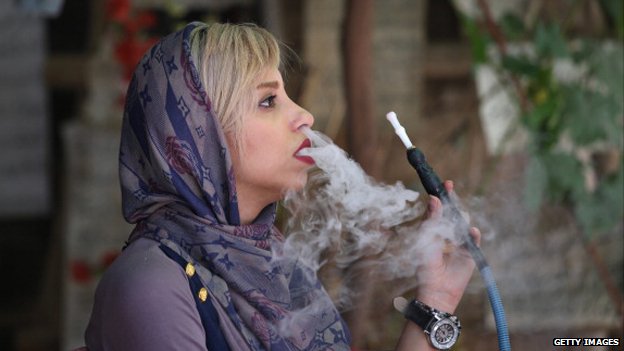
For those who stay there are subtle ways of showing opposition and Iran has these in abundance. The BBC is banned, yet the BBC’s Farsi channel is the most watched, while Iranian state TV offerings on religion and wildlife languish. Facebook is blocked yet 58% of Iranians circumvent the ban, gmail accounts were till recently banned yet 63% of Iranians use gmail as their preferred email address. Women, for the last ten years or so accounting for more university graduates than men, show passive resistance through pushing the boundaries on Islamic dress, so that in Shiraz, Iran’s most liberal city, the mandatory headscarf is worn tantalisingly far back to reveal a full head of hair, with figure-hugging brightly coloured jackets leaving nothing to the imagination.
So how, in the face of such contradictions, has the political clergy of the Islamic Republic managed to retain its power and control? The answer lies in its ever-increasing dependence on its various law enforcement forces, above all SEPAH and the Basij – another parallel with Syria. SEPAH is the Iranian Revolutionary Guard set up in 1979 to preserve the Islamic nature of the revolution and to pre-empt a military coup or foreign interference, while the Basij is the volunteer militia under its control, numbering up to one million. To cement the loyalty of SEPAH and the Basij, the clerical elite has permitted them to enrich themselves through mafia-style smuggling rackets operating across the Straits of Hormuz to the UAE – shades of Syria again where Assad’s shabiha control the contraband routes through the ports of Lattakia and Tartous. A multi-billion dollar empire has grown up, transparent to ordinary Iranians who follow world affairs closely. Banned from Twitter, most use SMS, sending each other jokes by text message based on the news of the day. SEPAH and the Basij are particular targets, with messages like: ‘How much do you think SEPAH will charge the mullahs for smuggled fridges? Reply: About five prostitutes a day for a month should do it,’ and ‘How many Basij fighters do you reckon are now in Syria? Reply: I don’t know, but a lot more than in Iran,’ and ‘Who runs Syria these days? Reply: Iran of course!’
The highly experienced Iranian commander of the Quds Force (special operations division of the Iranian Revolutionary Guard), Major General Qassem Suleimani, has since early 2013 been masterminding the Assad regime’s fight against its rebels, sending advisers into Syria, helping bolster depleted ammunition/weapons supplies and re-train Syrian government troops. With consummate skill, he created the 60,000-strong National Defence Force (NDF) in Syria, modelled on the Basij, ostensibly to protect local neighbourhoods, in practice to exploit them and run smuggling rackets.
President Bashar al-Assad with the caption: ‘We pledge allegiance to you with blood forever.’ Blood drips from the words ‘with blood’.
Rouhani is an ace negotiator and will feign flexibility while holding tight to his position. He knows that time pressure is on his side: the West needs him now in its fight against ISIS and he has till 24 November to reach a nuclear deal. The conditions are perfect for extracting concessions from the West, and of one thing we may be sure: the Iranian governing elite will do nothing that rocks the status quo domestically, nothing that interferes with its ability to enrich itself. Embassies may open in London and Tehran, cooperation over ISIS in Iraq (though not in Syria) may be forthcoming when its own border region is threatened, but the Iranian regime, SEPAH and the Basij will remain umbilically connected, to each other and to the Syrian regime. Their collective survival is at stake and their loyalty to each other is not negotiable.
Looking back at Rouhani’s Twitter account, I am struck by the fact that, set against his 257K followers, he is only following six people, one of which is his own Iranian language account. The others are Iran’s Supreme Leader Ayatollah Khamenei, Ayatollah Rafsanjani, Ayatollah Khatami, his own Foreign Minister Javad Zarif and his own Vice President and Environment Minister the heavily headscarved Massoumeh Ebtekar – not exactly a broad range of opinion. All of which confirms that however much Rouhani smiles abroad, at home he is beholden to his hard-line masters.
“Abigail Frymann tries hard to present both sides of the narrative in her feature interview (“The rebels want my head”, 7 June) with Mother Agnes Mariam of the Cross. Sadly, in so doing she falls hook, line and sinker for the controversial nun’s take on matters inside Syria. The view that ‘the majority of anti-Assad fighters in Syria are foreign’ is presented as ‘widely accepted’, yet all reputable media outlets like The Financial Times and the BBC regularly report that whilst there are indeed now many foreign fighters inside Syria, they began in small numbers and only started expanding a year after the uprising began. Even now they account for less than 25% of the total opposition. Assad himself has of course brought in far greater numbers of foreign fighters – from the Lebanese Shia group Hizbullah and the Iranian Revolutionary Guard – to defend his own regime, but no mention is made of that.
Certainly matters ‘are not black and white’. But the ‘more complicated reality’ to which Mother Agnes refers is that Assad, under the guise of a general amnesty in early 2012, released al-Qaeda affiliated prisoners from his jails, knowing full well they would regroup and pursue their extremist ideology. Again, no mention is made of that. Now, two years later, the proof is before us, as ISIS, untargeted by regime airstrikes, was allowed to consolidate itself in Ar-Raqqa, from where it has swept into Iraq and taken large swathes of territory. Assad and ISIS should be mortal enemies ideologically – why is it that they have yet to fight each other?
The ‘reconciliation’ initative of which Mother Agnes is part, so loudly trumpeted by the Assad regime that well-meaning people like Mairead Maguire are fooled into nominating Mother Agnes for the Nobel Peace Prize, is a naked attempt to deceive the world that Assad is keen to forgive and forget. Had ‘reconciliation’ been his message at the outset in March 2011 instead of savage crushing of peaceful demonstrations, ISIS extremists could never have thrived on Syrian soil. As to her assertions on the chemical weapons attack, Human Rights Watch has systematically dismissed the basis for her arguments.
Only when Assad, no doubt amply aided by Hizbullah and Iran, finally orders his forces to drop barrel bombs on ISIS headquarters, instead of on moderate rebel headquarters in Aleppo and Dera’a, will his narrative that he is fighting ‘extremism and terrorism’ become true. Maybe then we can nominate him for the Nobel Peace Prize.”
Diana Darke
Author of My House in Damascus, An Inside View of the Syrian Revolution
All that remains of St Simeon Stylites’ pillar in St Simeon’s Basilica west of Aleppo, thanks not to the current fighting, but to Christian pilgrims harvesting ‘souvenirs’ across the centuries [DD]






![Prophetic 2007 poster of Bashar in Damascus' Hijaz Railway with the caption: 'We pledge allegiance to you with blood forever.' Blood drips from the words 'with blood'.[DD]](https://dianadarke.com/wp-content/uploads/2013/11/travellers-syria-12-13-bashar-is-pledged-allegiance-in-dripping-blood.jpg)

![All that remains of St Simeon Stylites' pillar in St Simeon's Basilica west of Aleppo, thanks not to the current fighting, but to Christian pilgrims harvesting 'souvenirs' across the centuries [DD]](https://dianadarke.com/wp-content/uploads/2013/09/damascus-trip-july-2010-067.jpg)
 dianadarke