dianadarke

Syria and Turkey commentary

Archive for the category “ISIS”

Palmyra’s Double Life

OLYMPUS DIGITAL CAMERA

[DD]

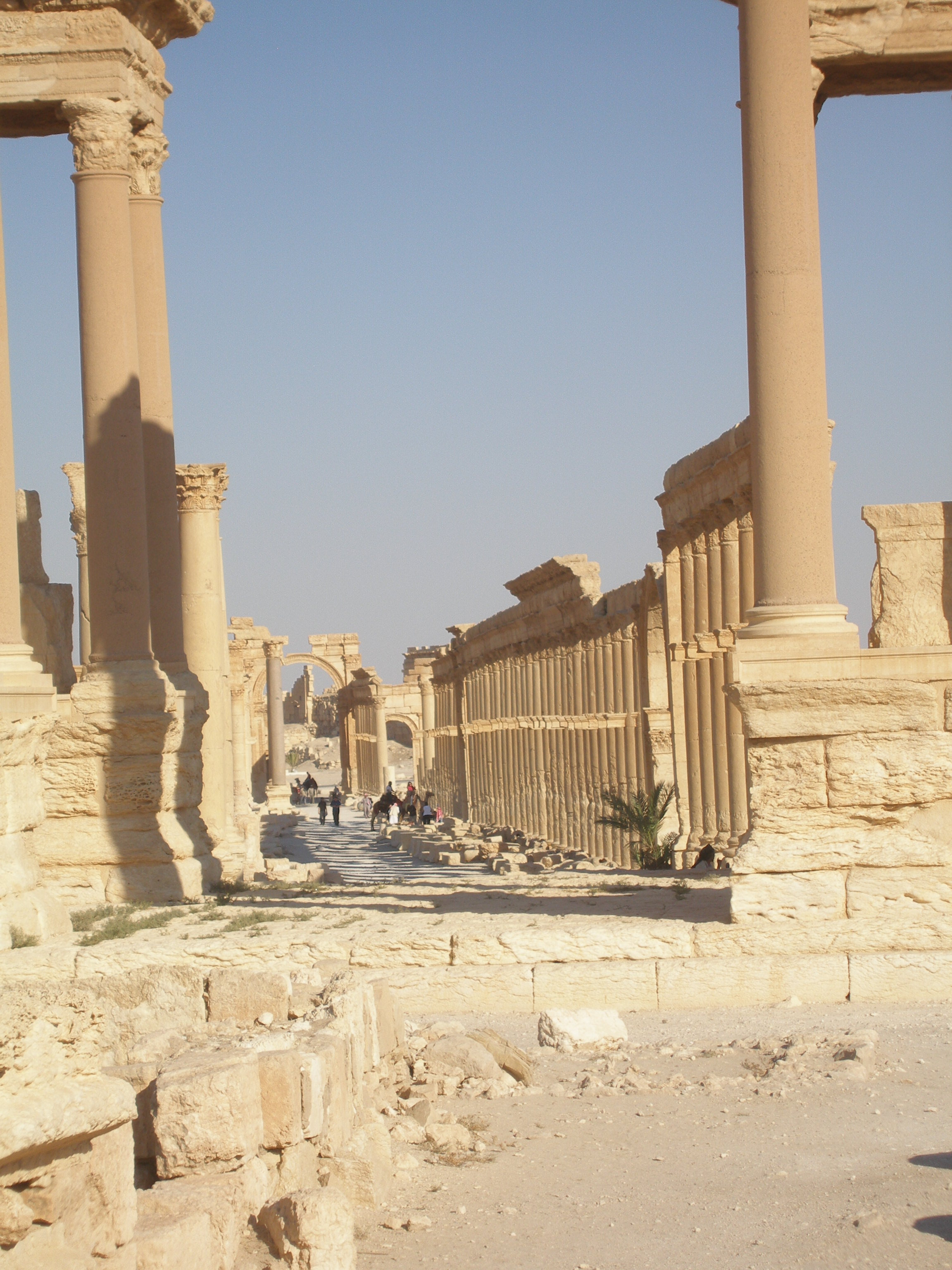
Nothing sums up Palmyra’s split identity more than this ‘egg and dart’ motif, found repeatedly all over the ancient caravan city’s ruins. The egg represents life and the cycle of rebirth, while the arrow/dart represents war and death. The two live side by side in the endless pattern of life, repeated across the centuries.

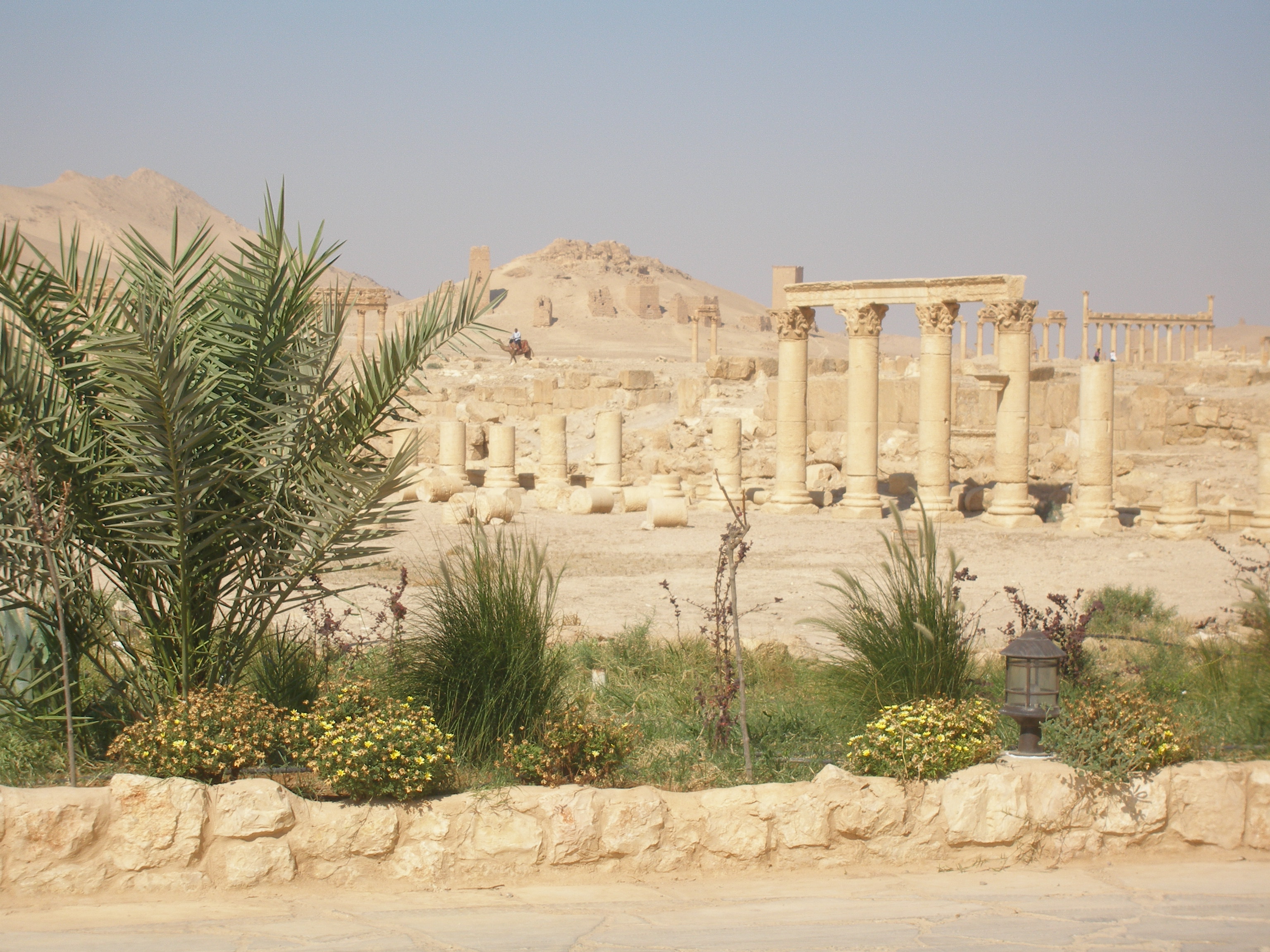
This is what is now taking place at Syria’s most famous and magnificent classical site, known throughout antiquity by romantic titles such as ‘Bride of the Desert’ or ‘Venice of the Sands’. In recent days, since news broke on 14 May 2015 of ISIS’s surprise attack launched on Palmyra from its headquarters of Raqqa just 100 miles/two hours’s drive to the north, the site has received worldwide attention with outraged cries of horror at the prospect of ISIS smashing the ancient stones to pieces as they have already done in the Iraqi sites of Nimrud, Nineveh, Mosul and Hatra. Almost every media outlet in the world has carried photos of the spectacular 1st, 2nd and 3rd century Roman streets, its temples and its tombs.

OLYMPUS DIGITAL CAMERA

[DD]

OLYMPUS DIGITAL CAMERA

[DD]

Standing alone in the middle of the desert, unfenced and unprotected, Palmyra is indeed vulnerable to attack. But take a close look at this photo below:

OLYMPUS DIGITAL CAMERA

[DD]

A pair of camels sit awaiting custom in the shade of Palmyra’s monumental entry arch. Behind them is the Temple of Bel, one of the world’s most important religious sanctuaries. But just above the left-hand camel, notice the whitewashed simple building. Originally built as the residence of the Ottoman governor of Palmyra, it functioned in the heady pre-2011 tourist days when Palmyra welcomed thousands of visitors, first as a folklore museum with displays of traditional Bedouin costumes and jewellery, then as the Tourist Reception Centre complete with cafe in the courtyard.

But since 2011 this building has served as the regime’s intelligence (mukhabaraat) headquarters, and it is to here that Assad’s soldiers first fled, after being driven out of their local state security branch in the north of the modern town (known in Arabic as ‘Tadmur’). As fierce fighting raged round the northern security buildings and close to the infamous Tadmur prison in the east, the top regime officials cut their losses and escaped west by road, abandoning their men to the tender mercies of ISIS. Also close by are valuable oil and gas fields, another primary target of ISIS.

Consider for a moment the irony of the situation. While the world’s attention is commanded by the international outcry over the threat to the ancient ruins of Palmyra, they will now learn too of the double life of Palmyra, its modern life under the Assad regime. Palmyra Prison, Syria’s most feared by its citizens, was home for years to men such as Yassin al-Haj Saleh (subject of a 2014 film ‘Syria Our Terrible Country’) and Bara Sarraj (‘From Tadmor to Harvard’ 2011), men who had done nothing to deserve the horrific torture they endured inside the prison. Bara’s unbelievable experience can be digested here:

http://www.jadaliyya.com/pages/index/3500/the-cell-of-survival_bara-sarraj

The prison was closed in 2001 but reopened in 2011 to receive new dissidents of the Revolution. Hundreds if not thousands are once again housed in the buildings originally built as military barracks by French Mandate forces. Once the prison is captured by ISIS, will the inmates join up in gratitude and swell their armies further?

Palmyra prison

Whereas Assad had hoped to gain kudos by presenting himself to the international community as a protector of Syria’s cultural heritage, the ISIS attack has instead exposed the ruthless accoutrements of his regime. Assad soldiers have been photographed running off with their own booty from the Palmyra site:

Palmyra looting Assad soldiers

They, like ISIS, have always seen such treasures as legitimate ‘spoils of war’, and no one has done more damage to Syria’s cultural heritage than the Assad regime. The difference is that while ISIS broadcasts its damage to the world, the Assad regime keeps it quiet and seeks to blame it on others.

Palmyra map

But thanks to the double-sided nature of Palmyra, the world will no longer be fooled.

Related articles:

http://www.apsa2011.com/index.php/en/provinces/homs/palmyra.html

http://www.wsj.com/articles/syrian-monuments-men-race-to-protect-antiquities-as-looting-bankrolls-terror-1423615241

http://www.bbc.co.uk/news/world-middle-east-32807858

http://www.thesundaytimes.co.uk/sto/news/world_news/Middle_East/article1557098.ece

Two Women of Mardin v ISIS

mardin buildings

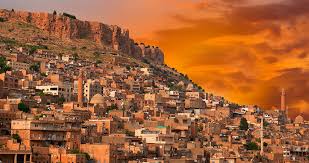
Mardin, a stone-carved historic hillside city in southeast Turkey whose buildings gaze south towards Syria and the Fertile Crescent, boasts two famous women.

The first is the colourful Shahmeran, half-woman half-snake, a legendary creature from the shared mythology of ancient Mesopotamia. Pictures of her bold green and red image adorn the streets.

sahmeran

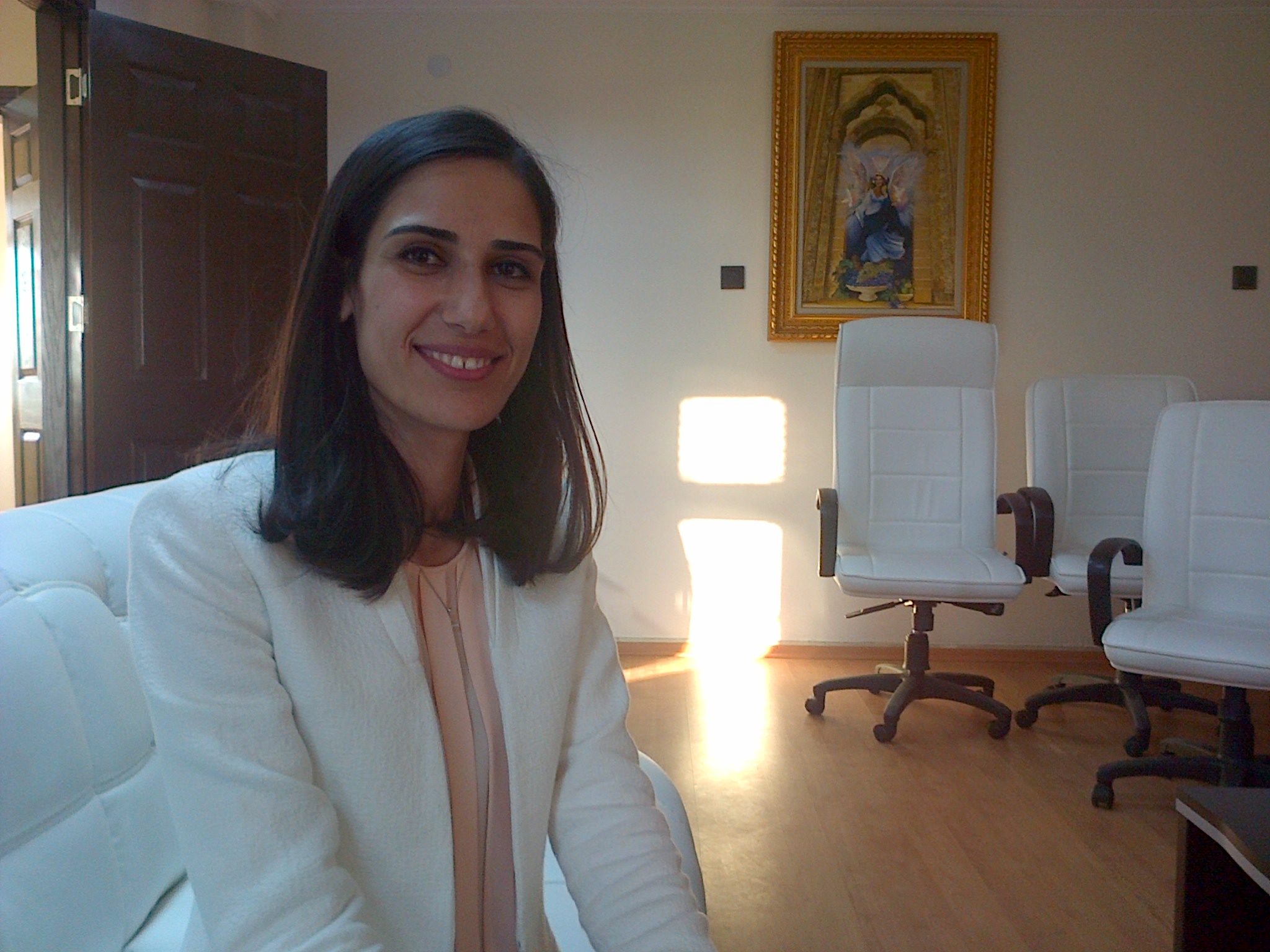
The second is a much younger addition to the city’s history, the 26 year-old co-mayor, Februniye Akyol. Shy and self-effacing, dressed simply in a white jacket, she is the first representative of the ever-dwindling Syriac Christian community to govern one of Turkey’s metropolitan municipalities.

She has agreed to a rare interview, and we sit together on the elegant white sofa of her Mardin office.

Mardin mayor April 2015

Earlier I had watched her give a refreshingly brief speech to assembled bigwigs, marking the official rehabilitation of the city’s main street, a 9.2 million euro project funded by the European Union to promote tourism. Mardin, already part of a United Nations-backed scheme for a Silk Road cultural corridor, is nothing if not ambitious. Next it plans to become a “City of Peace”, hoping eventually for UNESCO World Heritage status.

As for Februniye, who had to change her Syriac name of Febronia Benno to a ‘turkified’ version to enter Turkish politics, her success was not so planned. “I never expected this career,” she tells me softly. “In the 1990s growing up as a child in this region, we experienced terrible times, persecution, the rape of women.  Our situation was very bad. My father was arrested. For 16 days we didn’t know where he was. It affected me deeply.”

As the first woman from the local Syriac minority to go into higher education, attending Istanbul’s Marmara University in the Faculty of Insurance, she has now become a role model. Most Syriac graduates use their studies as an escape route for emigration to Europe. Instead, Februniye returned home.

Mardin Artuklu Uni

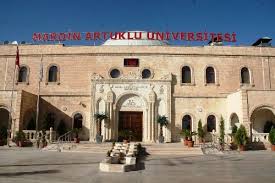
Then, while she was doing an MA at Mardin’s Artuklu University in Syriac Cultural Studies, unique in Turkey, her political career was suddenly launched  when she was chosen, together with a respected Kurdish veteran, to run for the BBP or Peace and Democracy Party, in last year’s local elections. “It is BBP policy always to have a woman co-mayor in their municipalities,” she explains.

februniye akyol

In an overwhelmingly Muslim region of long-standing enmities between Turks, Kurds and Arabs, now further complicated by the ISIS threat on the doorstep, the task in front of Februniye is a daunting one.

“I had some prejudices against the Kurds,” she says, “but I realised I had to overcome them.” Now she is working alongside her former enemies and persecutors, promoting an ideology diametrically opposed to ISIS with its subjugation of women and violent intolerance of minorities.

“Isn’t this the same system the Syrian Kurds are using,” I ask her, “in their provinces of Kobani, Afrin and Jazira?”

Kobani Map

“Yes,” she replies, “We are from the same families, just separated by the border. We all work together, no matter what race or religion, and have an equal quota for women on all our committees. Like them we want cultural, religious and linguistic freedoms for everyone.”

“Do you have contact with them?” I venture to ask, knowing the Syrian border is within sight of Mardin.

“Of course,” she replies with disarmingly frankness, “They come across for meetings from time to time.”

“But the border is closed. How do you manage that?”

“It can be opened when necessary,” she says simply.

Behind her delicate almost fragile appearance, I sense a steely resolve. She hands me her card and I notice her title is ‘Mrs. ’

“You are married?” I ask.

“Newly married,” she replies fingering her wedding rings as if still getting used to them.

It gives me the excuse to ask the obvious question, in this traditionally male-dominated society, where ISIS is knocking at the door:

“And how do the men feel about women sharing power?”

“They realise it has to be,” she replies, “It was even their idea.”

Strolling later past the renovated shop-fronts of Old Mardin I see the Shahmeran everywhere, in the famous jewellery, on key-rings, cushions and mirrors. I ask the shopkeepers about her meaning.

They explain how their Queen of Serpents is a source of healing and wisdom whose image reminds people to mend their ways, to shun evil and avoid betraying each other.

Mardin’s two famous women – one ancient, one young – will need to conjure all such powers here, if they are to survive the ISIS onslaught and defeat it.

sahmeran redMardin mayor 2

Turkey’s dilemma over Kobane

It is a case of deja vu for Turkey’s President Erdogan.

Three years ago, as Turkey’s Prime Minister, he was urgently calling for a no-fly zone and the setting up of a safe haven on Syrian soil along its border with Turkey. No one listened. Now he is calling for it again. In late summer 2011 after many months of trying to reason with Syrian President Bashar al-Assad, when high-level delegations shuttled regularly between Ankara and Damascus, Erdogan finally lost patience with his former ally, a man he had even gone on holiday with, and began his support instead of the Syrian opposition rebels. It was a bold move, partly influenced by his thinking that support for Islamist rebel groups inside Syria would act as a counterbalance to the Kurds, who make up c20% of Turkey’s population.

What he did not foresee, was that Syria’s Kurds, taking advantage of the vacuum left by the Assad regime in the northeast, would seize control of the northeast areas round Al-Hasakah and Qamishli, even seizing some of the border crossings into the Kurdish parts of southeast Turkey like Ras al-Ayn and Ayn al-Arab (known to Kurds as ‘Kobane’).

The Syrian Kurds were more prescient. They had foreseen in the Syrian revolution a major opportunity to further their aspirations for their own homeland, or autonomy at the very least. The Kurdish street slogan was: ‘Democracy for Syria. Federalism for Syrian Kurdistan.’ Bashar finally gave them citizenship in 2012 after 50 years of state deprivation, in an attempt to deter them from joining the revolution, but by then it was too little too late.

Kurds have historically been bad at uniting, with seven dialects and seven political organisations to bring together, but over the course of the Syrian Revolution some of Syria’s Kurds linked up with their fellow Sunni Kurds in Iraqi Kurdistan, and have been openly receiving military training from them. Turkey’s government has been horrified, fearing the effects on their own restive Kurds, whose guerrilla activities under the Kurdistan Workers’ Party (PKK) recently flared up again after ten years of near stabilility. Some 45,000 were killed in that struggle inside Turkey since 1984.

Ankara is currently engaged in a delicate peace process with its Kurds, giving them greater freedoms and rights in return for them laying down their arms and withdrawing to Iraqi Kurdistan. Turkey knows how easily Kurdish ambitions could derail plans for the economic expansion of its southeast regions and how expensive that would be.

Pre-revolution, Bashar al-Assad was quoted as saying ‘Turkey is the model [for religious toleration in a secular state] because we have the same society and similar traditions.’ Over the last ten years under Erdoğan, Turkey opened up much faster than Syria under Bashar, liberalising its economy, embracing privatisation and free enterprise. As a result its economy has been booming, with growth peaking at about 12 per cent in 2010–11, though that figure has since slackened off considerably. It declared a ‘zero problems with neighbours’ foreign policy, trading with them all, and in 2009 opened its borders to Lebanese, Jordanians, Iraqis and Syrians, dropping all visa requirements. More and more Syrians started going to Turkey for their holidays.

At first Turkey welcomed Syrian refugees from the fighting, providing camps for them along the border. They began as a small trickle, building up to about 10,000 after the first year, then increasing exponentially to hundreds of thousands once the violence in Aleppo flared up. The flow then became such that they ran out of camp space, hurriedly building more, while backlogs of desperate refugees piled up on the Syrian side of the border. Now the numbers are close to a million and the strains are becoming unbearable.

Today once again Turkey is calling for a no-fly zone and a safe haven inside Syrian territory. Erdogan wants the US-led coalition to help him achieve this, knowing it means taking on the Assad regime, knowing it is too risky alone. Once again no one is listening. The reaction of the Syrian government is unpredictable. So far the US-led coalition air strikes and the focus on Kobane have enabled them to make gains on the ground around both Aleppo and Damascus. Even Iran is now talking of getting involved, to avert a humanitarian catastrophe, though it is far from clear how it would do this.

The longer the dilemma goes on, the harder Turkey’s decision will be. It has to juggle the pros and cons, knowing that its involvement in the Syrian conflict is deeply unpopular with its own Turkish population who have no appetite for war, yet also that its international reputation is at stake. Its ideal solution would be for Kobane to be saved by US-led airstrikes and Kurdish peshmerga battling ISIS on the ground, and for its peace process with its Kurds to be saved by securing a deal with the PKK similar to that which Ankara already has with Iraqi Kurdistan, whose oil Turkey badly needs. Erdogan knows he must save Turkey’s domestic stability at all costs, for the sake of the future and of investor confidence, for once broken, it will take years to put back together again.

Kurds on the Turkish borber, supporting their fellow Kurds battling for Kobane, Syria [October 2014]

Kurds on the Turkish border, supporting their fellow Kurds battling for Kobane, Syria [October 2014]

Related:

http://www.al-monitor.com/pulse/originals/2014/10/iranians-ask-soleimani-defend-kobani.html?utm_source=Al-Monitor+Newsletter+%5BEnglish%5D&utm_campaign=59e97cd3b2-October_8_2014&utm_medium=email&utm_term=0_28264b27a0-59e97cd3b2-93116701

http://www.theguardian.com/world/2014/oct/08/us-increasingly-frustrated-turkey-inaction-islamic-state

http://www.bbc.co.uk/programmes/p01gsjdw

http://www.chathamhouse.org/publication/postcard-nusaybin-turkey


Is Syria solvable?

Prophetic 2007 poster of Bashar in Damascus' Hijaz Railway with the caption: 'We pledge allegiance to you with blood forever.' Blood drips from the words 'with blood'.[DD]

Prophetic 2007 poster of Bashar in Damascus’s Hijaz Railway with the caption: ‘We pledge allegiance to you with blood forever.’ Blood drips from the words ‘with blood’.[DD]

At the funeral yesterday of a dear friend who died of natural causes in his own bed, I wept for Syria. Life coming to an end is hard to bear in any circumstances, but in Syria I cannot come to terms with why the lives of 200,000 people have ended, unnaturally, not in their beds, often with no funerals at all. What have they died for? Have their deaths achieved anything at all?

The mess that is Syria today scarcely resembles a country. Its identity has been shredded. After three and half years of a revolution that began peacefully but was met with violence, is it still even a revolution? So many opposing forces, so many countries are now involved that it has become impossible to see the way forward. Lawlessness has become the new norm. Inside Syria people are so confused about who is fighting whom and for what, that they have lost sight of what to strive for. Corruption is everywhere, the opportunism of war creating its own economy, with a ruthless few getting rich beyond their wildest dreams. Apart from the deaths, tens of thousands remain in prison. No one knows the numbers for sure. All across the country millions have been displaced and homes have been snatched – mine among them – sometimes just by needy people, but more often by immoral individuals taking advantage of the breakdown of law and order. Even in areas that used to be under tight regime control people are starting to realise that the government cannot protect them. Kidnappings purely for ransom money have become commonplace but no one is sure who the perpetrators are. More and more cases are being reported of the pro-government militia, the NDF (National Defence Force), tricking people into leaving their homes by warning them of imminent danger from DAESH (ISIS), then looting the contents and selling them on. As Lina Sinjab reports in her recent BBC piece about the NDF and its behaviour (see link below):

A few men with guns call themselves the ‘protectors of the neighbourhood’… They then set the rules and bypass the law, in a country that is already lawless.” (words of a Damascus resident)

As for the increasing cases of young people going out to Syria to fight, I cannot help but think of the scene in the film The Prime of Miss Jean Brodie where Mary Macgregor’s brother goes out to Spain to join in the Spanish Civil War, trying to do something noble with his life, only to join the opposite side to what he intended and be pointlessly killed. Seen from so far away, the idealism can seem so clear. From close up, all clarity vanishes, as it has done inside Syria. The Spanish Civil War lasted less than three years but killed around 500,000. The rebels finally prevailed and Franco went on to rule Spain for 36 years till his death in 1975. But the Syrian war has no precedent in history. We are in uncharted territory.

The international community has allowed the situation inside Syria to fester so long that it has become insoluble. The US air strikes are not helping ordinary Syrians. On the contrary the bombing of Jabhat al-Nusra targets is likely to turn Syrians against the West and its belated involvement which is not to save them, but to save itself from DAESH (the locally used acronym for ISIS/IS). Syrians have been sacrificed at the altar of world indifference and now, with the rise of DAESH, we will all have to pay the price. Only a change in Iranian policy towards Syria would shift the dynamics on the ground. Lured by the incentive of a US rapprochement, might they abandon the Assad regime and do a deal with Saudi Arabia and Turkey to remove Assad and his top layers, whilst keeping the military and security establishments largely intact? It is the obvious solution, but what are the chances of it happening?  As I wrote in My House in Damascus, “Pigs might fly…”

More than ever, I will have to remain a ‘hopeless dreamer’,  for the sake of all those lives lost unnaturally.

My Damascus House

My Damascus House


Related articles:

http://www.bbc.co.uk/news/world-middle-east-29429941

http://www.al-monitor.com/pulse/originals/2014/10/international-alliance-no-change-front-lines-syria-rebels.html?utm_source=Al-Monitor+Newsletter+%5BEnglish%5D&utm_campaign=15b8a0b861-October_2_2014&utm_medium=email&utm_term=0_28264b27a0-15b8a0b861-93116701

How #ISIS misuses early Islamic history to justify its actions

ISIS gangs smashing a priceless 8th C BC Assyrian statue (May 2014, Tell Ajaja, Syria)

ISIS gangs smashing a priceless 8th C BC Assyrian statue (May 2014, Tell Ajaja, Syria)

Abu Bakr Al-Baghdadi, leader of ISIS, declared himself ‘Caliph Ibrahim’ in June 2014. Claiming a genealogy traced back to the Prophet Muhammad and his noble tribe the Quraysh, together with a PhD from the Islamic University of Baghdad, his religious credentials are certainly stronger than previous Al-Qaeda leaders.

The caliphate in early Islam was a military and political office, not simply a religious one. The Prophet Muhammad during his lifetime was religious leader, lawgiver, chief judge, commander of the army and civil head of state all in one. ‘Caliph Ibrahim’ is following this model. The Prophet Muhammad died suddenly in 632 leaving no male children. Disputes over who was to be his khalifa or caliph, (Arabic ‘successor’) have been responsible for most of the schisms of Islam, including the major Sunni/Shi’a division. ‘Never was there an Islamic issue which brought about more bloodshed than the caliphate,’ wrote the respected historian Al-Shahrastani (1086-1153) in his Book of Sects and Creeds.

To boost his standing further, ‘Caliph Ibrahim’ appears to be modelling himself on the first four Sunni Orthodox caliphs – Abu Bakr, Umar, Uthman and Ali – known as Al-Rashidoun, ‘the rightly-guided ones’, who succeeded the Prophet Muhammad. Under them the Islamic state expanded within a decade from Arabia to conquer first Syria, then Iraq, Persia, Egypt and beyond. Those early conquests were characterised by military campaigns led by brilliant strategists like Khalid ibn al-Walid and Amr ibn al-Aas, using horses and camels in lightning raids against their enemies – the Byzantines and the Sassanians – whose armies were generally on foot. Today’s ISIS attacks too are characterised by their speed and surprise, always mounted on vehicles, attacking from many sides like a Bedouin ghazwa (raid). Raiding was seen as a noble occupation in early Arabia – much poetry is devoted to its praise. Acquisition of new territories was one of the principal duties of the caliph, and it is to this tenet of jihad (religious war) that Islam owed its fast early growth.

The Prophet Muhammad’s great achievement was to break tribal allegiances and replace them with a new fraternity of Islam: “Know ye that every Muslim is a brother unto every other Muslim, and that ye are now one brotherhood.”  All new converts of whatever tribe, race or nationality were welcomed. The new ‘Caliph Ibrahim’ is using the same tradition to welcome foreign fighters to his fold.

New actors on the world stage like ‘Caliph Ibrahim’ do not come out of nowhere. Conditions have to be right for them to flourish. When the Prophet Muhammad preached the new religion of Islam in what is now Saudi Arabia, anarchy already reigned in the 7th century world around him. Arabia’s political structures had broken down, sapped of energy by never-ending tribal feuds and disputes over springs, pasture and livestock – the bare necessities of life in an arid desert environment.  Long-running wars between the Byzantines and the Persian Sassanians, heavy taxes imposed by both empires and the multiple schisms of the Christian Church paved the way for the rapid advance of the early Muslim armies.

Like the early caliphs, ‘Caliph Ibrahim’s’ conquests have been eased and enabled by the chaotic regional environment. The post-2003 ‘de-Ba’athification’ process carried out by the Americans after deposing Saddam Hussein left an Iraq reeling and beset with government in-fighting. Ripe for harvest, its oilfields beckoned tantalisingly.

Syria’s tragic revolution-turned- civil-war provided the perfect cloak to ISIS ambitions. Under a general amnesty in early 2012, Al-Qaeda-affiliated extremists were released from Assad prisons. Some regrouped with remnants of Al-Qaeda-in-Iraq and organised themselves into what has evolved as ISIS. In March 2013 they captured Al-Raqqa on the Euphrates, 25 miles east of Tabqa, Syria’s largest dam, just as in August 2014 they captured the Mosul Dam, Iraq’s largest, on the Tigris – now wrested back for the time being by the Kurdish peshmerga with the help of US air cover. In Syria ISIS practised its fighting skills, not on the well-equipped Assad army, but on Syria’s Kurds and on the poorly-armed rebel fighters of the Free Syrian Army. ISIS now controls most of Syria’s eastern oilfields, and in Iraq too its strategy involves systematically seizing the northern oil installations, fuelling its wealth. Conservative estimates put ISIS income from oil alone at US$1 million a day. The bearded chiefs have grown rich beyond their wildest dreams.

Thanks to such control of oil and water, new followers flow strongly into the fold. An impoverished population suffering from the effects of drought, unemployment and disenchantment with the powers-that-be, makes fertile recruiting ground. Most of the Prophet Muhammad’s early converts to Islam were slaves and lower classes – people with something to gain. The first caliph Abu Bakr, when recruiting for his armies, wrote to the people of Mecca promising them there was rich booty to be won from the Byzantines. To raise more money from its conquered territories, early Islam also imposed a means-assessed poll tax on Jews, Christians, Sabians (and later Zoroastrians) considered ‘People of the Book’, acknowledged to be monotheists. Only groups like the Yazidis, who were misunderstood as ‘devil-worshippers’, were presented with the stark choice of ‘convert or be killed’. The poor paid a quarter of the rich, while women, children, beggars, the old, the insane and the sick were exempt. ISIS has been taking taxes from towns under its control in Syria since 2013. In Iraq it has been demanding protection money from local business, whilst also presenting a generous face through handing out food, petrol and subsidising electricity.

As well as offering an attractive and powerful identity, ISIS can offer $400-500 a month as regular income to young Sunnis only too happy to believe in a new ideology based on their own supremacy, and in which the Arabian concept of ghanimah, booty, is legitimate.  Sura 8:42 of the Koran says ‘one-fifth of the booty is for God, the Prophet, those close to him, orphans, the poor and the wayfarer’ ie belongs to the state. By implication therefore the rest can be taken by the fighters. Yezidi women and children are legitimate spoils of war in this ideology.

Under the rallying cry of religion, the ISIS of today is driven by motives it sees as sanctioned under Islam – to gain territory, to acquire new converts, and to spread its strict Islamic rule of law – the Shari’a – with punishments like amputation for theft and beheading for apostasy or for non-believers who refuse to convert. It is copying the social mores of 14 centuries ago.

But behind this religious cloak the same economic forces that drove the Prophet Muhammad’s followers and led to his early conquests are driving the speed of ISIS’s advance. Many despairing Syrians and Iraqis who have watched their countries crumble around them are now joining ISIS out of pragmatism, rather than ideology. The attraction of being on the winning side cannot be overestimated. As long as the region remains in disarray, the likelihood is that ISIS will increasingly be seen by many as the only answer – and a rewarding one to boot.

Bombs


#Yazidi women are legitimate ‘spoils of war’ in #ISIS ideology

As reports begin to emerge on the fate of Yazidi women captured in the Sinjar region of Iraq, it is as well to understand the ideology that enables ISIS to consider its actions legitimate:

The rules on ghanima (booty or ‘the spoils of war’) are clearly laid down in the Koran, Sura 8, verse 41, and ISIS is following them to the letter in its treatment of Yazidi women:

“Know that a fifth of what ye have won belongs to Allah – to his prophet, his family, to the orphan, the needy and the traveller.”

The verse was revealed to the Prophet Muhammad after the Battle of Badr in 624, the first decisive military victory won by Muhammad and his followers against those who opposed his new religion of Islam. As part of the pre-Islamic Bedouin raiding culture of the Arabian Peninsula, Arab chiefs had by tradition kept a share of the booty. It was the norm of the times. One fifth was later considered by Muslim scholars to be the share needed to support the Islamic state’s expenses as it expanded its empire. The remaining four-fifths were divided among the fighters who had won the booty.

This same concept of booty is being followed now by ISIS 14 centuries later, and they are defining it in the same way. The accepted definition by Muslim scholars of ghanima includes all weapons and all movable possessions. It also includes ‘non-believers’ who can be taken as prisoners of war – be they men, women or children. These prisoners are to be divided as slaves among the fighters. ‘Liberating’ the women is even considered an act of pious charity, especially if the women in question happen to be Yazidi, wrongly labelled ‘devil-worshippers’.

How in the 21st century does one even begin to combat such an ideology, when it is so convinced of its own legitimacy?

Yazidi children during a religious ceremony [Getty]

Yazidi children during a religious ceremony [Getty]

Related:

http://www.independent.co.uk/news/world/middle-east/iraq-crisis-isis-militants-plan-to-marry-captured-yazidi-women-9674922.html

http://www.bbc.co.uk/news/blogs-magazine-monitor-28686607

http://www.bbc.co.uk/news/world-middle-east-29001357


Iraqi/ISIS/Yazidi conflict is less about religion than about oil, water and power

Yazidi tombstone in southeast Turkey showing the peacock symbol, representing God on earth [DD, May 2014]

Yazidi tombstone in southeast Turkey showing the peacock symbol, representing the Peacock Angel, as God’s interlocutor on earth [DD, May 2014]

Article below as published in The Sunday Times 10 August 2014:

http://www.thesundaytimes.co.uk/sto/news/focus/article1444902.ece

Oil and water, not religion, are fuelling Isis campaign to wipe out minorities

Who could have dreamt that the plight of the secretive Yazidis, stranded without food and water up Mt Sinjar, would suddenly command worldwide attention, let alone lead to US air strikes against the self-styled caliphate of the insurgent group Isis? But the epic, near Biblical scenes of this resilient group of people fleeing up a bare mountain have caught the public imagination.

Look more closely at a map and it becomes clear that this entire region is filled with religious minorities, the remnants of the intermingling of many faiths. For here in the once Fertile Crescent was the birthplace of religion, even the birthplace of civilization itself. Three of the world’s great monotheistic religions were born here – Judaism, Christianity and Islam. It is a deeply spiritual part of the world.

The origins of many of the religions practiced here remain shrouded in obscurity. Yazidi ancestry is Assyrian-Semitic but over the centuries they are thought to have moved north from Basra and become Kurdicised.

Successive persecutions at the hands of local rulers have stemmed from two misunderstandings:  that their name referred to the detested early caliph Yazid bin Mu’awiya (when it derives instead from the Persian for angel ized), and that they worshipped the devil (a confusion of the name shaytan, Arabic for devil, with the Peacock Angel whom Yazidis see as God’s alter ego on earth).


Yazidi tombstone in southeast Turkey, with symbols of the peacock and the sun, representing God on earth [DD, May 2014]

Yazidi tombstone in southeast Turkey, with symbols of the peacock and the sun, representing God on earth [DD, May 2014]

Physically they resemble Kurds and most speak Kermanji Kurdish, though the Yazidis from Mt Sinjar also speak Arabic. They live separately from neighbouring tribes and do not intermarry, mainly settled in remote villages but are sometimes nomadic with herds of sheep. They have never been politically important – till now, when they have come under the glare of the international spotlight.

They have only ever sought to practice their religion in peace, away from prying eyes. At the core of their faith is a deep belief in transmigration,  that each life gives the chance to move gradually forward towards a better future. Hell and the existence of evil are denied as absolutes. They see all evil as man-made. Their current persecutors, Isis, are evil personified, threatening them with death or conversion, but no Yazidi can convert religion – it is tantamount to forfeiting the soul. As with the Druze and Alawi minorities found across Lebanon and Syria, it is not possible to convert to their religion, only to be born into it.

The images of bleak deserts that flash across our screens today also serve to obscure the region’s two secret treasures: water and oil.  The mighty Tigris and Euphrates rivers both of which have their headwaters in eastern Turkey, run through Syria and Iraq before exiting into the Gulf near Basra. The very word ‘Mesopotamia’ means ‘the Land between the Two Rivers’.

Whoever controls these waters controls the lifeblood of the region, and IS’s seizure in recent days of the fragile Mosul Dam has the potential to change the course of history – another epic flood of biblical proportions. Downstream, were it to burst, either accidentally from lack of maintenance or deliberately as an act of maniacal vengeance, Iraq’s first and second cities, Baghdad and Mosul, would disappear underwater. The oil wells of northeast Syria, northern Iraq and Iraqi Kurdistan all lie within the grasp of IS, and it is systematically taking control of them to fund its operations.

Beside the religious there are further ethnic  minorities, such as the Turkmen who divide more or less equally between Sunni and Shi’a Islam with their own language and customs, and the Shabak, mainly Shi’a  but with elements of Yazidism. They too have their own language. The numbers of all these minorities have plummeted over the last decade, none more so than the Christians, down to about 400,000 in Iraq alone from 1.5 million before 2003. There are between 70,000 and 500,000 Yazidis worldwide.

It is one of the great ironies of history that all these minorities lived out their beliefs in relative peace under the Ba’athist regimes of Saddam Hussain in Iraq and the Assads in Syria. But the US invasion of Iraq in 2003, the revolutions of the ‘Arab Spring’ and now the rise of Isis have combined to turn this part of the world upside down. Into the power vacuum left by the floundering Syrian Revolution and the chaos of the Maliki-led Iraqi government stepped Isis, making its headquarters at Raqqa on the Euphrates in Syria.

As the patchwork of Iraq and Syria disintegrate under the onslaught of Isis, it is north to Iraqi Kurdistan that the overwhelming majority of persecuted minorities are fleeing. Perceived as a haven of relative stability, the Kurdistan Regional Government is seeking to gain independence from Iraq, though its Peshmerga fighters, low on cash and weaponry, will be tested to the full in the coming weeks and months. Its Education Ministry has introduced the enlightened policy that its schools must teach all world religions equally. Most Kurds are Sunni Muslim but Islam is accorded no special status. A person’s faith is seen as a private matter. For Isis such a policy is of course anathema.

Many refugee minorities would flee to Turkey, if the borders were opened, as the Turkish government now also allows its Syriac Christians and its Yazidis to live unmolested.

The biggest irony is that all the religious groups struggling to co-exist in this region believe in the same God, however they choose to address him or whatever symbol they choose to represent him – be it a peacock, a cross, the sun or simply an abstract geometric pattern. Proof if ever it were needed, that this conflict is less about religion, than about water, oil and power.

Diana Darke is author of My House in Damascus: An Inside View of the Syrian Revolution. She has specialised in the Middle East for more than 30 years.

Related posts on the Yazidis:

http://www.bbc.co.uk/news/blogs-magazine-monitor-28686607

http://www.independent.co.uk/voices/letters/letters-now-we-can-all-share-the-boris-fantasy-9658001.html (scroll to second letter from Professor Christine Allison, Ancient community faces a grim fate)

Yazidi graveyard showing peacock symbol to represent the Peacock Angel [DD, May 2014]

Yazidi graveyard showing peacock symbol to represent the Peacock Angel, God’s interlocutor on earth [DD, May 2014]


Postcard from Nusaybin, southeast Turkey

POSTCARD from NUSAYBIN (as published in Chatham House’s The World Today magazine (Aug/Sept 2014 issue)

Mar Yakoub Church and university, Nusaybin [DD, 2012]

Syriac Mar Yakoub (St James’s) Church and university dating to the 4th century, Nusaybin [DD, 2012]

One glance at a modern map is enough to understand why Nusaybin is a hotspot in today’s world. Situated in southeast Turkey, it looks across the border at its southerly reflection, Qamishli in northeast Syria; its main east-west highway hosts an endless convoy of tankers with their precious cargo heading out from Erbil in oil-rich Iraqi Kurdistan into oil-poor Turkey;  and another highway leads southeast to Iraq’s Mosul. This volatile triangle of territory is delineated by watchtowers and fences along the Syrian-Turkish border, erected in the 1970s, and by the long Syrian-Iraqi desert frontier which became a physical barrier only after 2003.

All this talk of borders would have made no sense at all before World War One. Sykes-Picot had yet to draw their ‘lines in the sand’ creating the modern states of the Middle East. The maps in Baedeker’s 1906 Palestine et Syrie show only the loose provincial Ottoman boundaries and the journey from Nusaybin to the ruins of Nineveh, capital of the Assyrian Empire on the banks of the Tigris opposite Mosul, is described as ‘five days on horseback requiring a strong escort.’ Even in the 1930s under the French Mandate when Agatha Christie accompanied her archaeologist husband Max Mallowan to dig the famous tells of Mesopotamia, they would arrive by train at Nusaybin via the Berlin-Baghdad railway, then head south with no customs formalities, despite their trunkloads of luggage.

The defunct border crossing from Nusaybin to Qamishli [DD, 2014]

The defunct border crossing from Nusaybin to Qamishli [DD, 2014]

Nusaybin’s strategic location on east-west trade routes ensured a complex past. Beginning with the Assyrians, empires came and went, and as Roman Nisibis it formed a fortress-frontier against the Persian Sassanids. Forever caught in the power-play of outside forces, there are two indigenous peoples, the Kurds and the Syriacs, in and around Nusaybin who rarely get a mention, stateless peoples whose aspirations for nationhood were repeatedly thwarted. But an unintended consequence of recent events like the US invasion of Iraq, the ‘Arab Spring’ and the rise of ISIS militants has changed the dynamic.

The city’s residents today, like most in the area, are overwhelmingly Kurdish, with just a small Syriac community, but in the 4th century the population was mainly Syriac, and Nusaybin’s Syriac roots are still deep. St James’ Church in the centre is one of the world’s oldest functioning churches, dating back to 325. Alongside it sits the newly excavated university where famous scholars like St Ephrem the Syrian, ‘Harp of the Spirit’ (306-73), composed  hymns and trained all-female choirs. His language was Syriac, and his descendants, ancestors of the Assyrians, still speak a dialect of ancient Aramaic known locally as ‘Suryani’, using its classical form in their liturgy.

Successive persecutions at the hands of fellow Christians, Muslims and Kurds across the centuries caused most to escape to Europe and beyond, but to ensure the language does not die, each year dedicated members of the Syriac diaspora  send their children to Syriac summer schools run by monks at the nearby monasteries. Those who stayed scattered into small broken communities across the region within cities like Raqqa and Aleppo in Syria, Mosul and Baghdad in Iraq.  Qamishli was largely created by Christians fleeing the fighting of World War One.

Next summer  will be the centenary of their worst ever persecution, the 1915 Sayfo (The Sword), little known in the West, a massacre in which tens of thousands of Syriacs were slaughtered alongside Armenian Christians, mainly at the hands of Kurdish tribesmen.  Yet remarkably, today the highly educated and talented Syriac community is reviving, fed not only by families from abroad, but also by refugees from Syria,  returning to their ancient homeland. Most significantly of all, they are gradually healing historic rifts with their Kurdish neighbours, acknowledging that they were manipulated during the 1915 Sayfo by their Turkish masters.

Roman columns of Nisibis in the no-man's land between Nusaybin (Turkey) and Qamishli (Syria) [DD, 2013]

Roman columns of Nisibis in the no-man’s land between Nusaybin (Turkey) and Qamishli (Syria) [DD, 2014]

Looking across today’s barbed-wire border from Nusaybin, through the no-man’s-land where the last relics of Roman Nisibis still rise, the houses and grain silos of Syria’s Qamishli are clearly visible. Blessed with fertile wheat fields, Syria’s largest oilfield and three major rivers, this panhandle of northeast Syria  is quite a prize, and in January 2014 Syria’s Kurds, as the dominant population, declared Qamishli capital of ‘Rojavo’  or western Kurdistan. The 22 cabinet ministers are a Christian/Muslim/Kurdish mix, in line with their secular ideology. Kurdish identity is defined by ethnicity, language and culture not by religion, a fact reflected in Iraqi Kurdistan’s schools where all world religions are taught equally.

Today’s fragile balance is now threatened by new invaders, the Sunni militants of ISIS, who want to rid the region of imperialist borders, and impose an ultra-conservative Islamic state across Iraq and Greater Syria.  A year from now, at the centenary of the Sayfo, will Nusaybin still be in Turkey? What will the map look like? Only one prediction can safely be made – that it will still be a hotspot.


#Syriac Christians threatened with the ‘Sword’ again

Graves in the village of Anitli (Haho) [DD, May 2014]

Graves in the village of Anitli (Haho) [DD, May 2014]

The threat of  ‘the sword’ has special resonance for Syriac Christians. Syriac for ‘sword’ is Sayfo, the name they use to refer to the massacre they suffered in 1915, when tens of thousands of them were slaughtered. On Friday 19 July the Syriac Christians of Mosul, whose ancestors were the Assyrians with their capital at Nineveh on the bank of the Tigris opposite Mosul, were threatened with the sword, unless they converted to Islam or paid the jizya, a tax levied by early Islam on religious minorities. Beheading by the sword was the earliest form of capital punishment in Islam. This time, to escape such a fate, they are fleeing northwards in their thousands, mainly into Iraqi Kurdistan, whose Kurdish rulers do not define themselves or anyone else by religion. Islam is one among many religions and Kurdish schools there teach all religions equally. Nearly a hundred years ago,  the Syriacs fled southwards from Turkey. On that occasion their persecutors were mainly Kurdish tribesmen acting on the instructions of  Turkish masters seeking to purge the Turkish state of non-Turkish minorities, but today their tormentors are fanatical fighters of mixed nationalities from the State of the Islamic Caliphate (formerly ISIS), who took control of Mosul,  Iraq’s second city, on 10 June 2014.

As Europe remembers the outbreak of World War One a hundred years on, the oft-forgotten group of Aramaic-speaking Christians has been gearing up for its own centenary. Their original heartlands are the region known as the Tur Abdin (‘Mountain of the Servants of God’ in Syriac),  a remote corner of what is now southeast Turkey, where their churches and monasteries date back to the 4th century. As their anniversary approaches, this resilient community, helped by members of their increasingly active diaspora from Sydney to Stuttgart, has been resolutely fighting back.

Their expulsion from Mosul will definitely not be the end of them. The following text of my BBC From Our Own Correspondent piece with accompanying photos, describes their determination to survive:

http://www.bbc.co.uk/programmes/p022kkk3 (direct link to the BBC Radio 4 broadcast of 10 July 2014)

“No need for alarm clocks in Midyat. Every day in this ancient Syriac Christian town high on its plateau in southeast Turkey I am woken by goats bleating at my window and by cattle clattering past on cobbled streets. Kurdish children are herding them to nearby pastures from once elegant mansions that now serve as stabling.

Syriac stone mansion in Midyat [DD, May 2014]

Syriac stone mansion in Midyat [DD, May 2014]

For visitors like me the livestock lends a rustic charm, but not for members of the Syriac diaspora like Gabriel Khoury, whose ancestral home is one such pungent stable. Gabriel’s family emigrated to Australia when he was a boy, but now he has come back to claim his property. ‘I have six court cases to fight,’ he declares, his blue-eyes flashing angrily.  I encounter him at church where he leads the chanting in Aramaic, the language spoken by Christ. Then he takes me to the one-roomed hovel, his current home, which is all he has left of his heritage. His surname ‘Khoury’ reveals he comes from a line of priests.  ‘Long story short,’ he explains, ‘I will not give up till I have my family’s houses and shops back. Then, if God wills, I will rebuild them.’

Gabriel in his single room [DD, 2014]

Gabriel in his single room [DD, 2014]

Rebuilding is a constant refrain in this region known as the Tur Abdin,  where the Syriacs, one of the world’s earliest Christian communities, suffered heavily at the hands of the Kurds and Turks, especially in the 1915 massacres. At the village of Kafro I meet Niall, who has returned from 30 years in Stuttgart to help rebuild his community. An imposing row of large walled villas with a slightly fortified feel now flanks the single street. Alongside the ruins of the house where he was born, he has opened an al fresco pizzeria shaded by a nine-sided gazebo draped with vines. Multiples of three, representing the Trinity, are everywhere in the architecture here, and vines too hold deep spiritual significance, producing wine from the precious blood-stained soil. Traditionally each family planted just enough for its own modest consumption, but now some Syriacs have set up a wine factory imaginatively concealed in a mock mansion carved with friezes of grapes and wine glasses. Producing five reds and two whites to growing worldwide acclaim, its carefully chosen trademark  Shiluh means ‘peace’ in Syriac.

‘Two more families are coming back this year,’ smiles Niall, as he takes me to see the derelict shell of their original church. ‘When our community is bigger, we will restore this one. For now we are using a smaller one.’ He leads me past a well-tended cemetery where an open grave is awaiting the body of a 90-year-old returnee from Germany. This land reclaims its old, but reclaiming the young is more problematic. ‘Our teenagers,’ he explains, gesturing at a group just finishing their pizzas, ‘will leave soon for universities in Germany. A school bus takes the three of them from Kafro to Midyat where they are the only Christians in classes of over 40. How can we expect them to return here?’

Back in Midyat, Gabriel is on the case. The refugee camp established on a nearby hill was intended just for Syriac  Christians fleeing the fighting in neighbouring Syria, but so successful were they in being sponsored to leave, that only one family now remains.

The Syriac refugee camp on a hill outside Midyat [DD, May 2014]

The Syriac refugee camp on a hill outside Midyat [DD, May 2014]

 People like Gabriel took responsibility for the Christian refugees, many of whom have since moved west to Istanbul. Some have stayed in Midyat, like Maryam, a fair-haired beauty originally from Qamishli just across the border in northeast Syria. She now works as a waitress at one of Midyat’s magnificently restored Syriac mansions, converted to a 15-room hotel.

Midyat boutique hotel (Shmayaa) converted from a Syriac mansion [DD, May 2014]

Midyat boutique hotel (Shmayaa) converted from a Syriac mansion [DD, May 2014]

‘Long story short,’ says Gabriel, ‘we need more like this to bring our people back, more girls and more hotels.’ He even wonders if one of his sons might marry Maryam – his own wife was from Qamishli – and plans how young men might return from Europe as architects and managers to design and run hotels, as businessmen to create new enterprise, and above all  as lawyers to champion their cause. I dare to raise December’s controversial settlement of the land dispute with the biggest of the monasteries. ‘Don’t make me laugh,’ he retorts  tossing his head, ‘they gave us 20% only, the other 80% is still held back. Long story short,’ he continues, ‘we will fight on till we get back what is rightfully ours. ‘

Father Joaqim, Syriac monk at Mor Awgen, near Nusaybin [DD, May 2014]

Father Joaqim, Syriac monk  who has revived Mor Awgen Monastery, near Nusaybin [DD, May 2014]

As the centenary of their historic massacre, the Sayfo, approaches, long story short, maybe they will.

Related links:

http://www.bbc.co.uk/programmes/p022kkk3

http://www.independent.co.uk/voices/editorials/conversion-of-iraq-as-isis-drives-christians-out-of-their-homes-the-groups-genocidal-intentions-take-on-horrible-clarity-9617651.html

http://www.independent.co.uk/news/world/middle-east/time-runs-out-for-christian-iraq-isis-deadline-passes-with-mass-flight-9617606.html

http://www.al-monitor.com/pulse/originals/2014/07/jabhat-al-nusra-announce-islamic-emirate.html
Church of the Mother of God, Haho July 2013

Church of the Mother of God, Haho [DD, May 2014]

Refutation of Mother Agnes Mariam’s narrative on #Syria

As submitted to The Tablet, published 21 June 2014
“Abigail Frymann tries hard to present both sides of the narrative in her feature interview (“The rebels want my head”, 7 June) with Mother Agnes Mariam of the Cross. Sadly, in so doing she falls hook, line and sinker for the controversial nun’s take on matters inside Syria. The view that ‘the majority of anti-Assad fighters in Syria are foreign’ is presented as ‘widely accepted’, yet all reputable media outlets like The Financial Times and the BBC regularly report that whilst there are indeed now many foreign fighters inside Syria, they began in small numbers and only started expanding a year after the uprising began. Even now they account for less than 25% of the total opposition. Assad himself has of course brought in far greater numbers of foreign fighters – from the Lebanese Shia group Hizbullah and the Iranian Revolutionary Guard – to defend his own regime, but no mention is made of that. 
Certainly matters ‘are not black and white’. But the ‘more complicated reality’ to which Mother Agnes refers is that Assad, under the guise of a general amnesty in early 2012, released al-Qaeda affiliated prisoners from his jails, knowing full well they would regroup and pursue their extremist ideology. Again, no mention is made of that. Now, two years later, the proof is before us, as ISIS, untargeted by regime airstrikes, was allowed to consolidate itself in Ar-Raqqa, from where it has swept into Iraq and taken large swathes of territory. Assad and ISIS should be mortal enemies ideologically – why is it that they have yet to fight each other?
The ‘reconciliation’ initative of which Mother Agnes is part, so loudly trumpeted by the Assad regime that well-meaning people like Mairead Maguire are fooled into nominating Mother Agnes for the Nobel Peace Prize, is a naked attempt to deceive the world that Assad is keen to forgive and forget. Had ‘reconciliation’ been his message at the outset in March 2011 instead of savage crushing of peaceful demonstrations, ISIS extremists could never have thrived on Syrian soil. As to her assertions on the chemical weapons attack,  Human Rights Watch has systematically dismissed the basis for her arguments.
Only when Assad, no doubt amply aided by Hizbullah and Iran, finally orders his forces to drop barrel bombs on ISIS headquarters, instead of on moderate rebel headquarters in Aleppo and Dera’a, will his narrative that he is fighting ‘extremism and terrorism’ become true. Maybe then we can nominate him for the Nobel Peace Prize.”
Diana Darke
Author of My House in Damascus, An Inside View of the Syrian Revolution
All that remains of St Simeon Stylites' pillar in St Simeon's Basilica west of Aleppo, thanks not to the current fighting, but to Christian pilgrims harvesting 'souvenirs' across the centuries [DD]

All that remains of St Simeon Stylites’ pillar in St Simeon’s Basilica west of Aleppo, thanks not to the current fighting, but to Christian pilgrims harvesting ‘souvenirs’ across the centuries [DD]

Post Navigation