dianadarke

Syria and Turkey commentary

Archive for the category “Syria”

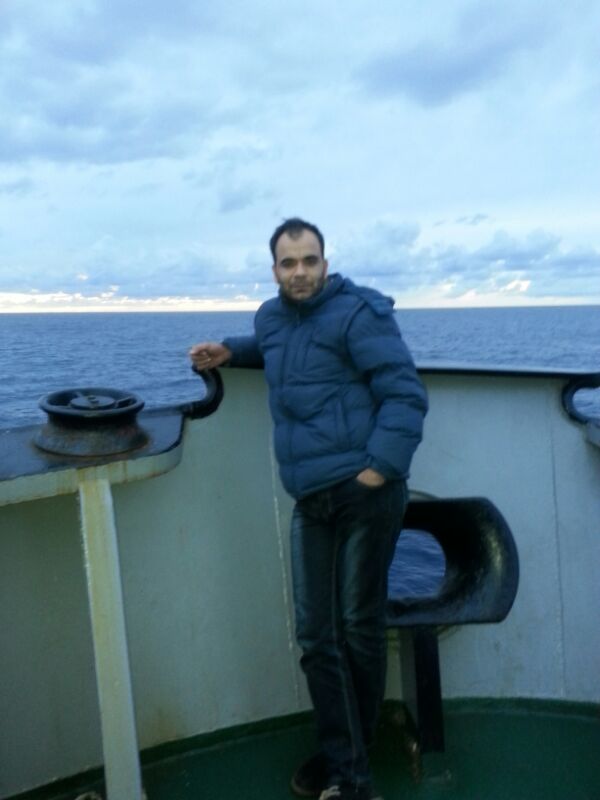
A Syrian in Saarbrucken

“Politics is all about interests, everyone knows this of course,” said Muhammad, his earnest brown eyes looking directly into mine. “But none of us imagined it would end like this.”

In those intelligent philosophical eyes I could see echoes of Ramzi Read more…

How to get a German passport

Muhammad Yassin passport Germany

Every year over 40,000 migrants arriving in Germany do a German citizenship test. 33 questions have to be answered, of which at least 17 must be correct.

Here is a sample of the types of questions, carefully and cleverly chosen to highlight key differences between how the autocratic societies from which many migrants are likely to have come function, and how German society functions.

Question 1:

In Germany people are often allowed to say something against the government because…

A  There is religious freedom here.

B  People pay taxes.

C  People have the right to vote.

D  There is freedom of opinion here.


Question 2:

What is compatible with the German constitution?

A  Corporal punishment.

B  Torture.

C  Death penalty.

D  Punishment by fine.


Question 3:

Two friends want to go to an open-air swimming pool. Both are dark-skinned and are therefore not allowed in. Which right has been violated in this situation? The right to…

A  Freedom of opinion.

B  Equal treatment.

C  Freedom of assembly.

D  Freedom of movement.


Question 4:

Which right belongs to the basic rights which are guaranteed according to German constitution:

A  Freedom of belief and conscience.

B  Maintenance.

C  Work.

D  Accommodation.

Question 5:

What does it not say in German constitutional law:

A  Human dignity is sacrosanct.

B  Everyone should have the same amount of money.

C  Every person is allowed to give his opinion.

D  Everyone is equal before the law.


Question 6:

Elections in Germany are free. What does that mean?

A  One can accept money to vote for a specific candidate.

B  Only people who have never been in prison can vote.

C  The voter cannot be influenced or forced to vote for a particular candidate.

D  All people entitled to vote must cast their vote.


Question 7:

Where in Germany do you go to inform yourself about political topics?

A  Security department of the local municipality.

B  Customer head office.

C  National head office for political education.

D  Churches.


Question 8:

What kind of living is not allowed in Germany?

A  A man and woman are divorced and live with new partners.

B  Two women living together.

C  A single father living with his two children.

D  A man married to two wives at the same time.


Question 9:

What does one need in Germany for a divorce?

A  The consent of the parents.

B  A doctor’s certificate.

C  The consent of the children.

D  The guidance of a lawyer.


Question 10:

A young woman wants to get her driving licence. She is afraid of the test because German is not her mother tongue. What is right?

A  She must live in Germany at least 10 years before she can get her driving licence.

B  She cannot get her driving licence if she does not know German.

C  She must get her driving licence in the country of her mother tongue.

D  She can perhaps do the theory test in her mother tongue. It is on offer in more than 10 languages.

(Source: The Rhein-Neckar Zeitung of 25/26 July 2015)

Related posts:

A successful Syrian asylum seeker in Germany:

http://www.bbc.co.uk/news/magazine-33817958

From Our Own Correspondent BBC Radio 4 http://www.bbc.co.uk/programmes/b063y63k (starts at 7 minutes in)

Muhammad Yassin Mersin boat4


Germany granted asylum to over 41,000 in 2014, more than 30,000 of them Syrian. Britain has taken 187 Syrian refugees to date, 1.5% of Germany’s acceptance rate.

http://www.bbc.co.uk/news/world-europe-24583286

http://www.independent.co.uk/news/uk/politics/david-cameron-says-britain-will-accept-just-a-few-hundred-more-syrian-refugees-despite-4-million-looking-for-new-home-10332104.html

The “Iranification” of Syria

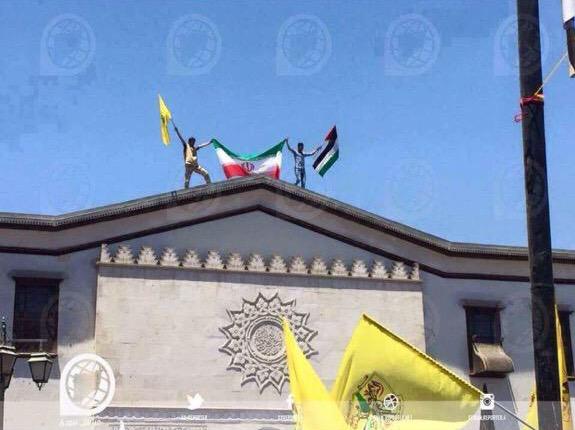
Iranification of Syria Iranification of Umayyad Mosque

The pictures say it all. Iranian and Shia militia flags are now paraded in the spiritual heart of Damascus, the magnificent Umayyad Mosque, using the legend that the head of Hussein, martyred at Kerbala in 680AD, was buried here beneath a shrine in the eastern precincts.

Iran’s involvement in Syria used to be discreet but these days it is blatant. The ‘Iranification’ of Syria is gathering pace, almost as if it is a race to seize as much as possible before its puppet Assad regime collapses. Iran may be prepared to sacrifice chief puppeteer President Bashar al-Assad and his corrupt elite, but under no circumstances is it prepared to surrender its vast economic investment in Syria, or more precisely, in regime-controlled Damascus and the “Shia crescent” that links to the coast via Hizbullah heartlands in Lebanon.

The most recent manifestation of this open determination to control Syria’s capital is the forced confiscation of hundreds of acres of land around the Iranian Embassy in the western suburb of Mezzeh.

iranification of mezzeh

Dubbed “Iranian Towers”, the scheme is tantamount to changing the demographic of this entire neighbourhood of Damascus. Residents displaced by the eviction order, mainly Sunni families on low incomes, are reported not to have been offered compensation. Evidently the opinions of such people will count for nothing in the Syria of the future which Iran is seeking to engineer.

On my recent visit to Damascus to retake my house from war profiteers, Iranian influence was already evident behind the scenes. Friends and neighbours in the Old City told me that the CCTV cameras along Al-Amin Street, a Shia quarter, had been installed by Iran, and the only building projects underway were all known to be Iranian-funded. Wealthy Iranians are also distorting the property market by buying up prestige homes in the affluent areas including the Old City, especially near Shia shrines like Sayyida Rouqqaya. Among ordinary Damascene residents the strong perception is that Iran is increasingly pulling the strings behind the facade of the Assad regime: as the regime weakens, Iran is taking advantage.

Masquerading as religious affinity between Shia Iran and Alawi-ruled Syria, this relationship has never been anything other than a marriage of convenience. It began when Syria supported Iran in the Iran-Iraq War back in 1980 to spite Saddam Hussein. But these days the partnership has become so unequal it is more like a master/slave relationship, one of total dependence.

Since the 2011 Syrian uprising the Iranian government has been maintaining the Assad regime in power by supplying riot control equipment, intelligence monitoring techniques, snipers and oil to sustain its war activities. Using experience honed during its own 2009 Green Revolution, Iran developed  the world’s most sophisticated “cyber-army” technology in the world after China. Assad’s shabiha paramilitary forces were trained by Iranian militia, and General Qasim Sulaimani (commander of the Iranian clandestine Quds Force) personally masterminded Syrian military strategy and oversaw the creation of the volunteer reserve “National Defence Forces” (NDF) modelled on the Iranian basij paramilitary force.

Qasim Sulaimani

In early June this year General Sulaimani deployed thousands of extra Iranian, Afghan and other foreign fighters round Damascus to protect the city after ISIS victories in Palmyra and Deir ez-Zour left it vulnerable. Reports of the numbers range between 7,000 and 15,000. Iranian President Hassan Rouhani has publicly announced Iran will support the Damascus regime “till the end of the road”, not for ideological reasons, but because he knows that the current weakness and dependence of the Syrian regime means that Iran can secure political and strategic goals that had previously been out of reach.

With the announcement of the new nuclear deal and its accompanying sanctions relief, Iranian investment and wealth is set to soar. Iran has been described as the ‘world’s largest untapped market’ by British business guru Martin Sorrell and it boasts the world’s third largest oil reserves. Already major oil companies have visited Tehran to discuss the future of Iran’s oil industry.

Will Iran divert large amounts of this new wealth to fund its military activities in Syria, to protect its investment? Almost certainly, which makes it more and more likely that Iran will be enlisted by the P5+1 (the US, UK, France, Russia, China plus Germany) to fight ISIS, a common enemy to them all, inside Syria and to jettison Assad, but leaving Iran’s investment in Syria intact. It is almost certainly part of the deal. In this latest twist of the game, the Syrian people are again helpless pawns on the chessboard, with the big international players moving their pieces around to fit their own economic and political interests as ever.

Related articles: 

http://www.alaan.tv/news/world-news/133872/starting-iranian-project-demographic-change-damascus-syria

http://syrianobserver.com/EN/News/29389/Resentment_Soars_Shiite_Militias_Flood_Damascus/

https://www.alsouria.net/content/%D8%B5%D8%AD%D9%8A%D9%81%D8%A9-%D9%85%D8%B4%D8%B1%D9%88%D8%B9-%D8%A5%D9%8A%D8%B1%D8%A7%D9%86%D9%8A-%D9%81%D9%8A-%D8%AF%D9%85%D8%B4%D9%82-%D9%8A%D9%87%D8%AF%D8%AF-%D8%A8%D9%87%D8%AF%D9%85-%D9%85%D9%86%D8%A7%D8%B2%D9%84-%D9%85%D9%84%D9%8A%D9%88%D9%86-%D9%85%D9%88%D8%A7%D8%B7%D9%86

http://www.haaretz.com/opinion/.premium-1.664456

https://now.mmedia.me/lb/en/NewsReports/565473-damascus-residents-displaced-for-iran-project-report-says

http://www.alaraby.co.uk/english/news/2015/6/24/syrias-economy-lies-in-tatters-says-uk-report

http://www.alaraby.co.uk/english/news/2015/6/25/iranian-oil-fuels-syrian-regimes-war-machine

http://www.alaraby.co.uk/english/comment/2015/6/16/body-bags-from-syria-and-irans-state-of-denial

http://www.irishtimes.com/news/world/middle-east/iranian-fighters-go-to-syria-to-help-defend-damascus-1.2240812


Is there a grand American/Kurdish plan in Syria?

Arab families returning to Tel Abyad

Arab families returning to Tel Abyad

Events are moving very fast in northern Syria, so fast it is hard to keep track of all the different threads and what they mean. But one thing seems clear – the Americans and the Kurds are working together because their interests coincide. The Americans want a ground force with whom they can coordinate air strikes to push back ISIS, and the Kurds want to control and link up their three separate cantons along the Turkish border. So far so good, but what is the deal they have struck with each other?

Following the surprisingly quick fall of Tel Abyad to the Kurds last week, their YPG forces have now sped south and taken the town of Ain Issa from ISIS control, along with the nearby military base of Brigade 93 and surrounding villages. It is a half-way point to Raqqa, ISIS headquarters, just 50km further south, so have they really agreed to take on ISIS in its heartland, aided by US air strikes? Such a move would be highly audacious and unless the Americans  already have intelligence that Raqqa is not as strong as it projects itself, would inevitably cost many Kurdish lives. The Kurds would want a big reward for such a project. What might that be?

Ain Issa  is also at a junction of roads heading northwest across the Euphrates near the medieval castle of Qal’at Najm, towards Manbij and Jarabalus, a region the Kurds would have to control if they wanted to link up with their third and most isolated canton of Afrin, northwest of Aleppo. Is that a realistic ambition?

The biggest question is whether or not a grand but as yet undeclared American strategy in the region has now been formulated, using their willing Kurdish partners on the ground to strike at the heart of ISIS in Raqqa and deal it a blow from which it may struggle to recover. With its main supply routes via the Turkish border cut off at Tel Abyad and the Kurds increasingly controlling the Turkish/Syrian frontier areas, ISIS may indeed suddenly be vulnerable at its heart. If Raqqa were to fall the blow to ISIS PR and its image of invincibility would be massive. How deep into Syria’s non-Kurdish territory might the Kurds be persuaded to go? As far as Palmyra for example, just two hours’ drive south from Raqqa?

The picture is confused by many factors. How will the Kurds be received in predominantly Arab areas when there is a clear perception that their YPG forces have been conducting some ‘ethnic cleansing’ exercises in Tel Abyad and other towns they have taken? Arabs are said to feel unwelcome in Rojava, yet Al-Jazeera TV has shown pictures of some Arab families returning to their unlooted homes, even being reunited with their abandoned livestock.

Then there is Turkey’s position, now even more confused by the recent election results, giving more parliamentary representation to the Kurds than at any other time in their history. Today is the first day that efforts to form a ruling coalition are starting in Turkey, with President Erdogan and his dominant AK party increasingly hysterical about the dangers emanating from the strengthening of the Kurds along the Syrian border. Were the Kurds to succeed in joining up their three cantons of Afrin, Kobani and Hassakeh the consequences for Turkey would be considerable: it would put paid to their hopes of a no-fly zone along the border inside Syria and might even permit the Kurds to open up a corridor for an oil pipeline to the Mediterranean from Iraqi Kurdistan. Maybe this is even what has been promised to them by America as their reward for combating Islamic State.

The future of such grand schemes will depend above all on the ability of the Kurds to win over the other ethnic groups with whom they share this territory – Arabs, Turkmens, Syriacs, Chaldeans, Armenians, Chechens. They must prove that their declared intention – to build a democratic life free from race, religion and gender discrimination – is mirrored in their actions. Let us hope that at least is part of the deal.

Related articles:

http://www.al-monitor.com/pulse/originals/2015/06/turkey-syria-kurdish-corridor-in-the-making-kobane.html

http://www.bbc.co.uk/news/world-middle-east-33234648

http://www.alaraby.co.uk/english/news/2015/6/23/syrian-kurds-seize-raqqa-military-base-from-islamic-state

ISIS Road to Damascus starts at Palmyra

OLYMPUS DIGITAL CAMERA

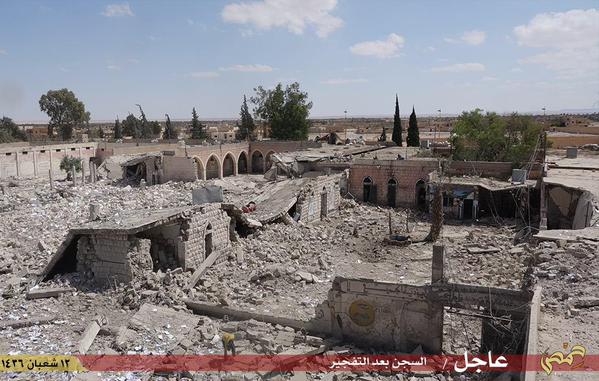
ISIS has confounded its critics. Instead of dynamiting the priceless temples and colonnades of Palmyra, Syria’s most visited UNESCO World Heritage site, it has blown up the cells and torture chambers of nearby Tadmur prison, Syria’s most powerful symbol of Assad regime brutality. Palmyra’s prison, synonymous with suffering in the minds of Syrians, represents perhaps more than any single building in Syria, the 40-year Assad stranglehold on its people.

Tadmur prison

This carefully staged PR coup will have gained it many friends, even from among those who would have thought themselves anti-ISIS. It is like a loud fanfare announcing: Beware, Bashar, your days are numbered and we are on our way to get you.

Think of the wealth that ISIS now has at its disposal through its capture of Palmyra. With the prize of the ancient city came other prizes: the oilfields to the north and the military hardware captured from the regime’s nearby airbase, T4, thought to include 21 tanks, 12,000 machine guns and 40 ammunition stores. Then came capture of the last regime-held border crossing into Iraq, at al-Tanf due east of Damascus with its own road linking into the Palmyra highway to the capital. And don’t forget the sheep. The Sunni tribes of this Syrian semi-desert steppeland, known as Badiat ash-Sham, still number around one million, and are mainly nomadic Bedouin from the Rwala, Beni Sakhr and Beni Khaled tribes. Syria was one of the first lands to be inhabited by the Bedouin outside the Arabian Peninsula and today these Bedouin still rear most of Syria’s sheep, considered the tastiest in the Middle East. Every year 10 million of them are exported to Saudi Arabia, earning high yields.

badia sheep bedouin

Four centuries before the advent of Islam the historic oasis city of Palmyra grew wealthy from the taxes it levied on goods transiting the Silk Road via camel caravans. The highest taxes, according to the famous bilingual Greek/Aramaic ‘Palmyra Tariff’ stone, were due on perfumes, dried fish, olive oil, water and prostitutes. Now ISIS has captured today’s equivalent wealth for itself – oil, military equipment, sheep plus potential extra manpower from the local Sunni tribes. In addition it will no doubt harvest the archaeological site for artefacts, levying its usual 20% tax on anything dug up from the outlying areas.

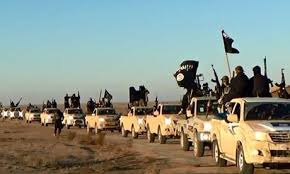
Armed with all Palmyra’s many forms of wealth, ISIS sees the open road to Damascus, to the exposed heart of the Assad regime.

isis on move

There are few settlements en route, just two more airbases where even more military hardware can be harvested. Inside Syria ISIS has seen that the international community is impotent, with no unified strategic policy, while Assad’s army is in retreat.

The world’s media pours out articles eulogising the ruins, while ISIS thrives like a germ in the perfect environment on the chaos deep inside Syria. May the world’s attention remain focussed on Palmyra long enough to understand that until Syria’s chaos is solved, ISIS will multiply exponentially and grow beyond anyone’s ability to stop it. Damascus is in their sights and Palmyra has been their launchpad.

Related posts:

Palmyra’s Double Life

Palmyra’s legacy to ISIS


Palmyra’s legacy to ISIS

OLYMPUS DIGITAL CAMERA

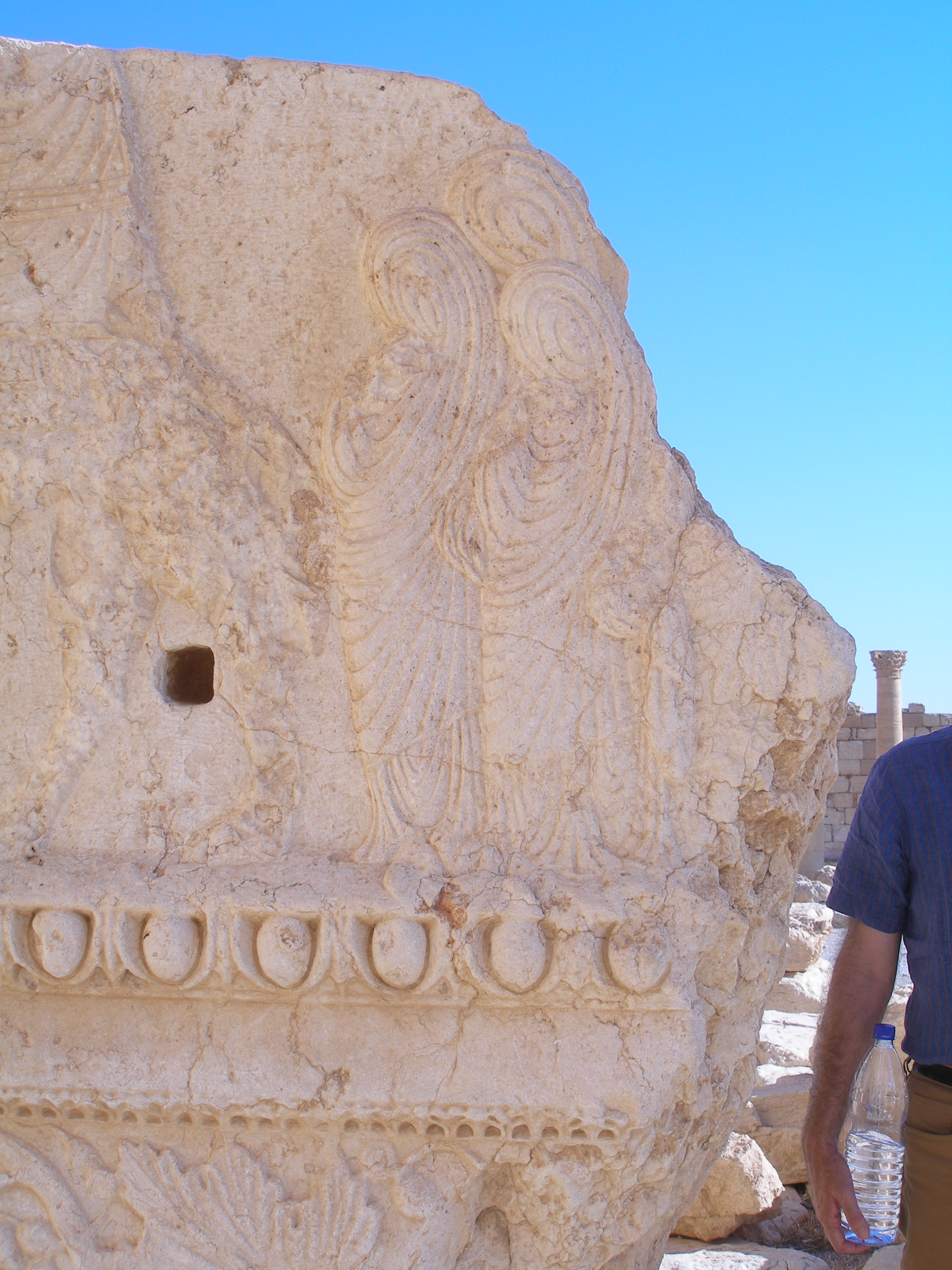
This carved block at Palmyra pre-dates the advent of Islam by four centuries, and is thought to show the world’s earliest representation of veiled women, top right. It is one of the countless examples of how practices we now consider Islamic were often traceable to pagan times.

The early Muslim armies captured Damascus in 636 just four years after the death of the Prophet Muhammad, and went on to make it the capital of their Umayyad Caliphate. It was the first encounter Muslims had with cultures of the Eastern Mediterranean and Mesopotamia, cultures which were themselves the products of rich intermingling of Babylonian, Assyrian, Egyptian and Persian influences and which had in turn been under Greek and Roman influence for centuries. Commerce, as ever the driver of human inter-action, was thriving as new trade routes evolved, while religious and cultural trends co-existed.

The Umayyad Caliphate, far from seeking to ban or wipe out this multicultural heritage of earlier empires and civilisations, simply took over the existing infrastructure from the previous Byzantine and Sassanian rulers, going on to develop its own unique contribution to the art and architecture of the region. The Umayyads absorbed and adopted the customs of the cities they conquered. With the fall of borders, they unified the region thereby encouraging additional cross-fertilisation of ideas and artistic traditions. The results can be seen in all their buildings, from Jerusalem’s famous Dome of the Rock to the lesser known desert palaces like Mushatta (see photos below) and Khirbat Mafjar now scattered all over the deserts of Jordan, the West Bank and Syria.

Mshatta facade 2mshatta facade

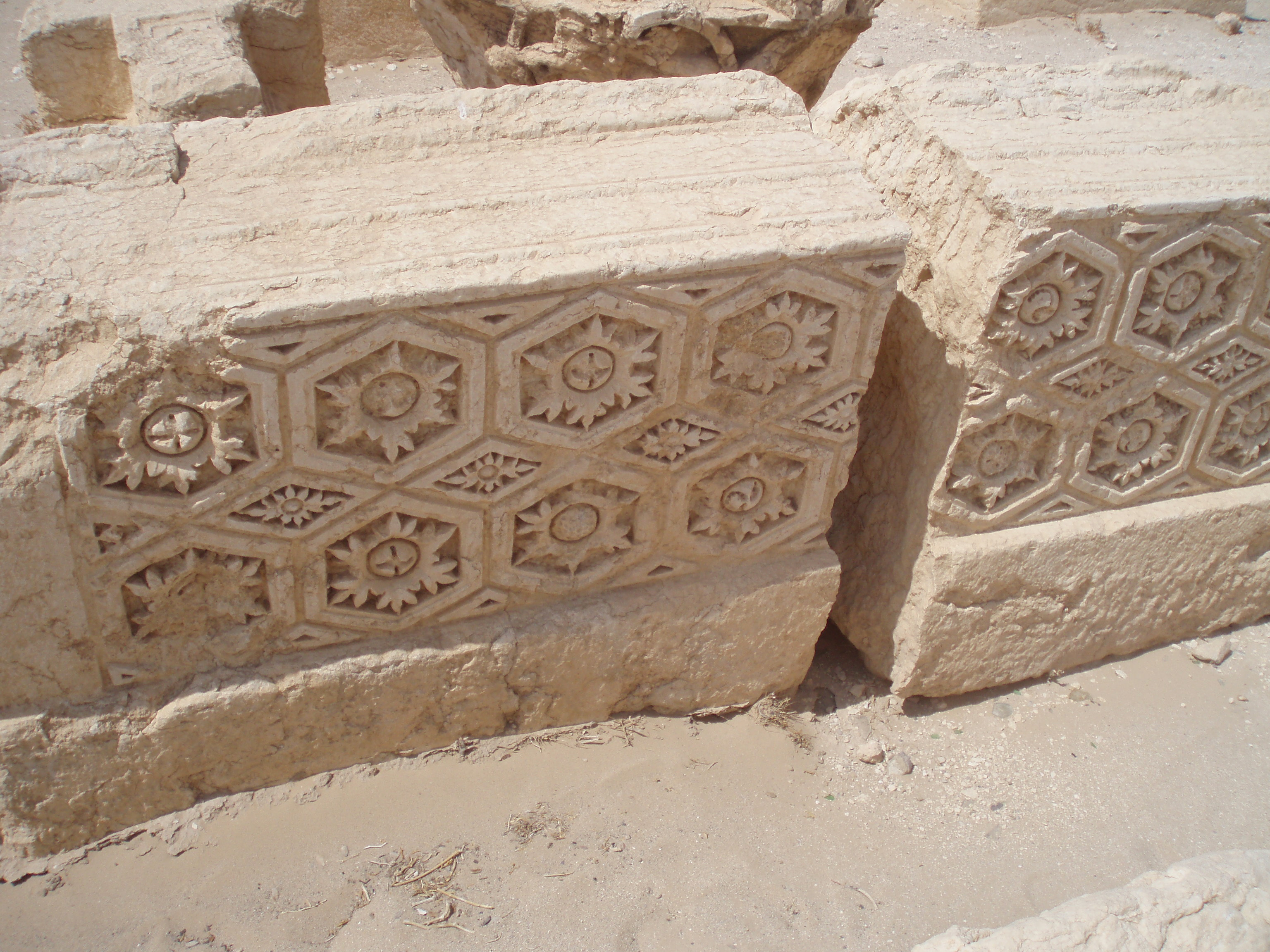
When it comes to the case of Palmyra, this rich cultural legacy is especially clear. The carved stone blocks carry motifs of flowers, including the famous Palmyrene Rose, ringed with acanthus and lotus leaves.

OLYMPUS DIGITAL CAMERAOLYMPUS DIGITAL CAMERAOLYMPUS DIGITAL CAMERA

The Palmyra drawings by English architects Wood and Dawkins went on to influence directly the classical revival of the 18th century, where Palmyrene roses are often to be seen on the ceilings of grand British country houses.

The Umayyad desert palace of Qasr al-Hayr al-Sharqi which stands in the desert some 100km northeast of Palmyra, has a mosque which incorporates columns and capitals brought from the site of Palmyra. The architecture of its monumental gateway displays an eclectic mix of Byzantine, Mesopotamian and Persian styles, with many recycled Roman and Byzantine capitals. Its twin, Qasr al-Hayr al-Gharbi, which lies in the desert  80km southwest of Palmyra, likewise boasted a monumental 8th century facade, now incorporated into the modern entrance of the Damascus National Museum.

OLYMPUS DIGITAL CAMERA

These fusions are clearly visible in the vine scrolls, the bunches of grapes symbolising wealth, fertility and prosperity in both the stone carvings of Palmyra and the decorative patterns of the Umayyad palaces, not to mention later Islamic tile patterns.

OLYMPUS DIGITAL CAMERAOLYMPUS DIGITAL CAMERA

Mythical creatures like griffins, together with birds like peacocks and eagles, animals like gazelles and lions are often found entwined in the Tree of Life, an ancient concept pre-dating Islam by centuries, yet all such motifs are still found on the borders of prayer rugs across the Muslim world. If ISIS claims that such things are idolatrous, it would also have to destroy most of the Islamic carpets and tiles of the Middle East.

And what of the many mosques across the Muslim world that were built on the foundations of earlier churches and temples, such as the Umayyad Mosque of Damascus?

OLYMPUS DIGITAL CAMERAOLYMPUS DIGITAL CAMERA

Would they too have to be destroyed, like these early Islamic mosaic visions of fantasised trees and palaces?

In the nihilistic vision of ISIS there is, it seems, no room for diversity. They have set their course on the total destruction of relics from earlier cultures, thereby denying the roots of the very Islamic civilisation to which they claim to be returning. By destroying Palmyra, they will be destroying their own roots, ensuring their own eventual downfall, since a caliphate devoid of culture cannot endure. What a perfect contradiction.

Palmyra’s Double Life

OLYMPUS DIGITAL CAMERA

[DD]

Nothing sums up Palmyra’s split identity more than this ‘egg and dart’ motif, found repeatedly all over the ancient caravan city’s ruins. The egg represents life and the cycle of rebirth, while the arrow/dart represents war and death. The two live side by side in the endless pattern of life, repeated across the centuries.

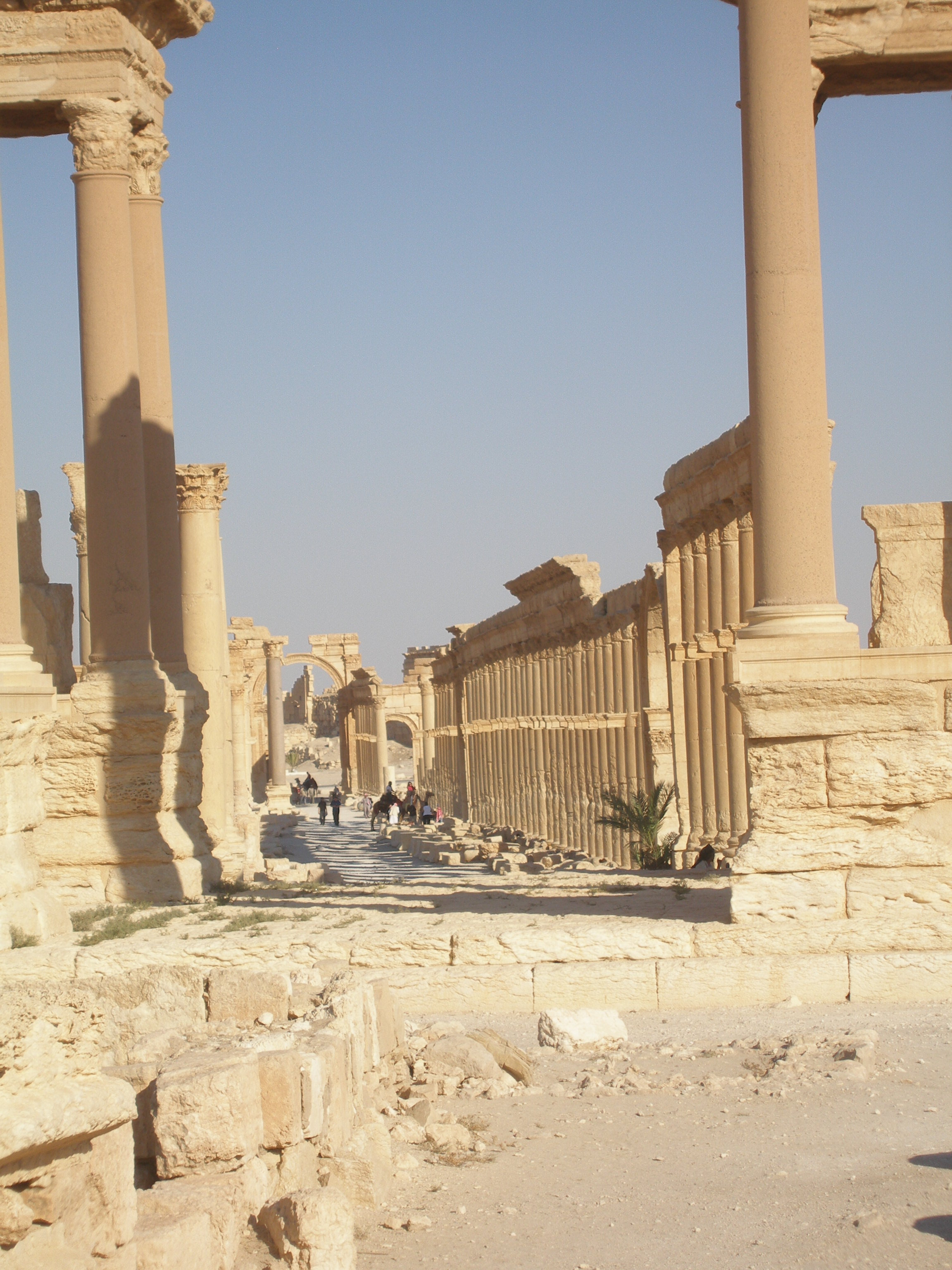
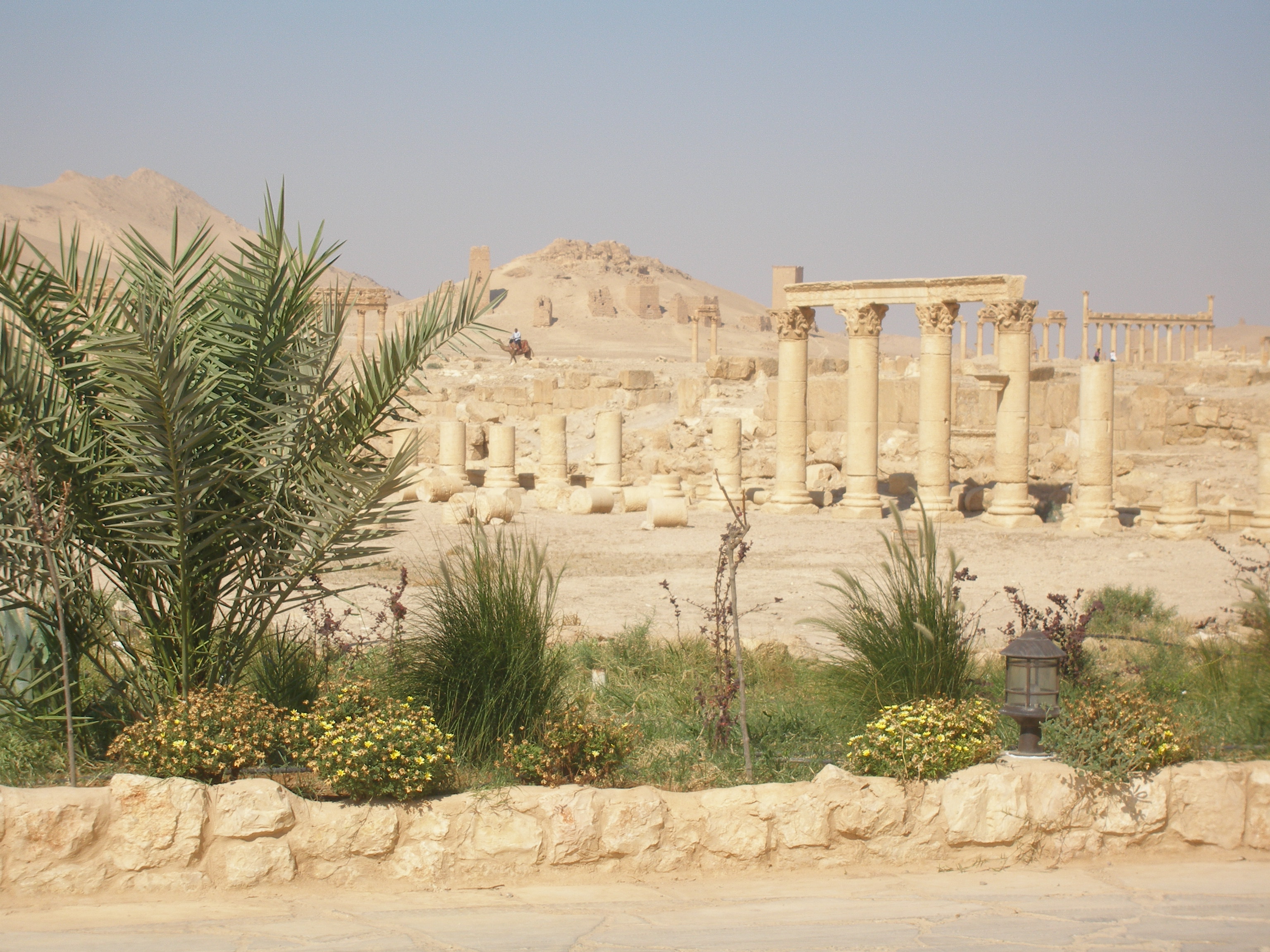
This is what is now taking place at Syria’s most famous and magnificent classical site, known throughout antiquity by romantic titles such as ‘Bride of the Desert’ or ‘Venice of the Sands’. In recent days, since news broke on 14 May 2015 of ISIS’s surprise attack launched on Palmyra from its headquarters of Raqqa just 100 miles/two hours’s drive to the north, the site has received worldwide attention with outraged cries of horror at the prospect of ISIS smashing the ancient stones to pieces as they have already done in the Iraqi sites of Nimrud, Nineveh, Mosul and Hatra. Almost every media outlet in the world has carried photos of the spectacular 1st, 2nd and 3rd century Roman streets, its temples and its tombs.

OLYMPUS DIGITAL CAMERA

[DD]

OLYMPUS DIGITAL CAMERA

[DD]

Standing alone in the middle of the desert, unfenced and unprotected, Palmyra is indeed vulnerable to attack. But take a close look at this photo below:

OLYMPUS DIGITAL CAMERA

[DD]

A pair of camels sit awaiting custom in the shade of Palmyra’s monumental entry arch. Behind them is the Temple of Bel, one of the world’s most important religious sanctuaries. But just above the left-hand camel, notice the whitewashed simple building. Originally built as the residence of the Ottoman governor of Palmyra, it functioned in the heady pre-2011 tourist days when Palmyra welcomed thousands of visitors, first as a folklore museum with displays of traditional Bedouin costumes and jewellery, then as the Tourist Reception Centre complete with cafe in the courtyard.

But since 2011 this building has served as the regime’s intelligence (mukhabaraat) headquarters, and it is to here that Assad’s soldiers first fled, after being driven out of their local state security branch in the north of the modern town (known in Arabic as ‘Tadmur’). As fierce fighting raged round the northern security buildings and close to the infamous Tadmur prison in the east, the top regime officials cut their losses and escaped west by road, abandoning their men to the tender mercies of ISIS. Also close by are valuable oil and gas fields, another primary target of ISIS.

Consider for a moment the irony of the situation. While the world’s attention is commanded by the international outcry over the threat to the ancient ruins of Palmyra, they will now learn too of the double life of Palmyra, its modern life under the Assad regime. Palmyra Prison, Syria’s most feared by its citizens, was home for years to men such as Yassin al-Haj Saleh (subject of a 2014 film ‘Syria Our Terrible Country’) and Bara Sarraj (‘From Tadmor to Harvard’ 2011), men who had done nothing to deserve the horrific torture they endured inside the prison. Bara’s unbelievable experience can be digested here:

http://www.jadaliyya.com/pages/index/3500/the-cell-of-survival_bara-sarraj

The prison was closed in 2001 but reopened in 2011 to receive new dissidents of the Revolution. Hundreds if not thousands are once again housed in the buildings originally built as military barracks by French Mandate forces. Once the prison is captured by ISIS, will the inmates join up in gratitude and swell their armies further?

Palmyra prison

Whereas Assad had hoped to gain kudos by presenting himself to the international community as a protector of Syria’s cultural heritage, the ISIS attack has instead exposed the ruthless accoutrements of his regime. Assad soldiers have been photographed running off with their own booty from the Palmyra site:

Palmyra looting Assad soldiers

They, like ISIS, have always seen such treasures as legitimate ‘spoils of war’, and no one has done more damage to Syria’s cultural heritage than the Assad regime. The difference is that while ISIS broadcasts its damage to the world, the Assad regime keeps it quiet and seeks to blame it on others.

Palmyra map

But thanks to the double-sided nature of Palmyra, the world will no longer be fooled.

Related articles:

http://www.apsa2011.com/index.php/en/provinces/homs/palmyra.html

http://www.wsj.com/articles/syrian-monuments-men-race-to-protect-antiquities-as-looting-bankrolls-terror-1423615241

http://www.bbc.co.uk/news/world-middle-east-32807858

http://www.thesundaytimes.co.uk/sto/news/world_news/Middle_East/article1557098.ece

Two Women of Mardin v ISIS

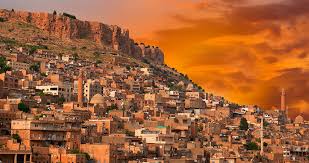
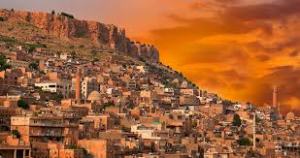
mardin buildings

Mardin, a stone-carved historic hillside city in southeast Turkey whose buildings gaze south towards Syria and the Fertile Crescent, boasts two famous women.

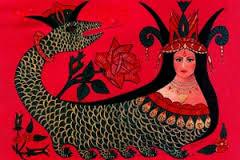
The first is the colourful Shahmeran, half-woman half-snake, a legendary creature from the shared mythology of ancient Mesopotamia. Pictures of her bold green and red image adorn the streets.

sahmeran

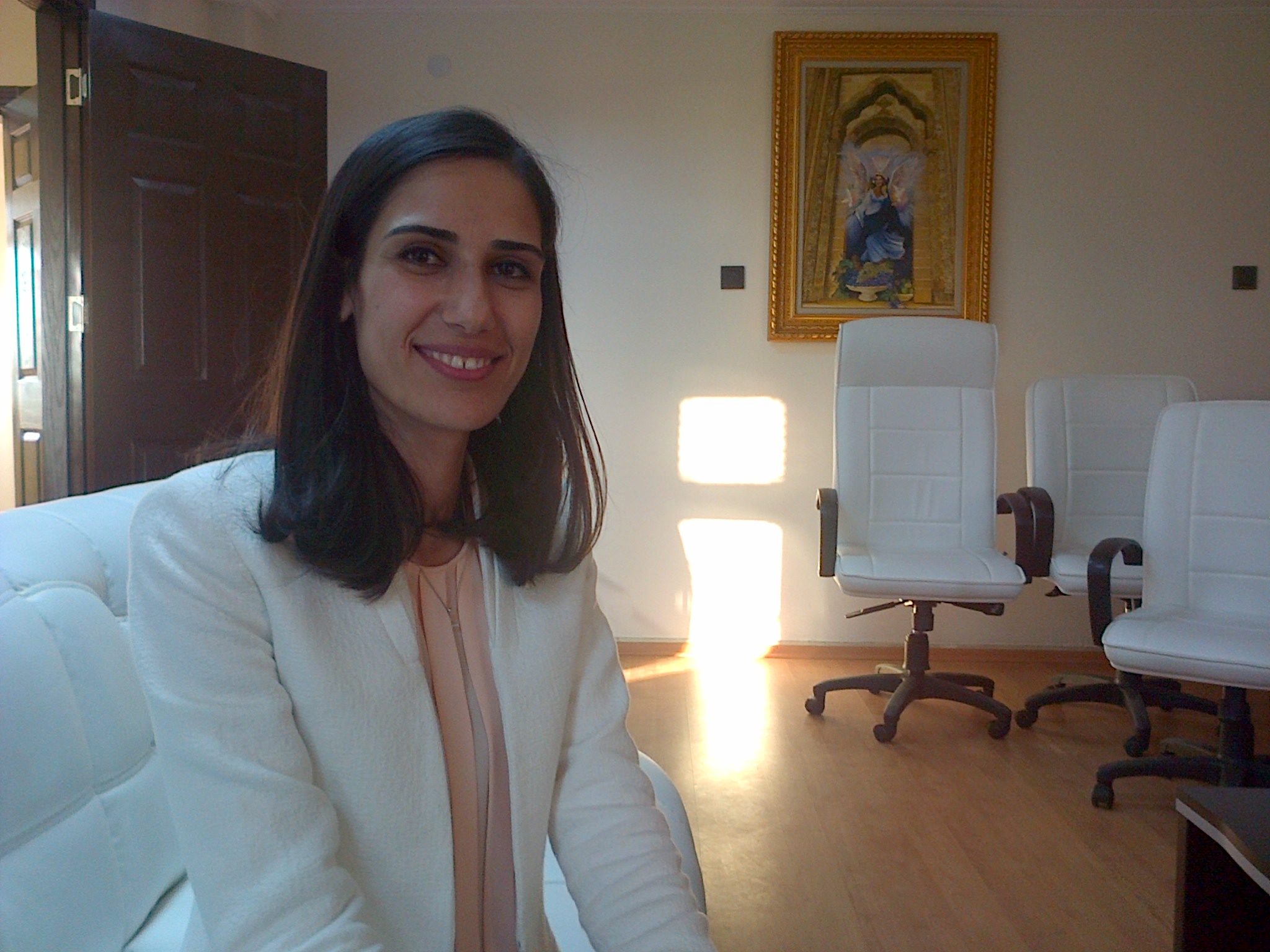
The second is a much younger addition to the city’s history, the 26 year-old co-mayor, Februniye Akyol. Shy and self-effacing, dressed simply in a white jacket, she is the first representative of the ever-dwindling Syriac Christian community to govern one of Turkey’s metropolitan municipalities.

She has agreed to a rare interview, and we sit together on the elegant white sofa of her Mardin office.

Mardin mayor April 2015

Earlier I had watched her give a refreshingly brief speech to assembled bigwigs, marking the official rehabilitation of the city’s main street, a 9.2 million euro project funded by the European Union to promote tourism. Mardin, already part of a United Nations-backed scheme for a Silk Road cultural corridor, is nothing if not ambitious. Next it plans to become a “City of Peace”, hoping eventually for UNESCO World Heritage status.

As for Februniye, who had to change her Syriac name of Febronia Benno to a ‘turkified’ version to enter Turkish politics, her success was not so planned. “I never expected this career,” she tells me softly. “In the 1990s growing up as a child in this region, we experienced terrible times, persecution, the rape of women.  Our situation was very bad. My father was arrested. For 16 days we didn’t know where he was. It affected me deeply.”

As the first woman from the local Syriac minority to go into higher education, attending Istanbul’s Marmara University in the Faculty of Insurance, she has now become a role model. Most Syriac graduates use their studies as an escape route for emigration to Europe. Instead, Februniye returned home.

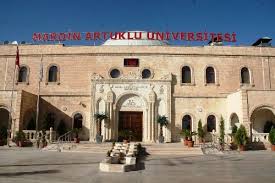
Mardin Artuklu Uni

Then, while she was doing an MA at Mardin’s Artuklu University in Syriac Cultural Studies, unique in Turkey, her political career was suddenly launched  when she was chosen, together with a respected Kurdish veteran, to run for the BBP or Peace and Democracy Party, in last year’s local elections. “It is BBP policy always to have a woman co-mayor in their municipalities,” she explains.

februniye akyol

In an overwhelmingly Muslim region of long-standing enmities between Turks, Kurds and Arabs, now further complicated by the ISIS threat on the doorstep, the task in front of Februniye is a daunting one.

“I had some prejudices against the Kurds,” she says, “but I realised I had to overcome them.” Now she is working alongside her former enemies and persecutors, promoting an ideology diametrically opposed to ISIS with its subjugation of women and violent intolerance of minorities.

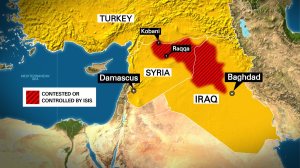
“Isn’t this the same system the Syrian Kurds are using,” I ask her, “in their provinces of Kobani, Afrin and Jazira?”
Kobani Map

“Yes,” she replies, “We are from the same families, just separated by the border. We all work together, no matter what race or religion, and have an equal quota for women on all our committees. Like them we want cultural, religious and linguistic freedoms for everyone.”

“Do you have contact with them?” I venture to ask, knowing the Syrian border is within sight of Mardin.

“Of course,” she replies with disarmingly frankness, “They come across for meetings from time to time.”

“But the border is closed. How do you manage that?”

“It can be opened when necessary,” she says simply.

Behind her delicate almost fragile appearance, I sense a steely resolve. She hands me her card and I notice her title is ‘Mrs. ’

“You are married?” I ask.

“Newly married,” she replies fingering her wedding rings as if still getting used to them.

It gives me the excuse to ask the obvious question, in this traditionally male-dominated society, where ISIS is knocking at the door:

“And how do the men feel about women sharing power?”

“They realise it has to be,” she replies, “It was even their idea.”

Strolling later past the renovated shop-fronts of Old Mardin I see the Shahmeran everywhere, in the famous jewellery, on key-rings, cushions and mirrors. I ask the shopkeepers about her meaning.

They explain how their Queen of Serpents is a source of healing and wisdom whose image reminds people to mend their ways, to shun evil and avoid betraying each other.

Mardin’s two famous women – one ancient, one young – will need to conjure all such powers here, if they are to survive the ISIS onslaught and defeat it.
sahmeran redMardin mayor 2

Syrian Kurds and their democratic model of ‘Rojava’

Rojava Syrian Kurds Saleh Muslim PYD leader

Big moves are afoot in Rojava, northeast Syria, where the Kurds are battling ISIS on two fronts. It is a clash of ideologies and will be a fight to the death, as Saleh Muslim, the softly spoken President of the PYD, Syria’s most powerful Kurdish faction, told a full house in the Houses of Parliament last night. So many people came, myself among them, that a room treble the size of the planned one had to be found.

Syrian Kurds have been largely invisible and overlooked in the media so far, but this may be about to change. Saleh Muslim’s organization, the PYD (Syrian Kurdish Democratic Union Party), was founded in 2003 to resist the Assad regime. Affliated to the PKK – the Kurdish resistance party in Turkey – the PYD is regarded as a terrorist organisation by the United States, so Saleh Muslim himself has never been granted a visa to visit and put his case. The jailed leader of the PKK, Abdullah Ocalan, last week released a statement for Newroz, the Kurdish New Year, urging his followers to abandon their armed struggle in favour of a political solution. The UK government and the Foreign Office are as usual dithering and at least six months behind the curve.

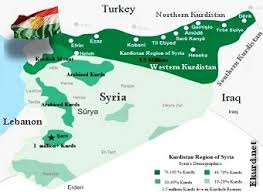
For when the Assad regime’s army pulled out of the northeast in mid-2012, the Syrian Kurds were given a once in a lifetime chance to start afresh, creating an inclusive society in which all ethnicities and religions are involved – Kurdish and Arab, Syriac, Yazidi, Sunni, Alawi and Shi’a – a society uniquely based on trust. In November 2013 they declared the self-governing region of Rojava, incorporating the three cantons of Afrin, Kobani and Jezira.

rojava map

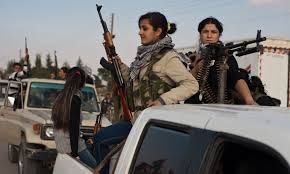
From their capital Qamishli they now rule through a series of committees all of which are made up of 40% women, with plans for this to rise to 50%. Women are represented throughout, alongside men, even in the fighting groups known as the YPG, the People’s Protection Units, a fighting force of some 50,000 fighters.

rojava female fighters

These are the same fighters who, without fuss or recognition, led the Yazidis to safety via a back route off Mount Sinjar in August 2014, the same fighters who defended their town of Kobani against ISIS. Their struggles against ISIS continue, but less reported, in the canton of Afrin north of Aleppo, and near the city of Hasakeh in Jezira.

rojava yazidis

An academic delegation to Rojava has recently returned, some of whom were also speakers at last night’s open debate. Without exception they declared themselves deeply impressed by what they found, despite the economic problems due to blockaded borders, the lack of electricity, the struggles with lack of medicine and healthcare. Rojava has established a unique democratic model in which all decisions are reached by consensus, in consultation with all groups. So far it is working remarkably well, without infighting, and frankly puts to shame the pretense of democracy in many western countries. The rich Assad regime flunkies ran away in 2012 when the Assad army pulled out, so their land and property has been redistributed.

But if this democratic pluralistic model is to survive in the region, with its emphasis on the inclusion of women at all levels, it will need help. At the moment it is succeeding in its battles against ISIS through sheer will-power and conviction. It is defending its homeland. But Saleh Muslim says he also sees their approach as the right model for the rest of Syria and indeed for the region as a whole. A massive re-education needs to go on, he says calmly, to convince people that this inclusive model is the only way forward, and the West and the international community needs to commit its support rather than standing on the sidelines dithering while thousands die needlessly. In short, there needs to be a coherent strategy, so far lacking in western governments.

rojava mourning deaths

Related articles:

http://www.al-monitor.com/pulse/security/2015/03/syria-pyd-kurds-federalism-middle-east.html

http://www.thenational.ae/world/middle-east/syria-kurds-struggle-since-battle-for-kobani

http://www.theguardian.com/commentisfree/2014/oct/08/why-world-ignoring-revolutionary-kurds-syria-isis


Syria – death of a gentle giant

Yesterday as the Syrian uprising entered its fifth year, I learnt of the death of my dearest Syrian friend. I am still numb from the news. My gentle giant is gone.  Ramzi the Philosopher, his pseudonym in My House In Damascus: An Inside View of the Syrian Revolution, died not in fighting or in a bomb attack, but from brain cancer. A complex operation to remove the tumour was carried out last September, leaving him unable to speak, read or write. His mother and sisters nursed him in their simple Lattakia flat, interpreting his noises, doing their best to comfort him. But in spite of all their efforts, he never regained the power of speech.

Cartoon of Ali Ferzat fighting with his pen against oppression, by Matt Wuerker

I see a terrible symbolism here. Syria’s silent majority is silent due to pragmatism, due to fear of the repercussions of speaking out, and due to a realisation that no one is listening to their voice anyway. But that my wise and eloquent Ramzi should have had silence imposed upon him is the cruellest of fates. With his death, part of Syria has died, the best part, for Syria has lost one of its noblest sons. His deep soft voice will never be heard again and Syria is the poorer for it.

Graves in the village of Anitli (Haho) [DD, May 2014]

Maybe his death is for the best, an end to his horrible suffering – displaced from his home three times by fighting between rival factions, Ramzi’s life had become a nightmare. Twice his village home was looted right down to the window frames. He was never political, never took up arms and hated violence. As the eldest son, when his father died some years ago, he took on the role of breadwinner to support his aging mother and his unmarried sisters through his earnings as a professional tourist guide. All who knew him loved him, and he was the guide of choice inside Syria for the top-quality Martin Randall tour operator. His love of his country was so deep it was tangible, and he conveyed this love to all foreign visitors.

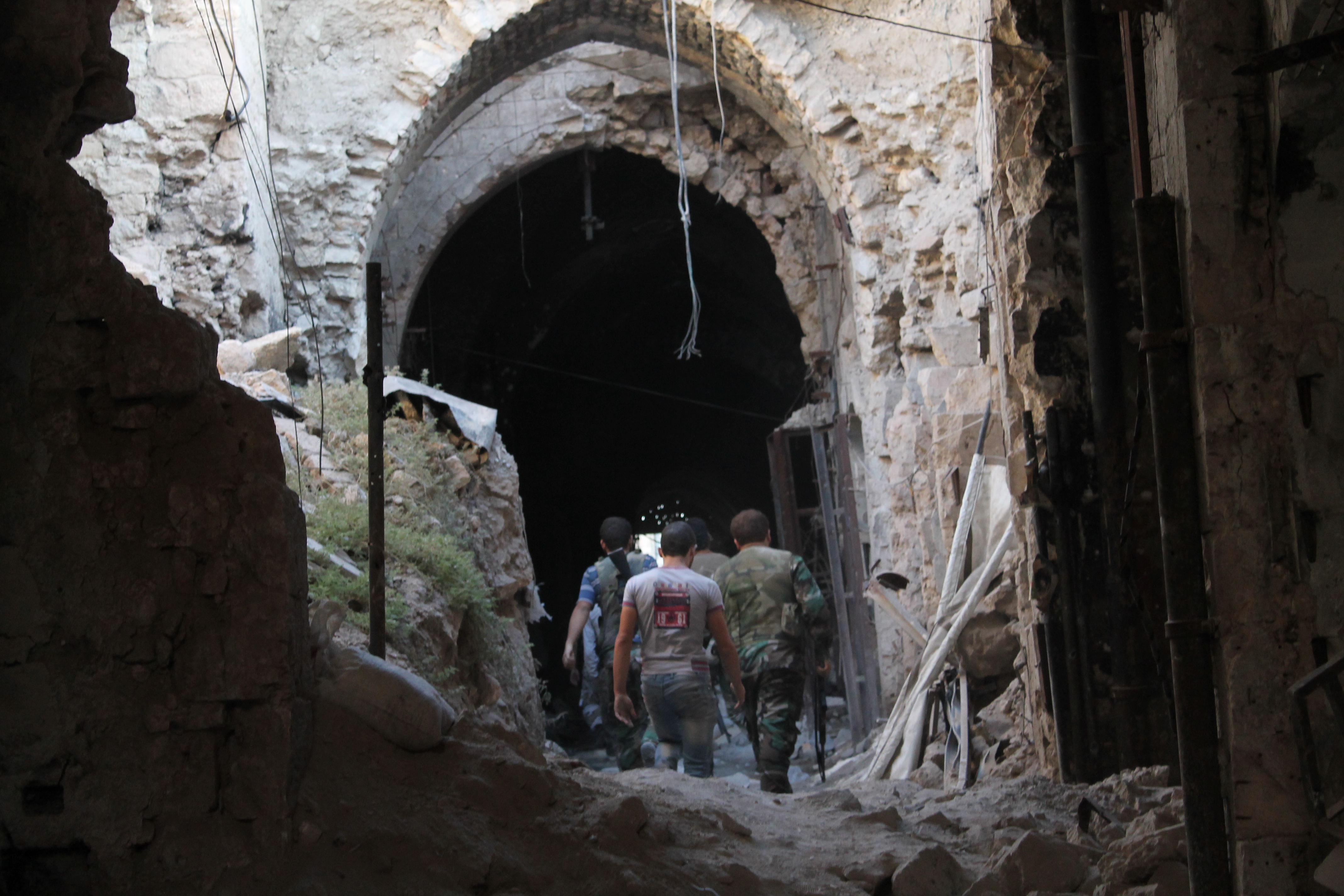
Aleppo's old souk,

When his country descended into civil war and he lost his livelihood, his heart was broken. From having been a healthy hearty man in his forties, he fell victim to cancer. What a waste. He was a silent victim, one of thousands whose deaths will never even appear in the official casualty statistics, yet unquestionably part of the unseen fallout.

All those who have the power to end Syria’s nightmare, wake up! – for the more people like Ramzi die, the harder it will be for the country ever to recover.
Deserted garden Damascus's National Museum [2011, DD]

Deserted garden of Damascus’s National Museum, where I last met Ramzi

Post Navigation