dianadarke

Syria and Turkey commentary

Archive for the category “Syria”

Rebuilding Damascus

With its future in the balance, a cultural historian looks past the corruption, violence and trauma of recent decades to the almost lost history of collaboration and shared traditions between Muslims in Syria and Christians in Europe. By DIANA DARKE [as first published 10 January 2025 in The Tablet]

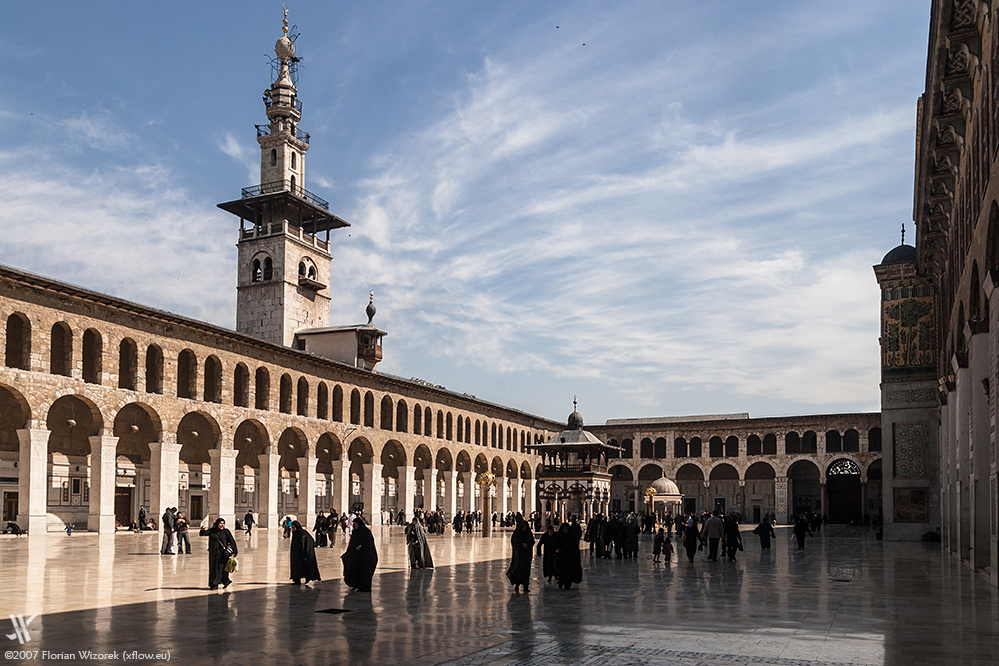
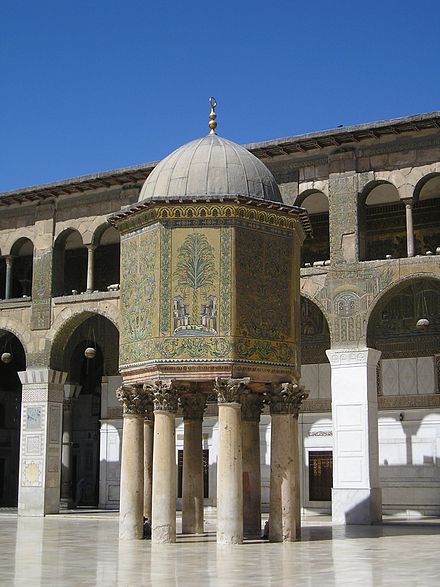
Buildings have stories to tell, in Syria none more perhaps than the magnificent Umayyad Mosque in the heart of the walled Old City of Damascus. It embodies the very soul of Syria, a sacred site where for over two millennia multiple civilisations and religions – Aramean, Greek, Roman, Byzantine and Islamic – have coalesced yet also survived in their own unique form. No surprise, therefore, that the new de facto ruler of Syria, Ahmad al-Shar’a, leader of Hay’at Tahrir al-Sham, the Organisation for the Liberation of Syria (HTS), chose to head straight there to pray after entering the city on 8 December.  

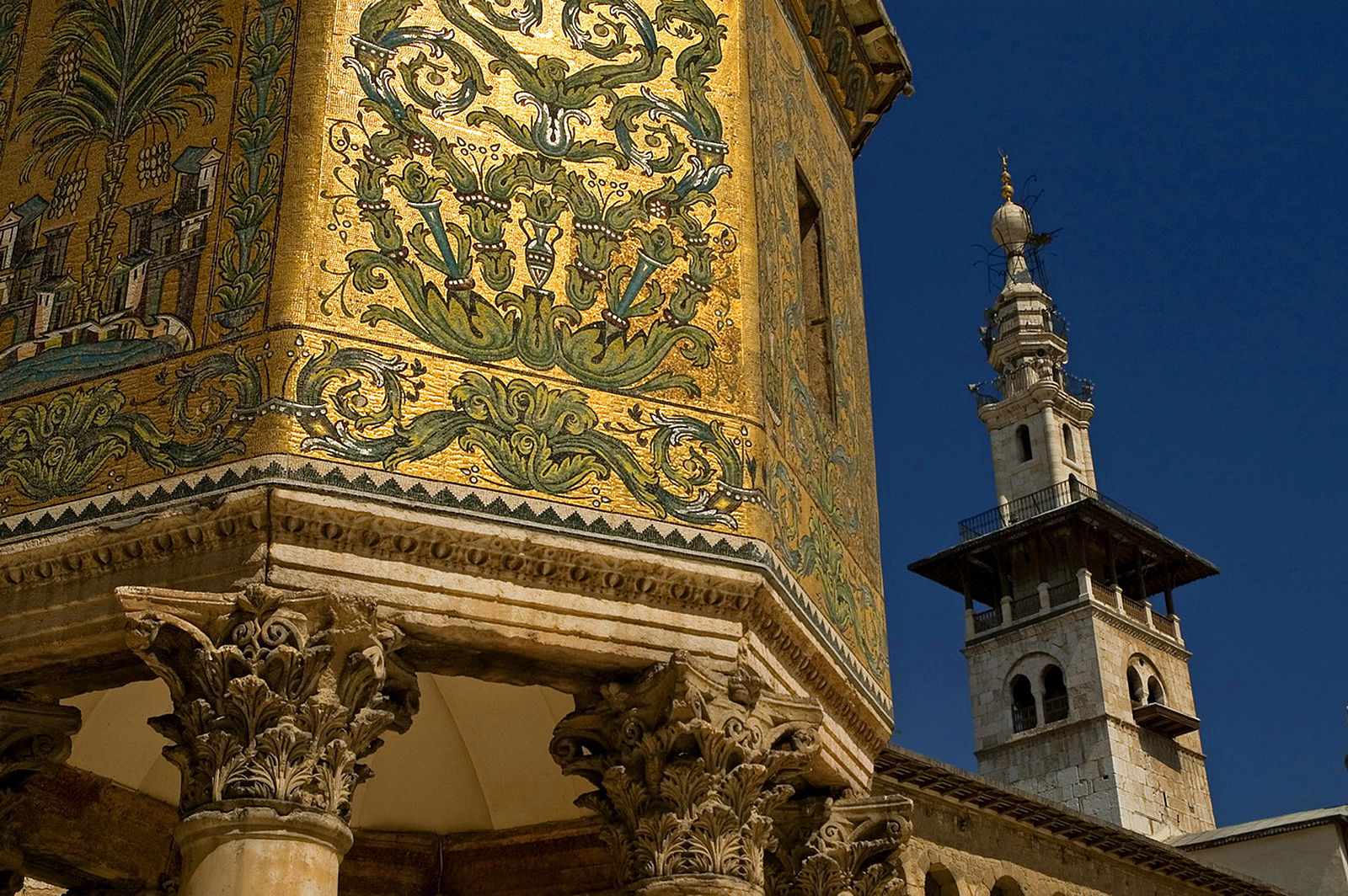
Syria has long been overwhelmingly Muslim but the Umayyad Mosque claims the heads of John the Baptist as well as Hussein, the Prophet Muhammad’s grandson. While still a cathedral, following the Muslim conquest of Damascus in 634, the building was shared by Christians and Muslims for close to a hundred years, as were the cathedrals of Homs and Hama. They were only converted to mosques once the Muslim population, small at first, gradually expanded. Top Byzantine Christian mosaicists then followed the brief of new Umayyad masters to cover the walls of the courtyard with breathtaking visions of the Islamic Paradise, timeless landscapes of fantasised trees, gardens, rivers and palaces in shimmering green and gold. 
When rulers change, life for those uninvolved in the fighting tends to continue as before. The best architects and craftsmen are summoned to work on new prestige projects, irrespective of their religion, just as the most entrepreneurial businessmen find new opportunities. It was the same in Umayyad Spain when elite Muslim craftsmen were summoned by new Christian rulers during the Reconquista, to transfer their innovative engineering technologies like pointed arches and ribbed vaulting, as well as their decorative repertoires, to prestige abbeys and cathedrals. As late as 1492 the Catholic monarchs Ferdinand and Isabella appointed a Muslim master builder to look after all royal buildings in Aragon, a position that then passed to his son. 

I bought a semi-derelict Ottoman courtyard house in Old Damascus in 2005. Full of wonder that I, as a foreigner, was able to buy a chunk of a UNESCO World Heritage site, I embarked on a three-year restoration project, guided by a Syrian architect and a team of fifteen craftsmen, experiencing first-hand the labyrinthine corruption of government and legal systems. To learn more about the house itself, I re-entered the academic world to study Islamic art and architecture. Deciphering the decorative styles of the house gave me the essential foundation for my subsequent work, connecting the almost lost history of collaboration and shared traditions between Muslims in Syria and Christians in Europe, traditions that formed the springboard for the architectural styles we know in Europe as “Romanesque” and “Gothic”.

In the new Syria of 2025 a Christian wheeler-dealer who made a fortune during the war in the transportation business is now raking it in as a high-end hotelier.  Among Aleppo’s traditional soap-making family businesses, trade is up by 80%. My lawyer, who throughout the war bemoaned the fact that most of his caseload was divorce work, is now kept busy by clients asking questions he cannot answer. Many, like me, had their houses stolen during the war by profiteers writing fabricated intelligence reports against them. By a miracle, despite being labelled a British terrorist with links to armed groups, I went back in 2014 and retook possession, evicting my previous lawyer, his mistress and baby, along with a fake general on a forged lease. 

The interim government faces huge challenges. Disentangling the different currencies, legal and education systems that operate in the different regions of Syria will take a long time. Add to that the complication of how to monitor the movements of returning refugees, as well as compiling a new electoral roll, and the three-year period Al-Shar’a suggested last week will be needed to draft a new constitution – four years for proper elections – in a unified Syria, becomes an ambitious target.  

Al-Shar’a has promised to make Syria inclusive for all, including women. The country’s central bank has just appointed its first-ever female governor. Many commentators outside the country gnash their teeth, convinced that HTS, a Sunni Islamist group once aligned with Islamic State and al-Qaeda, remains a jihadi extremist outfit similar to the Taliban. Yet at least so far, its leaders appear ready, as are the majority of  Syrians inside the country, to take Syria on a new trajectory, and seem prepared to engage pragmatically with the “international community” that failed it so badly, some elements of which even went so far as to rehabilitate Assad as if he were a fact of life, never understanding how hollowed-out his regime was, how unrepresentative of the overwhelming majority of Syrian people. 

Syrian friends forced into exile during the war (along with nearly a third of the Syrian population) are scattered across Lebanon, Jordan, Turkey, Germany, Norway and Canada. From a range of professions – architect, lawyer, hotelier, tour guide, environmentalist – not one of them was able to continue their former work in their host countries. All struggled to make new lives for themselves and they feel they have lost thirteen years of their life. Even harder to bear is how in recent years refugees from Syria have been made to feel increasingly unwelcome, the mood turning against them in their host countries as right-wing populism has risen to heights where it is destabilising Europe as well as Syria’s neighbours. Most now plan to return, to rebuild their lives and their country, bringing with them new expertise and knowledge. After Germany’s 6000-plus Syrian doctors have left, they will be missed by its aging population, their worth only recognised once it is too late. Friends who stayed also feel the last thirteen years have been wasted, their country devastated by aerial bombardment from the Assad regime and Russia, sanctioned and isolated from the outside world.

Nothing screams “CHANGE” to me more loudly than the sudden arrival since 8 December of the world’s media, banned since 2011. During the 54 years of the Assad dynasty’s rule – 30 years under Hafez from 1970 till his death from leukemia in 2000 and 24 years under his second son Bashar – it was never easy for journalists to get visas into Syria. Control of the narrative was always an essential part of the Assad grip on power. 

“Come in and report without restriction” was the message from al-Shar’a. In a country with so many secrets to uncover it is a journalist’s dream come true. Heartwarming scenes like a man exiled for 50 years reuniting with his 100-year-old mother have competed on our screens with tales of torture and abuse from the prisoners streaming out of the “slaughterhouse” in Seydnaya. Thank God the Assads’ filthy linen has been exposed for all to see. 

Blacklisted for years, I was able to slip into Syria seven times since the uprising began in March 2011, most recently as part of the Crazy Club, hiding under the cassocks of the clergy. Now I can return openly. The situation inside Syria is complicated and varies considerably from region to region but prices for most things have got cheaper and the Syrian pound’s exchange rate has stabilised. Embassies are re-opening, schools and universities have reopened and civil servants are back at work. In Damascus the hotels and restaurants are brimming, not just with journalists but also with foreign delegations – even from the US – queuing to offer support and investment. But water and electricity remain in short supply. As the architect living in my house explains: “They told us, ‘You were silently patient for 54 years, be patient for a few more days and you will have bright times to come.’ But it turns out we have no infrastructure. We still have electricity for only one hour in the day and one hour in the night.” 

Even so, he is happy, along with my other Syrian friends, that they are starting the New Year without Assad. Turkey has taken on responsibility for repairing the airports, roads and trains while Qatar will get priority in the energy sector. The White Helmets, trained to dig bodies out from under the rubble of Russian and regime air strikes, are now redeployed to clear that same rubble left untouched by Assad for years. 

None of Syria’s museums were looted during the lightning offensive led by the Idlib-based HTS. In fact, their government-in-waiting, now installed in Damascus with the same ministers in the same portfolios, reopened the Idlib museum after its priceless cuneiform tablets had been ransacked by the Assad regime’s soldiers. Assad posed as the protector of Syria’s cultural heritage, and claimed all his opponents were extremist terrorists, but when the rebels entered Damascus, historical sites like the National Museum and the al-Azm Palace were guarded. Sectarianism, too, was a narrative pushed hard by the Assad regime, yet in Idlib, al-Shar’a took care to foster positive relations with Druze and Christian communities, as he is doing now in Damascus. 

Much of Syria’s cultural heritage, damaged across the centuries by fires, earthquakes and wars, has later been rebuilt, each time more beautiful than before. The Umayyad Mosque’s Jesus Minaret, added in the eleventh century, resembles a campanile, and is named for the spot where, according to local folklore, Christ will descend on the Day of Final Judgement, a blending of Christian and Muslim beliefs typical of Syria. Mary receives more mentions in the Qu’ran than in the New Testament, and Old Testament stories like Abraham and the sacrifice of his son form key festivals in Islam. Syrian Muslims have historically attended church services at Christmas and Easter with Christian friends, while mosques have welcomed those of all faiths and none. 

The pressures are great and the future is precarious, but the Syrian people have the skills, the ingenuity, the innovative mindset and instinct for survival, despite the obvious deep trauma and hurt, to create a new Syria, one that may ultimately serve as a model for the wider Middle East.  

[A version of this article was first published on 10 January 2025: https://www.thetablet.co.uk/features/rebuilding-damascus-the-liberation-of-syria/]
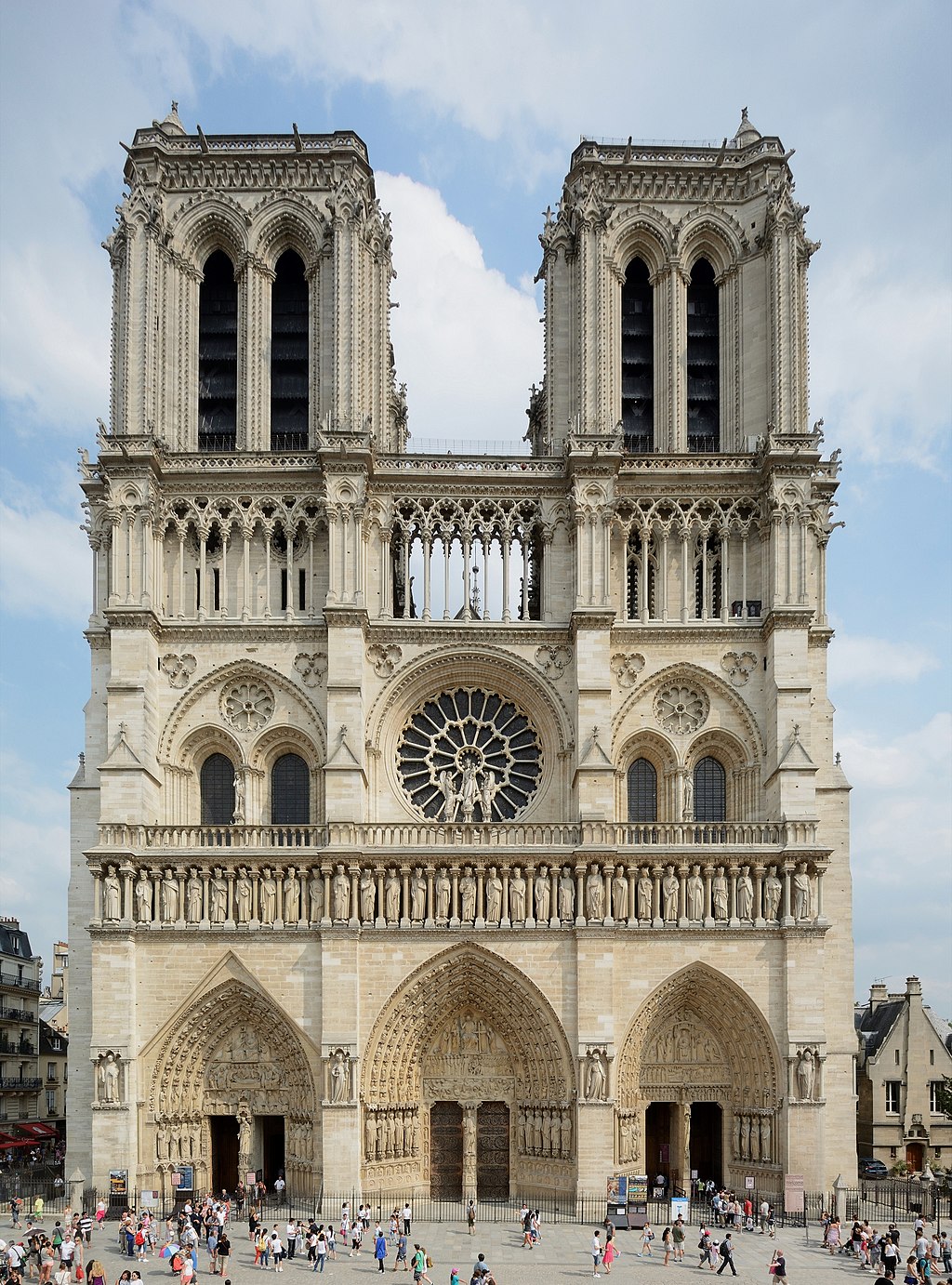
Notre-Dame, Trump and the new Syria

In a surreal twist of timing, President-elect Donald Trump was the guest of honour at Notre-Dame’s special reopening service on 7 December, at the very same time that the rebel offensive in Syria was reaching its whirlwind climax. Hours later, on Sunday 8 December, the world woke up to find that the Assad regime had vanished, following Bashar al-Assad’s night-time escape to Moscow, and that Notre-Dame was fully open to the public, following its intensive five-year restoration after the 19 April 2019 fire.

Syria too has been burning for the last 13 years. ‘Assad or we burn the country,’ was the message scrawled on walls across the country by his much-feared shabiha (secret police), along with slogans like ‘There is no god but Bashar’ and ‘Do not kneel for God, kneel for Bashar’.

Syria and Notre-Dame now both face a new future simultaneously. Restoring a fire-damaged medieval cathedral to a tight deadline was a huge challenge, one that many people thought impossible. Rebuilding an entire country, restoring its social fabric, regenerating its decimated economy after so many years of war is, of course, a challenge of an entirely different order, one that is almost beyond conceiving, a challenge that will involve many difficult steps and take many decades to achieve. But it is doable, with the right backing.

Did Trump give a single thought to Syria as he sat through the cathedral service? Probably not. Arriving in Paris that morning, he had dismissed the country, posting on his Truth Social network: “Syria is a mess, but is not our friend,” then adding “THE UNITED STATES SHOULD HAVE NOTHING TO DO WITH IT. THIS IS NOT OUR FIGHT. LET IT PLAY OUT. DO NOT GET INVOLVED!”

The very next day, however, the dynamics on the ground inside Syria had suddenly changed in a way no one had thought possible. In less than a fortnight the Islamist rebels from Idlib had swept out from the north, taking charge of Aleppo, Hama and Homs, while Druze rebels from Suweida in the south surged up to take the capital Damascus just in advance of them.

Despite his determination not to get involved, Trump may yet find himself, once in office on 23 January 2025, wrestling with decisions about the new Syria that will affect America directly – what to do about the US troops still stationed there, whether or not to support the Kurdish-led SDF (Syrian Democratic Forces) in Syria’s oil-rich northeast, whether to use them to clamp down on a resurgent ISIS and above all, whether to lift the sanctions and the rebels’ terrorist designation in order to allow the country to rebuild. Speed is of the essence, as with Notre-Dame’s rebuilding, so that everyone believes in the project and its feasibility.

Notre-Dame’s Connections to ‘Stealing from the Saracens’ and ‘Islamesque’

Notre-Dame has played a crucial role in my own recent work – it was the April 2019 fire and the world’s reaction to it that triggered my book ‘Stealing from the Saracens: How Islamic Architecture Shaped Europe‘ in 2020. Its sister volume ‘Islamesque: The Forgotten Craftsmen Who Built Europe’s Medieval Monuments‘ has just been published, coincidentally, a few days ahead of the cathedral’s 2024 reopening. To mark the occasion I wrote an article for Middle East Eye pointing out how Europe’s great medieval cathedrals, like Notre-Dame, owe much to highly skilled Arab master craftsmen.

‘Islamesque’ is a revolutionary piece of research, challenging the European art history world and its use of the architectural term ‘Romanesque’. The book has garnered a starred review in Publishers Weekly, an honour awarded to books ‘of exceptional quality and distinction’. Yet while my attention would ordinarily have been focused on ‘Islamesque’, I have found myself instead consumed by the new developments inside Syria, following every twist and turn, even asked to give media interviews by outlets like the BBC. My Syrian friends, both inside and outside the country, are ecstatic about the demise of the Assad regime. The ones inside said it felt unreal, as if they were watching a movie, with events all around them unfolding so quickly. After 54 years of milking the country like their own private farm, the old regime, its posters of Bashar so omnipresent, just melted away overnight. Their illusion of strength and invincibility was, in my view, always hollow, held in place by little more than fear and by the terrible tentacles of the Assad security and intelligence branches, all seventeen of them, modelled on East Germany’s monstrous STASI, a network that reached into all corners of society, leading people to believe that even the walls had ears. Such fear does not breed loyalty – it used to annoy me when commentators said that Assad still had a lot of support among Syrians inside the country.

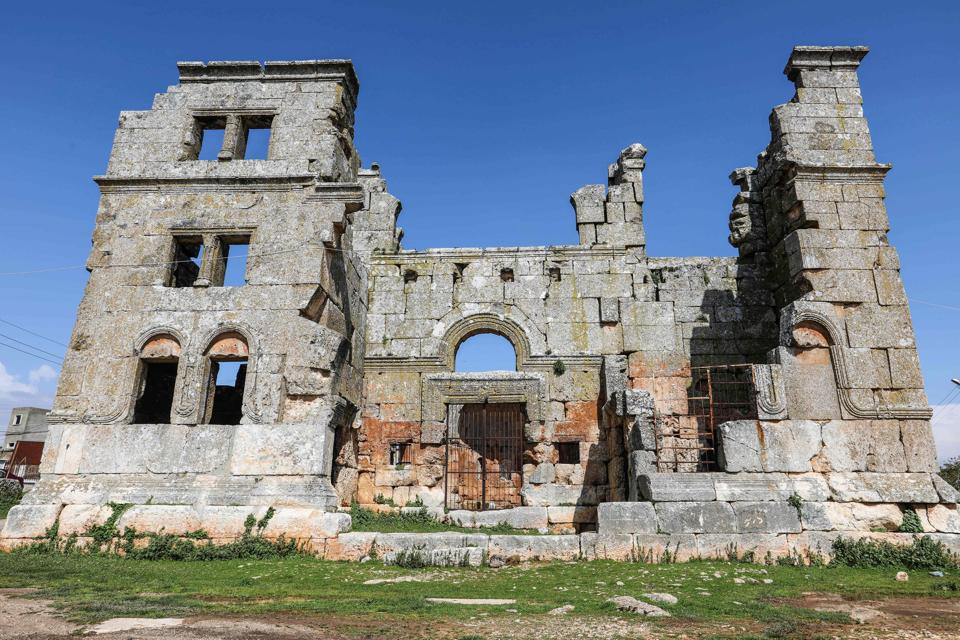
Syria and Notre-Dame also share many connections. For example – and you will find no mention of this in any of the overwhelmingly Europe-focused documentaries, books and articles written about the cathedral’s restoration – the structure’s sturdiness can be traced back to early fifth, sixth and seventh century archetypes of the twin tower model still extant in Syria’s northwest, where stonemasonry skills are literally as old as the hills. The three limestone massifs of Jebel Zawiya, Jebel Barisha and Jebel Ala formed the local building material for all Syria’s early churches. Close to two thousand such structures remain scattered among the ruins of some eight hundred settlements in the rebel-held Idlib Province, despite the Assad regime’s and Russia’s aerial bombardment of the last decade and despite the heavy earthquakes that have afflicted this region of northwest Syria since time immemorial, . These Byzantine settlements, known as the Forgotten Cities, were designated a UNESCO World Heritage Site in June 2011, just three months after the start of the Syrian war. 

Trump is almost certainly unaware of these and the many other cultural connections between Notre-Dame and Syria, let alone how the Gothic or ‘Saracen’ elements in Notre-Dame cathedral then found their way across the Atlantic, into cathedrals like Washington DC’s National Cathedral, the spiritual home of America, into Gothic campuses like Yale University and even into the heart of American democracy, Washington DC’s Capitol Dome, with its ‘Saracen’ Islamic double dome.

Whether or not he knows or cares about this architectural backstory of so many American monuments, Trump has the power to transform the new Syria. He could, in an act of faith and leadership similar to that which enabled Notre-Dame to be rebuilt in five years, have the vision to do a deal with Turkey’s President Erdogan on the Kurdish PKK elements within the Kurdish-led Syrian Democratic Forces (SDF) that also allowed the 2000 US troops to go home to America, and to then lift the US sanctions that were imposed against the old Syria in recognition that the new Syria deserves a chance to rebuild itself from the inside. In my dreams, this would enable the country to rise from the ashes and shine like a beacon in the region surprisingly speedily. It could even be a vital part of Trump’s legacy – to help create a new Syria – and as a by-product, even to eradicate Islamic terrorism from the globe forever. Once peace and stability are restored in the Middle East, extremist outfits like ISIS would find no more drivers for recruitment. Their base support gone, they would simply melt away, as surely as the Assad regime melted away once its ideological hollowness was apparent to all.

[end]

The Turkey/Syria Earthquake strikes at the birthplace of civilization

Gobekli Tepe

The sheer scale of the disastrous series of earthquakes in southeast Turkey and northwest Syria is hard to absorb, especially in a region already blighted by a decade of war, displacement, drought and disease. As if that were not sufficient punishment, the cruel weather has added another layer of suffering with its comfortless blanket of snow, making rescue efforts even tougher, whilst leaving thousands of shell-shocked souls to freeze in the open, homeless.

For many outside the region, it may seem a faraway tragedy that has no direct bearing on their own lives.  But as someone who has visited the area repeatedly over several decades, I feel that, beyond the humanitarian crisis unfolding day by day, there is a bigger picture that needs to be explained, to help grasp how connected we all are by oft-forgotten historical and cultural ties.

Historical and Cultural Context

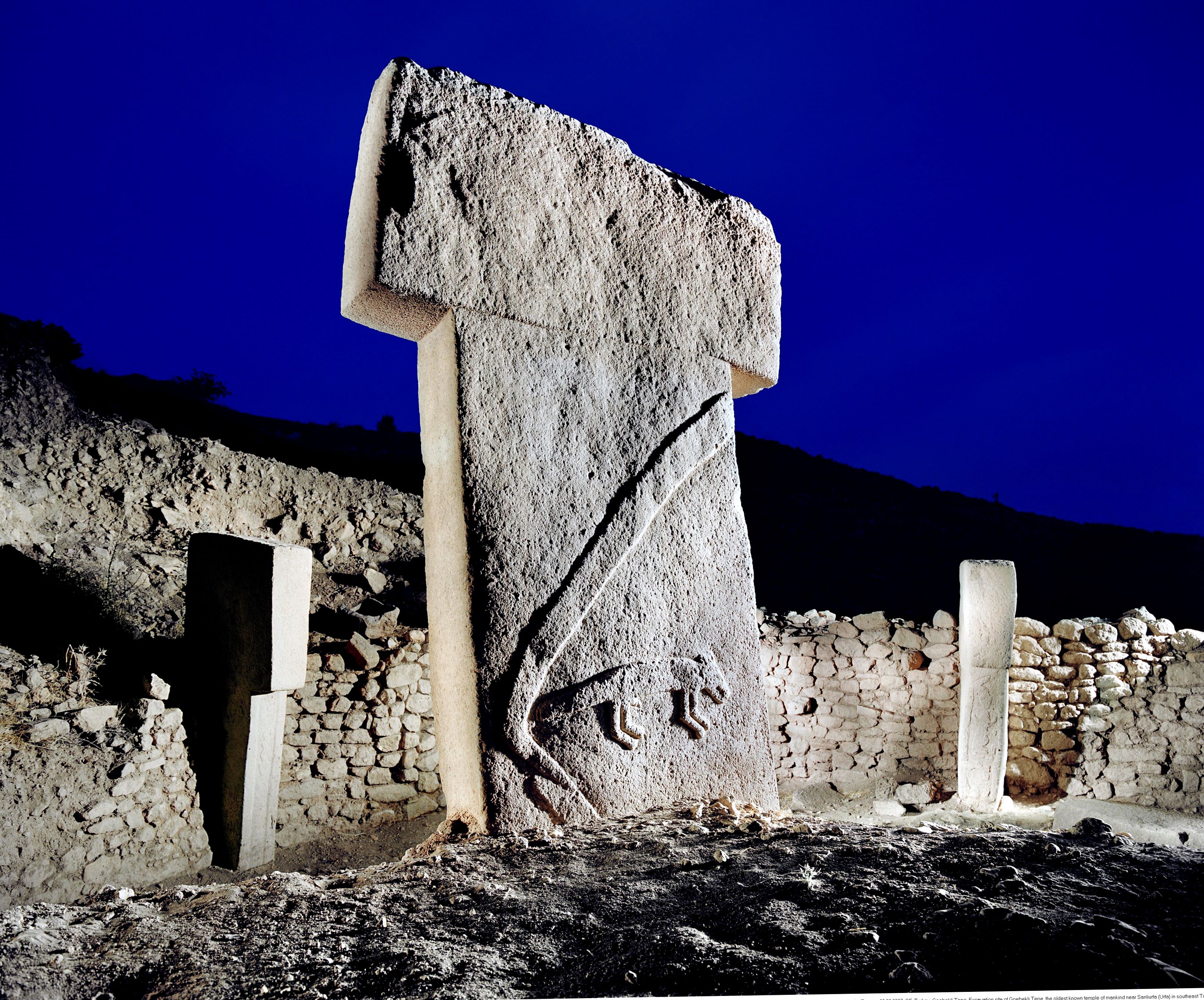
The discovery in the 1990s of the world’s oldest temples, a series of mysterious circular structures on the summit of Göbekli Tepe (‘Pot-bellied Hill’ in Turkish), turned all previous perceptions of man’s early history on their head. Overlooking the once lush grasslands of the Fertile Crescent, northeast of Urfa, they were built by nomadic hunter-gatherers some 12,000 years ago, pre-dating Stonehenge by 6,000 years, and the world’s earliest city at Çatalhöyük, also in eastern Turkey, by a full 3,000 years.

Gobekli Tepe

Similar groupings of circular temples have been identified in northern Syria, collectively proving that man’s first construction efforts, were devoted, not to building settlements, but to the worship of deities connected with the sun, the moon and the circular seasonal cycles on which he depended. The temples were first unearthed in 1994 by German archaeologist Klaus Schmidt, who tragically died before seeing UNESCO inscribe them on its World Heritage List in 2018.

World heritage sites 

As recently as 2021, UNESCO added the late Hittite site of Aslantepe (‘Lion Hill’) near Malatya and the Euphrates, in recognition of its significance in illustrating how a State society first emerged in the Near East, along with a sophisticated bureaucratic system that predated writing. Among the finds were the world’s earliest known swords, evidence of the first forms of organised combat used by the new elite to maintain their political power.

Aslantepe, two lion men in combat

Towering above the Tigris, UNESCO’s other World Heritage Site (2015) that lies within the earthquake zone is the brooding city of Diyarbakir, whose mood seems reflected in its massive black basalt walls. It too is part of the ancient Fertile Crescent, an important regional centre commanding the surrounding fertile plains throughout Hellenistic, Roman, Sassanid Persian, Byzantine, Islamic and Ottoman times. Its elegant ‘Ten-Eyed’ bridge, built by the Seljuks in 1065, still spans the river below.

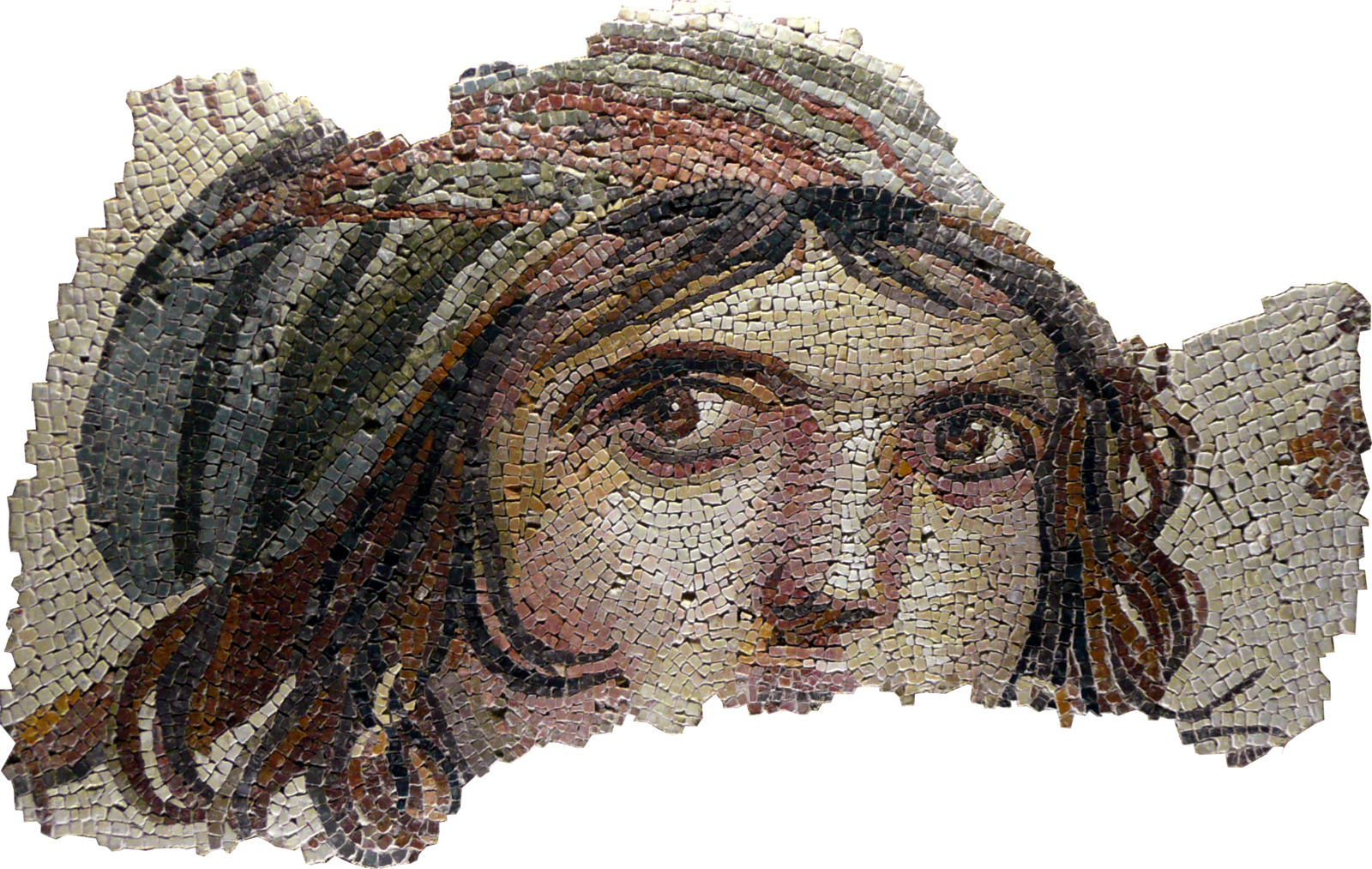
Further testimony to the onetime prosperity of the region is the site of Zeugma on the Euphrates, famous for its collection of superb mosaics, among the finest in the world. Once a thriving frontier town on the eastern edges of the Roman Empire, where 5,000 troops were garrisoned to defend against the Persians in the 2nd and 3rd centuries CE, it was also known as Belkıs, a reference to the Queen of Sheba  and her legendary wealth. Rescued, along with many other ancient sites, from the flooding caused by the modern Birecik Dam on the Euphrates, the spectacular mosaics graced the floors of rich villas, but today are housed a new purpose-built museum in nearby Gaziantep, epicentre of the first 7.8 magnitude earthquake that struck overnight on 5 February.

Zeugma mosaic, the so-called ‘Gypsy Girl’

Those who know Aleppo will find in Gaziantep many echoes of that more famous Syrian city. Not for nothing did so many Syrian refugees fleeing war in their own country take refuge in Gaziantep as their city of choice. In the days before the artificial borders imposed by Britain and France after World War One, the two cities were closely linked. Easily the most sophisticated city in southeast Turkey, Gaziantep, long hailed as the pistachio capital of the world, boasts around its prominent Seljuk citadel an old quarter, much of which was built by the Ottoman Governor of Aleppo. Like Aleppo, it has a mixed Muslim/Christian population, with its Christian population in Ottoman times likewise much larger than today. Their churches and mansions are still scattered about the old Christian quarter, often now converted to musical venues or boutique hotels. The citadel itself has suffered damage in the earthquake, so the historic quarter of which it forms the heart must also have been affected. Like Aleppo’s historic centre, it was the subject of extensive restoration projects, and experienced boom-level growth in recent times, its citizens deeply proud of their shared heritage and identity.

Gaziantep Citadel

Border ironies

Earthquakes do not recognise political boundaries, and just as Gaziantep was part of the Ottoman Province of Syria till 1922, so Aleppo too, less than 200km to the south, has suffered damage, both to its iconic citadel mound and to its surrounding historic areas. Friends have told me of their homes, newly restored from the war, damaged once again, by force majeure, as if accursed. Aleppo’s Great Umayyad Mosque, located at the foot of the citadel, has been undergoing restoration funded by Putin’s ally, the Russian politician Ramzan Kadyrov, President of Chechnya. The mosque’s unique 1,000 year-old Seljuk minaret miraculously survived many earlier earthquakes, only to collapse in cross-fire in 2013. Its rebuilding is a dauntingly complex jigsaw that is in progress, 60% complete, which has somehow survived this quake.

In more border ironies, the Province of Hatay in southeast Turkey belonged to Syria till 1939. Known before then as the Sanjak of Alexandretta, it was incorporated into Syria under the French Mandate in 1918 at the Ottoman Empire’s demise, but the French then gave it to Turkey in anticipation of a new war against Germany, a bribe to buy Turkish neutrality. Syrians have never accepted the transfer and most Syrian maps still show it as part of Syria.

Now eclipsed by the mosaics at Zeugma, Hatay boasts its own, much older mosaic museum in its capital city of Antakya, ancient Antioch, also hit by the earthquake. Built by the French, it was considered in its day second in the world only to the Bardo Museum in Tunis, displaying, in scenes like Narcissus and Echo and the Drunken Dionysus, the licentious lifestyle of banqueting and dancing against which the early Christians here preached. St Peter’s Rock Church cut into the cliffs behind the city was founded in 47CE by Peter, Paul and Barnabas as the first church after Jerusalem. Matthew is said to have written his Gospel in Antioch. Even before the arrival of Christianity, the city was very mixed, with Greek, Hebrew, Persian and Latin all spoken in its streets. ‘If your aim in travelling is to get acquainted with different cultures and lifestyles, it is enough to visit Antioch’, wrote Roman historian Libanius. ‘There is no other place in the world that has so many cultures in one place.’

St Peter’s Rock Church, Antakya (ancient Antioch)

Cycles of history

Today the population remains very mixed, with large communities – both Muslim and Christian – blended together. Among the early churches in Antioch was the octagonal Domus Aurea (Golden House), a magnificent structure thought to have been Constantine the Great’s palace chapel, built in 327CE. Destroyed by fires and earthquakes in 588, its exact location is lost to us today, but it is known through the description of contemporaries to have served as the prototype for the octagonal Basilica of San Vitale in Ravenna, Italy, from where the Emperor Charlemagne took his inspiration for his own palace chapel at Aachen, Germany.

Parts of the Crusader castle of Marqab, built from black basalt to dominate the Mediterranean coastal plain, are also damaged from the earthquake, with collapsed towers. Second in power only to the mighty Krak des Chevaliers, its cellars were stocked with enough provisions to last a thousand men for a five-year siege. Originally an Arab stronghold fortified in 1062, it was captured by the Byzantines in 1104, then sold to the Knights Hospitaller. It fell following a brief siege to the Mamluk army of Sultan Qalaoun in 1285, who whitewashed and thus preserved the frescoes in the chapel. One depicts a striking vision of Hell in which a huge bishop is sitting naked in a fire, with two devils tending the flames, along with two monster-headed figures flying overhead.

Marqab Castle, near Baniyas, Syria

Such cycles of history, filled with so many seismic twists and turns like earthquakes, wars and invasions, have all played their part in the ever-shifting balances of power in this region of great strategic significance. When looking at the horrors that are unfolding in southeast Turkey and northwest Syria today, it is impossible to predict how the current disaster will shape the future of this most volatile of regions.

The complex political landscape at play in both countries is likely, without huge international support, to hamper progress towards the imperative delivery of aid, while fledgling efforts that were underway for restoration of cultural heritage sites, especially in the blighted and fractured territory of Syria, will inevitably be pushed even further down the agenda.

Past parallels show us that rival powers are likely to continue to vie for control of this once Fertile Crescent, where the tectonic plates of so many past civilisations have struggled for survival, in ways that have shaped us all.

This piece first appeared in Middle East Eye on 9 February 2023:

https://www.middleeasteye.net/opinion/turkey-syria-earthquake-birthplace-civilisation-strike

Is Bashar al-Assad really the Guardian Angel of Syria’s Minorities?

Photo by the author, Homs, April 2018

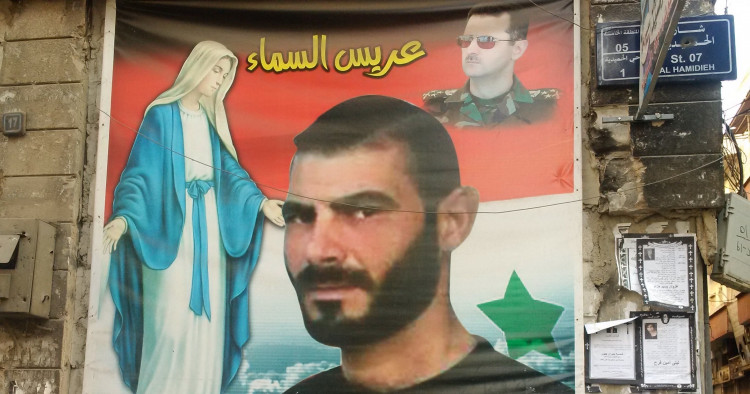
Look at the imagery in this poster plastered on a wall in bombed-out Homs. I photographed it on a visit in April 2018. Bashar al-Assad, president of Syria, sporting dark glasses and military fatigues, looking resolute and determined, appears in the heavens opposite the Virgin Mary, floating above the head of a martyred soldier. Bashar, on a par with the Virgin Mary, is presented as the guardian angel of Syria’s Christians. The message is spelled out even more clearly in war slogans liberally scrawled by regime militias on the walls of buildings everywhere, even on mosques — “There is no god but Bashar” and “Do not kneel for god, kneel for Bashar.”

Since the start of the current war, Bashar al-Assad, in power since 2000, has consistently sought to promote himself as the protector of Syria’s minorities — be they Christian, Alawi, Shi’i or Druze — from Islamist extremists. Many Western audiences have been seduced by his smart casual look and by his increasingly prominent, beautifully turned-out British wife, Asma. What has happened to minorities over the last 10 years of war and how does that compare to their treatment historically inside Syria?

Syria’s constitution is secular, but states that the president must be Muslim. When Bashar’s father, Hafez al-Assad, seized power in 1970, he was the first Alawite to become head of state. Alawites were considered by mainstream orthodox Sunni Muslims, who make up around 75% of Syria’s population, to be an heretical offshoot of Shi’a Islam, so Hafez engineered a convenient fatwa from Musa al-Sadr, a respected Shi’a cleric, declaring Alawites to be “within the fold of Islam.” Before the current war, Alawites accounted for about 10% of the population. Precise figures today are notoriously difficult to assess but most experts think the proportion may now have risen to something closer to 15%, partly because the majority of the many millions who have left Syria as refugees have been Sunni Muslims. Christians account for around 10% of the population, while Druze and Ismailis (further offshoots of Shi’a Islam) together represent about 5%.

Sectarianism and internal divisions

It is a common misperception in the West that sectarianism in the region is some ancient phenomenon rooted in age-old feuds. The Assads know this and understand only too well how to play on Western fears of Christian persecution by Muslim extremists, especially after the rise of ISIS and its public beheadings of Western Christians. But such divisions as existed between people were as likely to be found within the plethora of Christian and Muslim sects historically represented, and still present, in Syria as between the different religious communities themselves. One colorful story told to me by a Syrian dentist who grew up in a majority Orthodox Christian village in Syria’s Wadi Nasara (Valley of the Christians) described how his church felt so upstaged by a fancy new Evangelical church built with money brought in via the Allied army after World War II that the rival church was blown up! Syria’s Christians are not one homogenous group — there are many internal divisions, just as there are within Muslim and indeed Jewish groupings. The root of the problem is often economic inequality, rather than religious difference.

A striking historic example is the 1860 Damascus massacre of thousands of Christians. Covered in the European press at the time as a sectarian event, it triggered outrage and public sympathy, followed by the dispatch of French troops in what was labelled the first humanitarian intervention in defense of minorities. Yet the problem was never sectarian — it originated within the silk industry of Mount Lebanon. The Maronite Catholics were commercially closest to the French and many lived in socially-isolated grandeur, rich from the privileges awarded them by Western powers seeking to gain new markets at a time of European recession. As the Ottoman grip on its empire weakened, a feeding frenzy began in its provinces, with foreign interests competing for the spoils. The result was not only the ensuing inter-confessional violence among communities that had lived together largely peacefully up to that point, but also the complete undermining of the regional silk industry. It was gradually bought out by foreigners, mainly French Catholics, leading more and more locals to lose their livelihoods.

In Damascus the predominantly Catholic wealthy quarter in the Old City was burnt and looted by a mix of impoverished Druze and Bedouin, while many indigenous Orthodox Christians who lived in poverty-stricken Midan outside the walls to the south were spared and protected by their Muslim neighbors. The same resentments based on privilege and inequalities are building in today’s Syria, as churches in Homs and Aleppo are rebuilt and refurbished while the vast Sunni suburbs and their local mosques remain flattened. Only the flagship Aleppo Umayyad mosque and the Homs Khaled ibn al-Waleed mosque are being rebuilt for show, as empty shells.
 

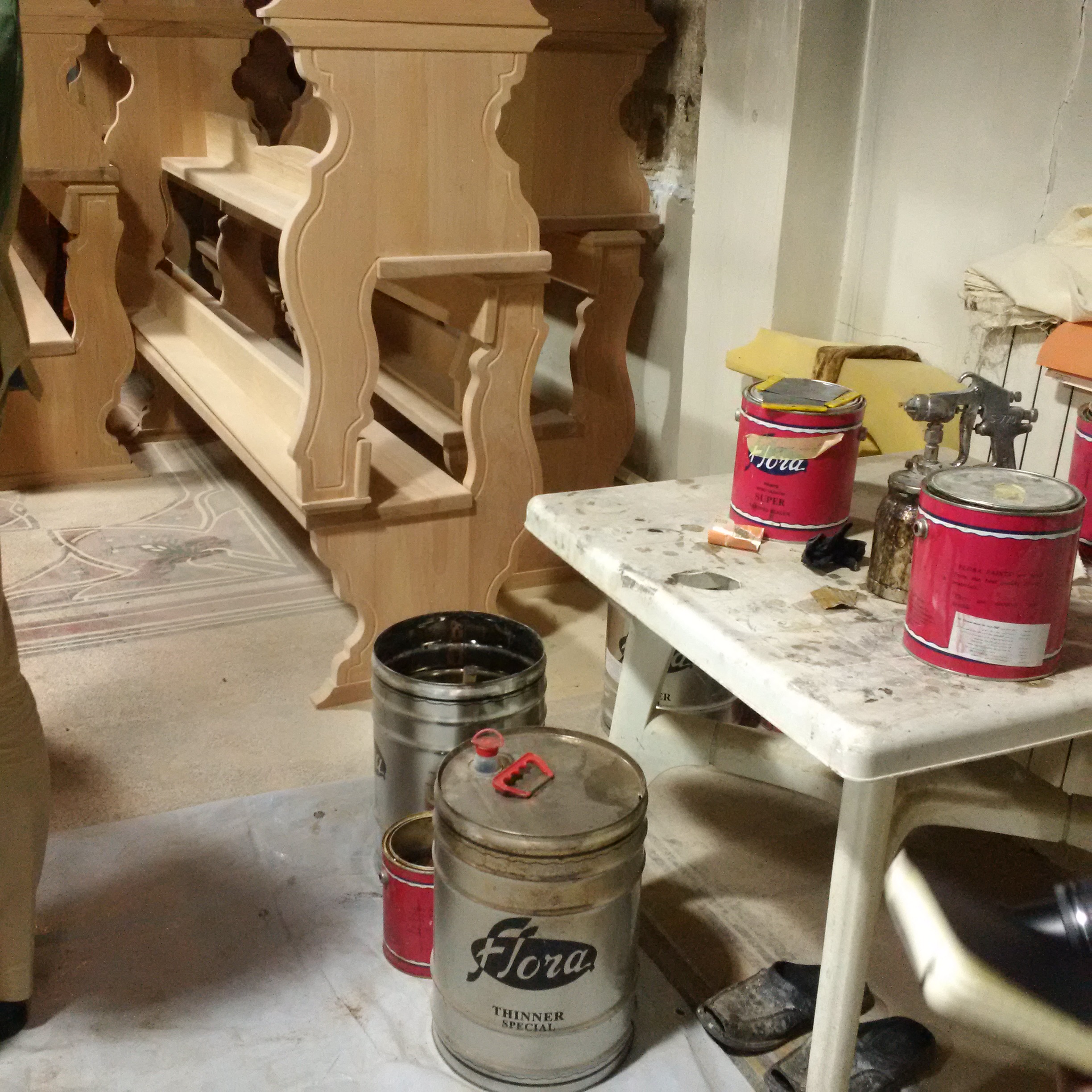
Newly made church pews in Homs about to be varnished.
Newly made church pews in Homs about to be varnished. Photo by the author.
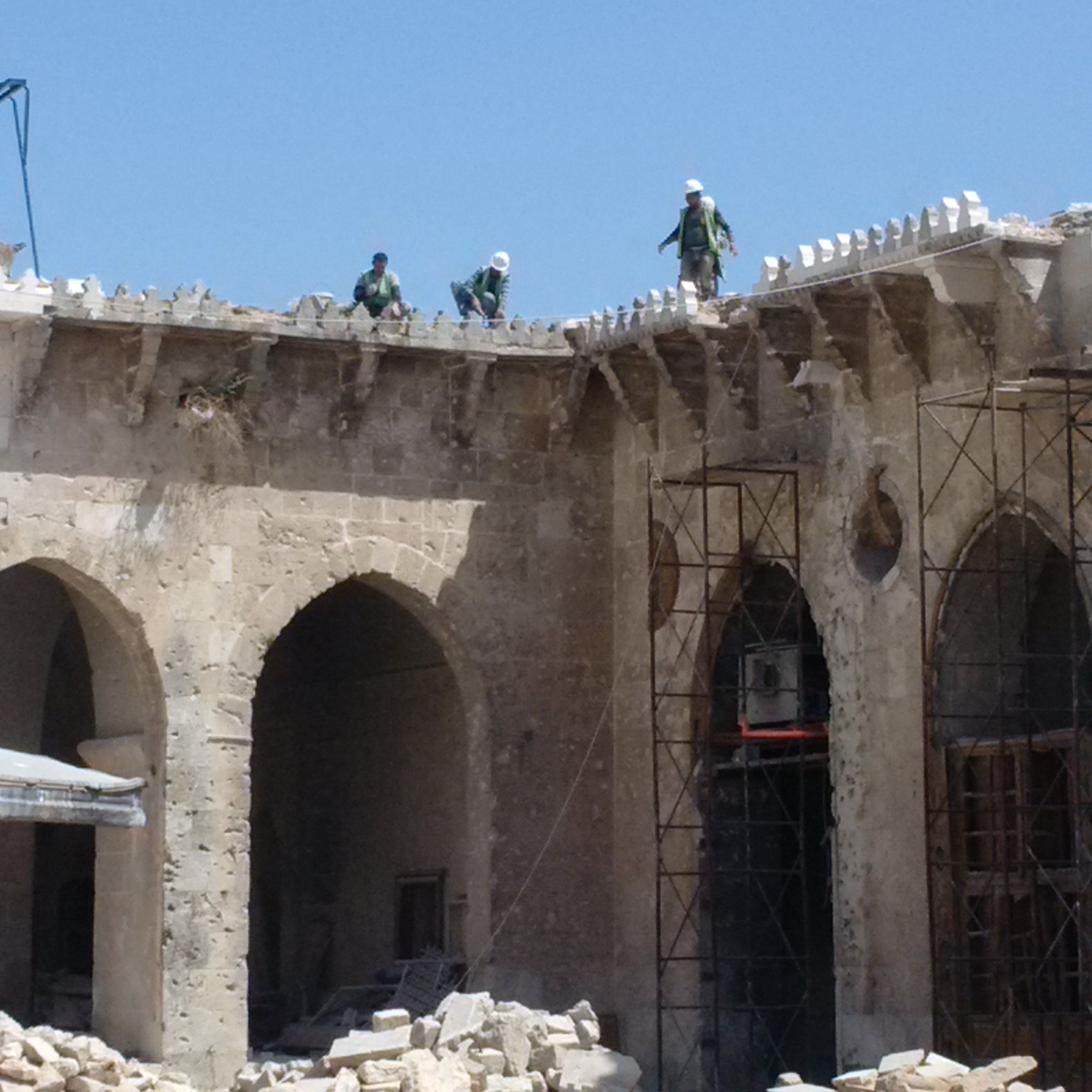
Aleppo's Umayyad Mosque under restoration, funded by Chechnya's Ramzan Kadyrov, a key ally of Russia's Putin.
Aleppo’s Umayyad Mosque under restoration, funded by Chechnya’s Ramzan Kadyrov, a key ally of Russia’s Vladimir Putin. Photo by the author.
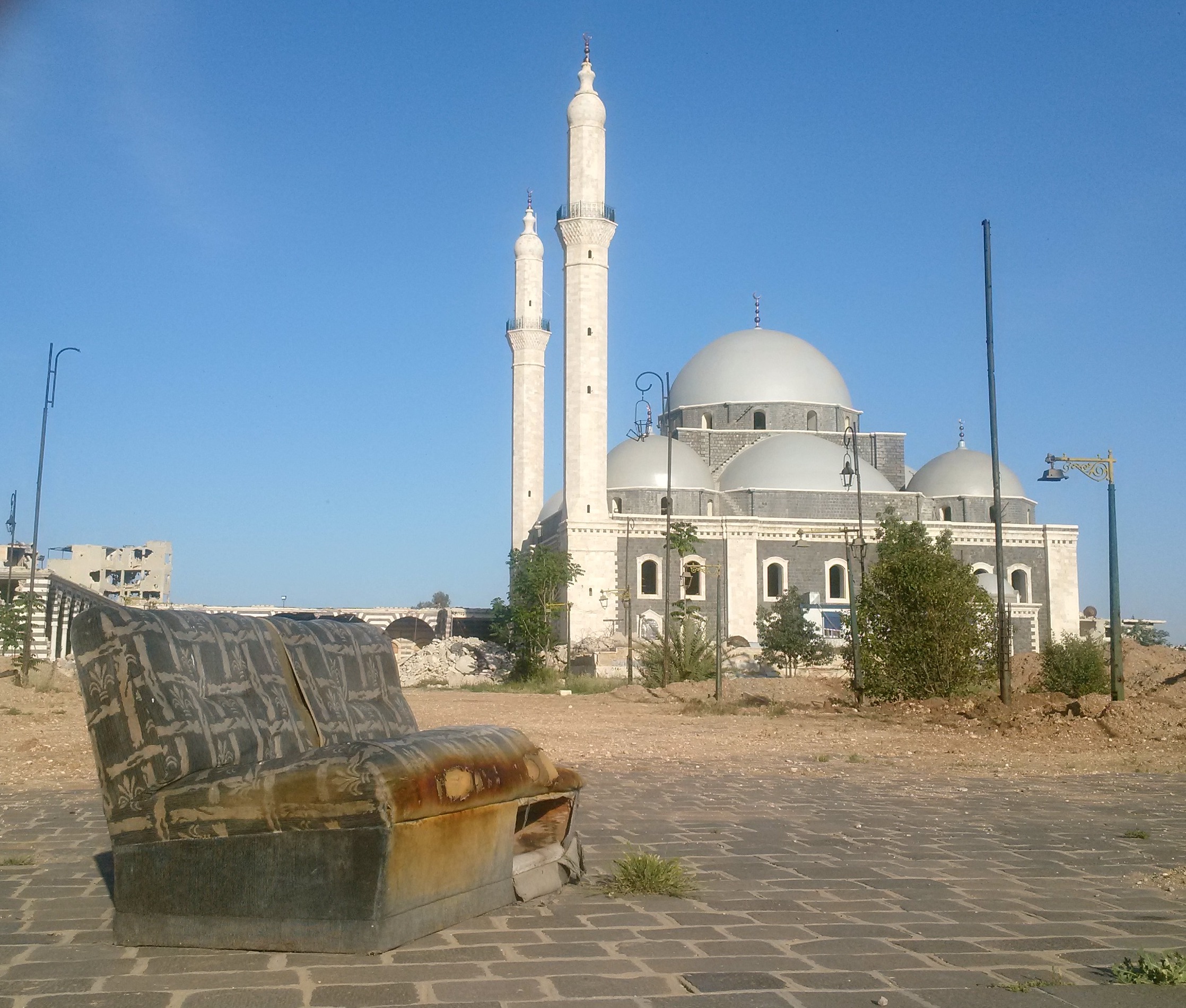
Khalid ibn al-Waleed Mosque in Homs, restored to a very rudimentary standard by the regime's Al-Iskan al-Askeri, the Military Housing outfit.
Khalid ibn al-Waleed Mosque in Homs, restored to a very rudimentary standard by the regime’s Al-Iskan al-Askeri, the Military Housing outfit. Photo by the author.

The 1860 war, like the war that rages today in Syria, was often mislabeled a civil war. Episodes of persecution were frequently misread by Europeans as sectarian, rather than economic, in nature.

But as with the current war, it only exacerbated the root cause of the grievances, deepening foreign interference. In the wake of French troops educational and philanthropic agencies began to arrive, often run by Catholic missionaries, founding orphanages, boarding schools, and dispensaries in which their own religion was privileged.

Engineering demographic change

Once the French took over Syria after World War I under their mandate, they continued their “divide and rule” methods by creating separate statelets, including for the Alawis and the Druze. But their attempts were resisted in the Great Revolt of 1925, which began in the southern Druze region. The Syrian people showed their innate pluralism by refusing to identify themselves by sect. Not until after the Ba’athist coup in 1963 did sectarian sentiment in Syria begin in earnest, when the sense of exclusion felt by many Sunnis led to the first real appearance of Sunni Islamist militancy in the 1980s, the trigger for the Muslim Brotherhood Hama massacre led by Bashar’s uncle, Rifaat al-Assad.

From 2012 onward “starve or surrender/reconciliation” deals were imposed on populations perceived to be disloyal. The first such deal was in Homs, where opponents of the Assad government were transported out in the famous “green buses” to the rebellious Idlib Province, whose population has now swelled to bursting with more and more displaced rebels, overwhelmingly Sunni Muslims. By late 2016, after half the Syrian population had been displaced and Syrian citizenship had been granted to tens of thousands of Iranian mercenaries who had fought to keep him in power, Bashar boasted to an American interviewer that “the social fabric is much better than before.”

Demographic change continues to be engineered or precipitated in today’s war, as it has been throughout Syria’s history. Centuries ago Sayf al-Dawla, founder of the Hamdanid dynasty, relocated the entire Shi’a population of Harran (in today’s Turkey) to repopulate his capital Aleppo after it had been ravaged by a Byzantine attack. After the end of the Crimean War, the Russians, needing to create a Christian majority, brought in Christians and by 1865 had pushed over half a million Muslims out into the Ottoman heartlands. In 1939 the French separated the Sanjak of Alexandretta from Syria and ceded it to Turkey, triggering the exodus of thousands of Armenians and Arabic-speaking Alawi, Sunni, and Christian refugees into northern Syria. In 1967 after capturing the Golan Heights in the Six Day War, Israel began almost immediately to settle Israeli Jews there, before illegally annexing the territory in 1981. Israeli maps show it as Israeli territory, not as Syrian territory occupied by Israel. Official Syrian maps continue to show both the Golan and the Sanjak of Alexandretta (renamed Hatay by Turkey) as part of Syria. Future maps of Syria will no doubt vary depending on who publishes them.

The ultimate irony is that within so-called secular Syria as represented by the nominally secular Ba’ath Party, in power under the Assads for the last 50 years, sectarianism has been consistently on the rise. The mentality has been you have either been a Ba’athist or not. You are either with us or against us. Loyal Ba’athists have been protected, be they Sunni, Alawi, Christian or whatever. Those perceived as disloyal to the Ba’athist Party have been punished, either through imprisonment, detention or torture.

Before the Assads, religious identities were pluralistic, and were only relevant at the social level. They were not politicized or institutionalized. The Assad legacy is to have turned Syria into a sectarian society for its own ends, following the French mandate model, setting community against community. But once Assad and his dynasty are gone, the Muslim-majority Syrian society will, in time, revert to its natural state of tolerance and co-existence with religious minorities, given the chance. It is the default position of every Syrian I know. All of them mourn the current triumph of Assad’s mock-secular sectarianism and pray collectively for its speedy passing.

***

This article first appeared on 12 April 2021 as part of a series written for MEI, the Middle East Institute based in Washington DC, where I am a non-resident scholar on their Syria Program:

https://www.mei.edu/publications/bashar-al-assad-really-guardian-angel-syrias-minorities

Syrian Secrets rising from the ashes of Notre-Dame

1024px-Incendie_Notre_Dame_de_Paris Notre-Dame fire

Notre-Dame roof and spire aflame on 15 April 2019, but structure intact. Photo from Wikipedia LeLaisserPasserA38.

Who would have thought that last year’s catastrophic fire at Notre-Dame de Paris would reveal so many secrets from its ash? A team of scientists has been gathered under the leadership of a military general to conduct deep background research into the fabric of the cathedral, hoping to understand how on earth the medieval masons and craftsmen made the building stand up. Nothing was written down, no plans were used. The study will take an estimated six years, helping to guide the restoration work.

The fire also sparked my own desire to study further. This time last year I wrote an article explaining the architectural backstory of the cathedral, how, like all medieval Gothic cathedrals, the origins of its twin towers flanking a monumental west entrance, its pointed arches, its rose windows, its ribbed vaulting can all be traced to the Middle East. Now, after extensive research, I have discovered many more connections, all of them unexpected. The full results will appear in my forthcoming book Stealing from the Saracens: How Islamic Architecture shaped Europe:  https://www.hurstpublishers.com/book/stealing-from-the-saracens/

Meanwhile, here are just a few pointers, to give the flavour. Let’s start with the stained glass, thankfully still intact after the fire. Recent analyses of stained glass in the main cathedrals of England and France between 1200 and 1400 all show the same high plant ash composition typical of Syrian raw materials. High-grade Syrian plant ash soda, known as ‘the cinders of Syria’, was considered superior to the pre-Islamic Egyptian natron ash used by the Romans and the Byzantines in their glass manufacture, and all Venetian glass analysed from the 11th to the 16th centuries shows its consistent use, by law. Medieval Continental Europe imported the raw materials for all its glass since there was no known local source.

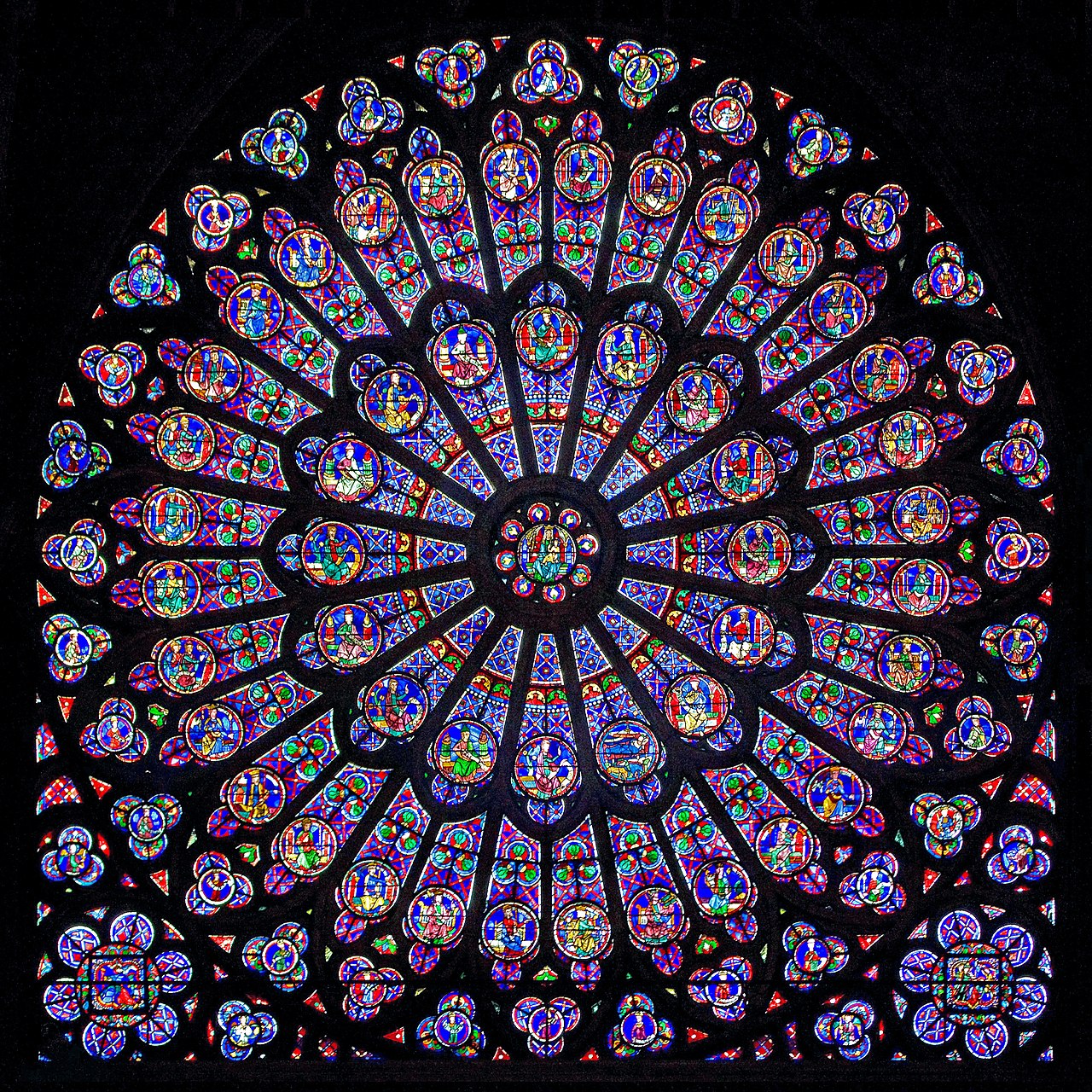
Coloured glass windows have been an integral and innovative element of Islamic architecture since the 7th century, starting with Jerusalem’s Dome of the Rock which carried coloured glass in its many high windows. They were known as shamsiyyat (from Arabic for sun) and qamariyyaat (from Arabic for moon), showing how the solar and lunar imagery of windows continued into European religious architecture. The Templar knights adopted the Dome of the Rock as their chief Christian shrine after the First Crusade, mistaking it for the Temple of Solomon, an error which resulted in many churches being modelled on a Muslim shrine. Notre-Dame’s famous rose windows on its west and north facades date from 1225-50 and are designed for the light to radiate out from the centre, hence the so-called Rayonnant style.

1280px-Gothic-Rayonnant_Rose-6 North rose window Notre Dame c1250

Notre-Dame Rayonnant-style North Rose Window, c1250, photo from Wikipedia, by Zachi Evenor and Julie Anne Workman, Aug 2010.

Light was also at the core of Gothic cathedral design.  Saint-Denis in north Paris was where the wealthy and powerful Abbot Suger first used Illuminationist thinking as the guiding principle in his new basilica. But who was Denis?

Paris_-_Cathédrale_Notre-Dame_-_Portail_de_la_Vierge_-_PA00086250_-_003 Notre Dame St Denis head

The martyr Denis, Bishop of Paris, holding his head after decapitation on Montmartre, Notre-Dame, Portal of the Virgin, photo from Wikipedia by Thesupermat, Sept 2011.

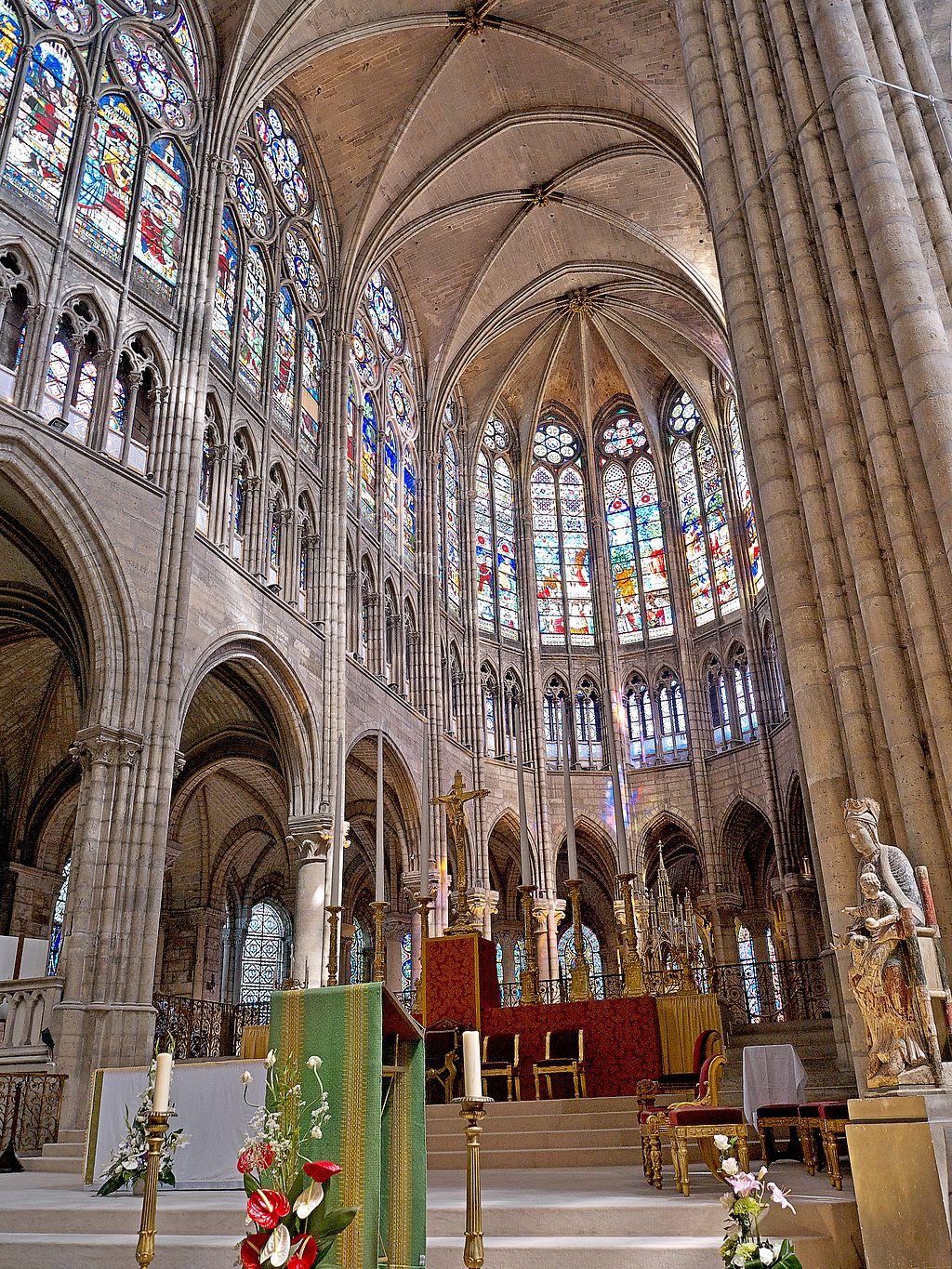
The Abbot and his contemporaries believed him to be a disciple of Paul, who later became confused with the first Bishop of Paris and patron saint of France, martyred on Montmartre. Centuries later, scholars realised that Denis’s influential work the Celestial Hierarchies, was in fact a hoax, written by a 5th century Syrian mystic monk calling himself Denis in order to get his philosophy noticed. As a result he is known in ecclesiastical circles as Pseudo-Denis, but his trick worked. Today the Basilica of Saint-Denis is universally acknowledged as the first true example of ‘Gothic’ with tall pointed arches enabling the lofty elegant choir. It was used thenceforth as the burial place of French kings.

1024px-Coeur_de_la_Basilique_de_Saint-Senis Saint Denis choir by Bordeled

Basilica of Saint Denis, the first, new, light-filled ‘Gothic’ choir, based on the philosophy of Denis, a 5th century Syrian mystic, photo from Wikipedia by Bordeled, July 2011.

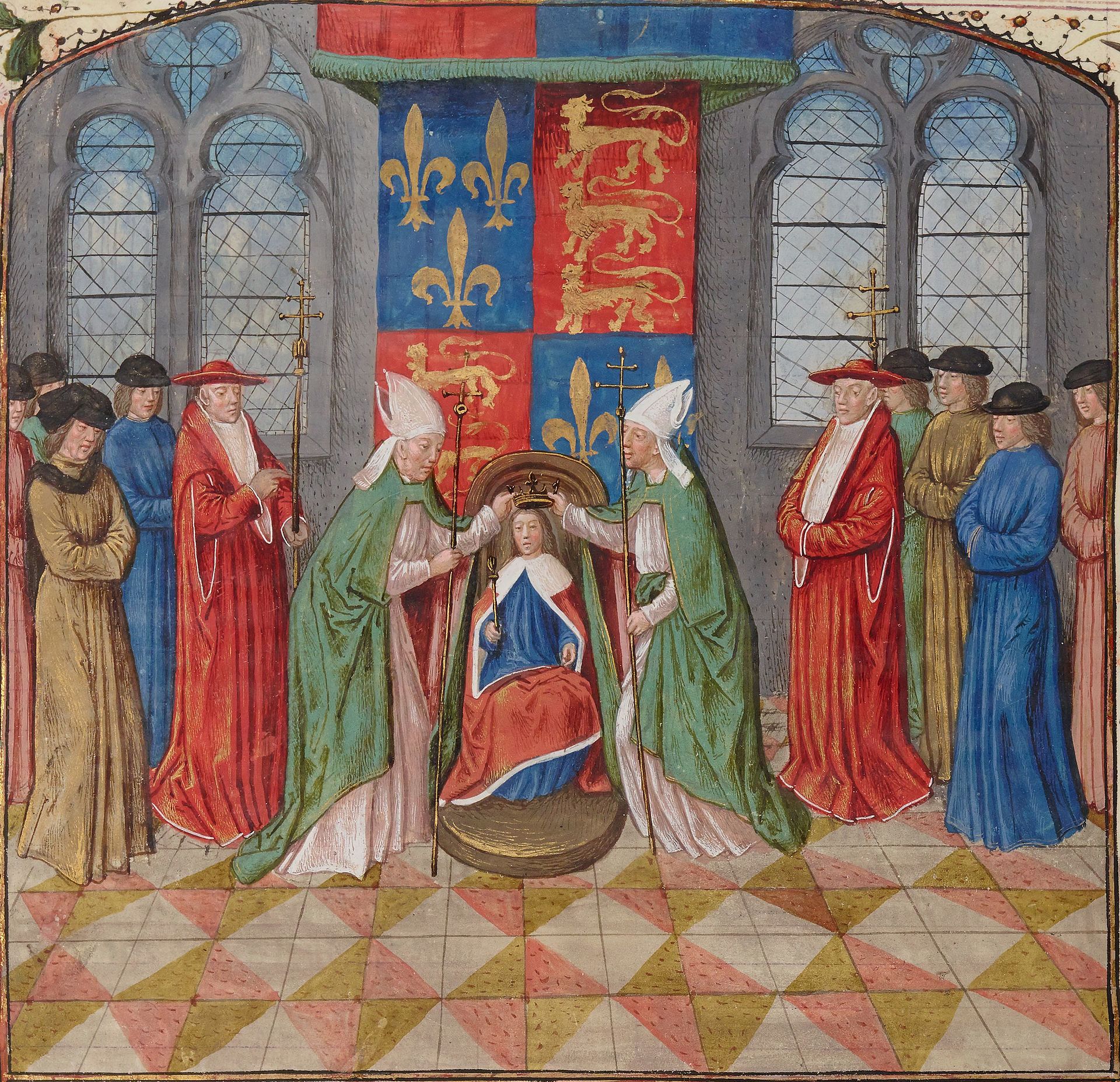
The very symbol of French nationhood and French royalty is the fleur-de-lis. But where was that first seen as an emblem? On the plains of Syria the Crusaders copied the local sport of ‘jarid’, knightly jousting tournaments on horseback where the players attempted to dismount each other with a blunt javelin. Heraldry and the use of family or dynastic symbols was already in use under the Ayyubids and the fleur-de-lis first appeared in its true heraldic form, the three separate leaves tied together in the middle by a band, as the blazon of Nur al-Din ibn Zanki and on two of his monuments in Damascus. Later Mamluk helmets often had nasal guards terminating in a fleur-de-lis. The boy king of England, Henry VI, was crowned king of France aged ten inside Notre-Dame in 1431, against a backdrop of fleur-de-lis.

Sacre_Henry6_England-France_02 Henry VI of England Fleur-de-lis

Coronation of the boy king Henry VI as king of France inside Notre-Dame, against a backdrop of fleur-de-lis, photo from Wikipedia public domain.

Notre-Dame’s central portal carries a stone-carved allegory of Alchemy, a statue of a woman holding books with a ladder and staff. The very word comes from the Arabic al-kimya’ and in medieval times the Middle East was widely acknowledged as the home of advanced experimental science. The use of plant ash in glass was itself a kind of alchemy, an experiment in which the addition of the alkaline (from qily another Arabic word) plant called ushnaan to the silica of the crushed pebbles of the Euphrates produced the world’s finest and most delicate glass, based at Raqqa, the centre of the Syrian glass industry from the 9th to the 14th century. The addition of further chemicals coloured the glass, cobalt for blue, copper oxide for turquoise, manganese for purple/pink and so on.

Alegoría_de_la_alquimia_en_Notre-Dame Alchemy Allegory Notre-Dame

Notre-Dame Allegory of Alchemy on the central portal, photo from Wikipedia by Chosovi, April 2006.

But the ashes of ushnaan also had other properties. They had been used since biblical times as a cleaning agent (Aramaic shuana) where there was no access to water, both in personal hygiene and in clothes laundry. To this day it remains an essential natural ingredient in the Syrian soap industry, as the plant grows especially well south of Aleppo round the salt lake of Jaboul. This is what gives Aleppo soap such a wonderfully soft and silky feel on the skin. It even has the bubbles trapped inside just like the Syrian glass.

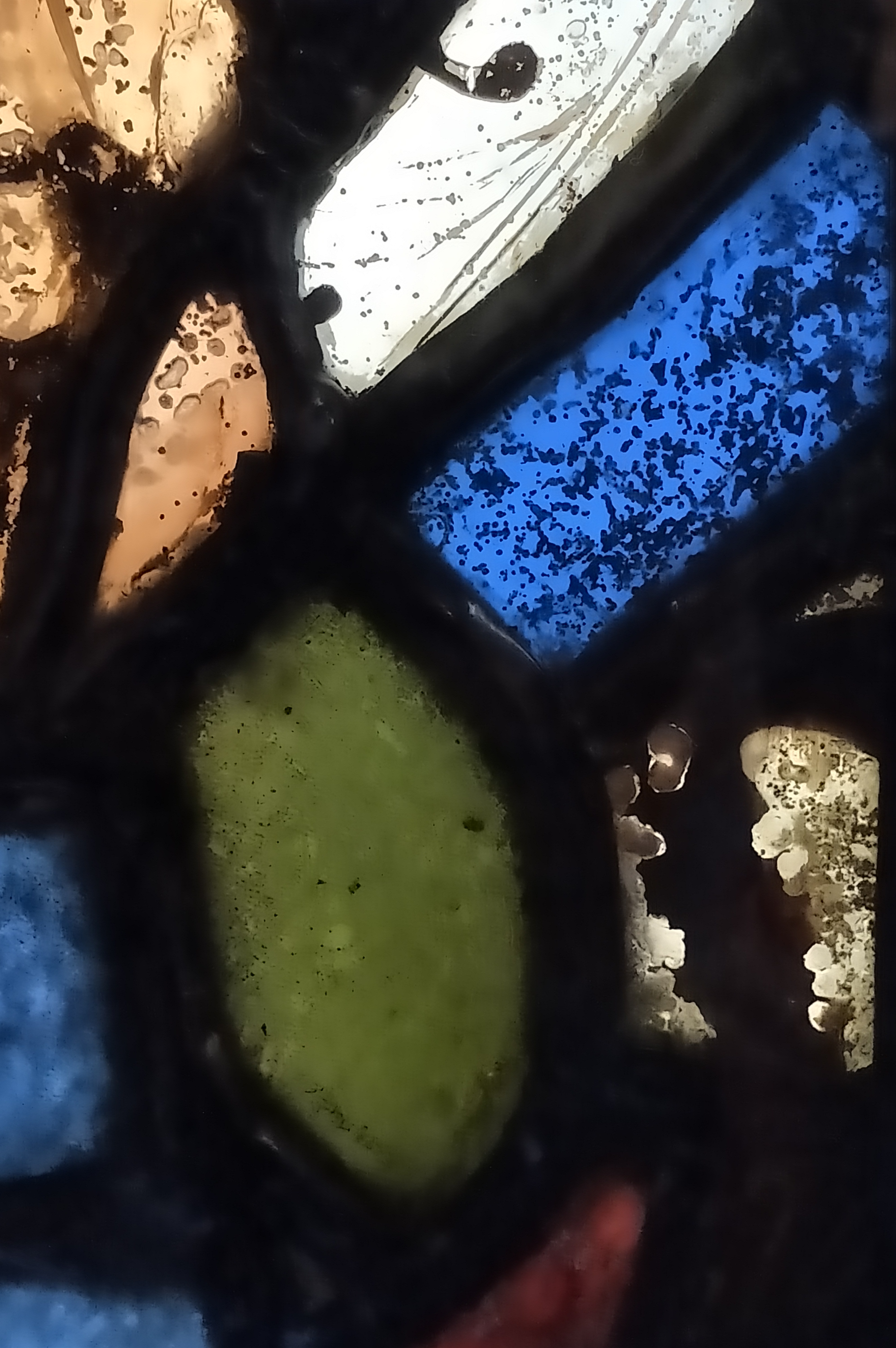
IMG_20200302_1634507 Stained glass Canterbury Cathedral c1180 V&A

Stained glass c1180 from Canterbury Cathedral, showing the trapped bubbles from the plant ash. These bubbles also gave the glass extra strength, making it less liable to fracture.  Photo by Diana Darke, taken 3 March 2020 in the V&A Museum, London

The team of scientists at Notre-Dame have made their own unlikely cleaning discovery – that the best way to remove the toxic yellow lead dust from the stained glass windows without danger to the colours is to use baby wipes from Monoprix. The commercial chemical wipes risked being too abrasive. Gentle Aleppo soap would no doubt be even better. How fitting it would be if the cathedral could be cleaned using the very same plant ash that is already inside its stained glass windows.

IMG_20200331_1023356

Syrian soap from Aleppo, with bubbles, made using Syrian plant ash known as ushnaan, famous for its natural cleansing properties, photo by Diana Darke, taken 31 March 2020

A version of this article first appeared in Middle East Eye on 14 April 2020:

https://www.middleeasteye.net/opinion/syrian-secrets-notre-dame

The ‘Forgotten Cities’ of Idlib at risk in Syria’s war

20190425181743_01Kharrab Shams

One of the earliest churches in the Dead Cities, Kharrab Shams, dated to 372. [photo copyright Diana Darke, Feb 2005.]

The haunting beauty of Syria’s so-called ‘Dead Cities’, once seen, is never forgotten. Here on the wild and magical hills of northwest Syria nestles the world’s richest repository of 4th, 5th and 6th century churches – over 2,000, spread among hundreds of early Byzantine settlements. Together, they represent the transition from Roman paganism to the zeal of early Christianity, providing unique evidence in stone of the influence of Syrian styles on the subsequent evolution of European Romanesque and Gothic religious architecture. 

But today, like the three million souls currently kettled in Idlib province, they are utterly forgotten. Bygone inhabitants grew prosperous from production of olive oil and wine, as their stone presses testify. Today’s cash crop is cigarette tobacco, lifeblood of the war.

OLYMPUS DIGITAL CAMERA

The olive presses in a 5th century villa at Serjilla. [copyright Diana Darke, July 2020]

Ironically, Syria’s Tourism Ministry rebranded the ruins ‘The Forgotten Cities’ before the war, imagining high-end walking tours for romantically-minded visitors amid the bucolic landscapes.

So forgotten were they, that UNESCO only recognised as them as a World Heritage Site in June 2011, calling them ‘Ancient Villages of Northern Syria’. Confusion over what to call them remains, but beyond doubt is their astonishing state of preservation. The ancestor of France’s beloved Notre-Dame Cathedral still stands on a remote hilltop in rebel-held Idlib, its familiar twin-towered facade flanking a monumental entrance.

OLYMPUS DIGITAL CAMERA

The facade at Qalb Lozeh, with three-storey towers flanking a monumental entrance, c. 450 [copyright Diana Darke, July 2010]

Crafted from local limestone c.450, it has survived wars, earthquakes and centuries of use as a playground for village children, never requiring buttressing in over 1500 years. Known as Qalb Lozeh, Arabic ‘Heart of the Almond’ (cf crème de la crème), its flamboyant doorway was designed to welcome eager pilgrims en route to hear the eccentric St Simeon preach from his pillar, a day’s walk northeast.

Much closer, in the valley below, today’s Qalb Lozeh villagers would have heard the explosions from Barisha on 27 October 2019, when ISIS chief Al-Baghdadi was ‘taken out’ by US special forces. Idlib’s rugged karst geography makes it natural guerrilla territory, with perfect caves for rebel hideouts.

Hermits too have long sought refuge in these caves. St Simeon Stylites, son a local farmer, was the most celebrated hermit of his day, moving from a cave to a pillar (Greek ‘stylos’) to escape the crowds who pursued him. When he died in 459 after living 36 years on top of his pillar, the Byzantine Emperor ordered the construction of four basilicas and a walk-in baptistery to mark the spot. The resulting St Simeon’s Basilica complex, completed in 490, was the Santiago de Compostela of its day, the first centred church beneath a dome, not surpassed in all of Christendom till Hagia Sophia in 537. Its curved apse (chevet) and the finely sculpted ornamentation on its lintels, arches, mouldings and facades herald the many subsequent architectural refinements of Constantinople and Europe.

OLYMPUS DIGITAL CAMERA

The chevet at St Simeon’s Basilica, completed by 490. [copyright Diana Darke]

The magnificent complex was badly damaged in May 2016 by Russian airstrikes blowing what remained of St Simeon’s pillar to pieces.

OLYMPUS DIGITAL CAMERA

What remained of the pillar of St Simeon Stylites, at the centre of the four basilicas in July 2010. [copyright, Diana Darke]

Today the raised hilltop is the site of a Turkish observation post.

Turkish powers of observation are evidently not the sharpest, for on 17 December 2019 the disappearance was reported from Ain Dara, an unusual neo-Hittite temple overlooking the lush Afrin valley just north of St Simeon’s, of a giant basalt lion, guardian of the site for 3000 years. Now feared smuggled across the Turkish border, it represented Mesopotamian fertility goddess Ishtar, popularised through Agatha Christie’s Curse of Ishtar set in Iraq where Christie, who worked on excavations in northern Syria with archaeologist husband Max Mallowan, helped save ancient treasures under threat. In January 2018 the temple was 60% destroyed by Turkish air force shelling.

OLYMPUS DIGITAL CAMERA

The claws of mythical beasts carved in the basalt stone of the 3000 year-old Ishtar Temple at Ain Dara [Copyright Diana Darke, July 2010]

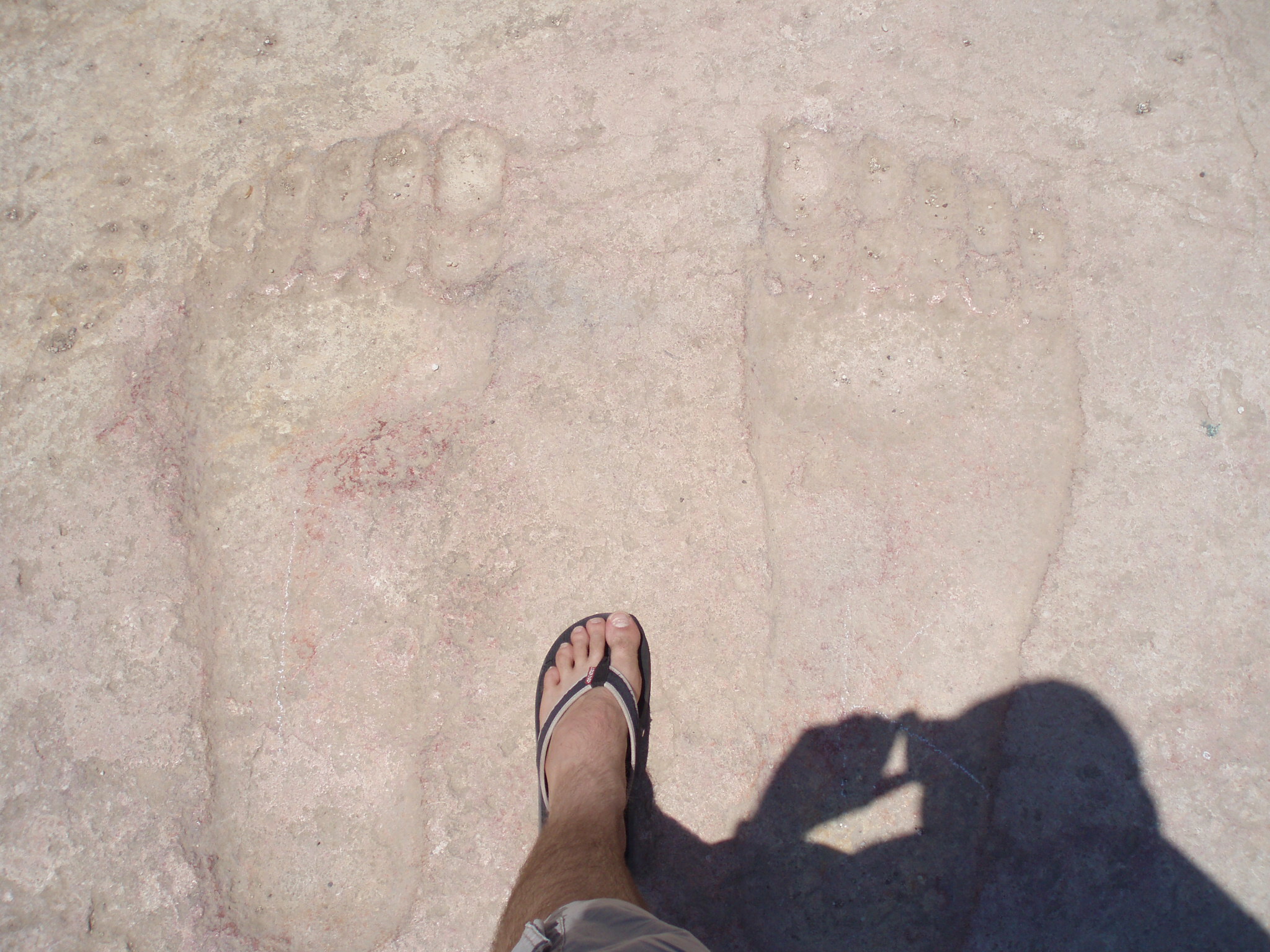
OLYMPUS DIGITAL CAMERA

The giant footprints of Ishtar entering the Ain Dara temple, a unique feature in the region. [copyright Max Darke, July 2010]

The routine Russian/Syrian bombing of Idlib’s schools and hospitals barely makes the headlines these days. Neither does the displacement of thousands of its poverty-stricken civilians into cold and muddy olive groves. Idlib’s inhabitants and culture are both ‘Forgotten’ and ‘Dead’, abandoned to their fate.

But we give up on the region at our peril.

Unmoved by massive loss of life and heritage, hard core Islamist extremists are digging in for the long haul. Most are not local, but with northwest Syria now home to the world’s largest concentration of Al-Qaeda-affiliated groups, the next iteration of ISIS may even now be incubating, soon to emerge from the caves of Idlib, to wreak more damage on Syria’s battered people and culture.

20190426120125_01 Church of Bissos Ruweiha

The Church of Bissos, Ruweiha, 6th century [copyright Diana Darke, February 2005]

A version of this article appeared on the BBC website on 8 February 2020:

https://www.bbc.co.uk/news/world-middle-east-51177433


NATO’s dilemma over the controversial Turkey/Syria border & the Kurds who straddle it

On 22 November 2019 I gave the annual John Martin lecture to the British Society of Turkish Area Studies (BATAS) at Regent’s University, London. My chosen title was ‘Turkey and Syria: deep past connections and deep present differences’, picked months earlier in order to focus attention on what had been, in my view, the long neglected border between Turkey and Syria. Little did I know that it would become, just weeks before the talk, the focus of worldwide attention after a phone call between President Trump and President Erdogan on 6 October 2019. The call was quickly followed by two connected events – the sudden US troop withdrawal from northeast Syria and Turkey’s incursion into Syria to create a long-demanded 30km deep safe zone along the border.

Originally agreed by the French and the new Turkish Republic after World War I, much of the border follows the course of the Berlin to Baghdad railway. A vastly long 822km line running from the Mediterranean eastwards, it crosses the Euphrates River and ends in Syria’s northeast corner where the Tigris River forms the border with Iraq.

It is an area I know well, having visited southeastern Turkey regularly since the late 1970s when first writing and then updating my Bradt guides to Eastern Turkey and to Syria. In fact it was where my feet first touched Turkish soil, after crossing from Syria at the Bab al-Hawa border post in my ancient Citroen 2CV. I therefore discovered Turkey ‘backwards’, entering from the east. At that time Syria was the safe haven, Lebanon was in the grip of civil war (I had just been evacuated from MECAS, my Arabic school in the hills above Beirut) and most of eastern Turkey was under martial law.

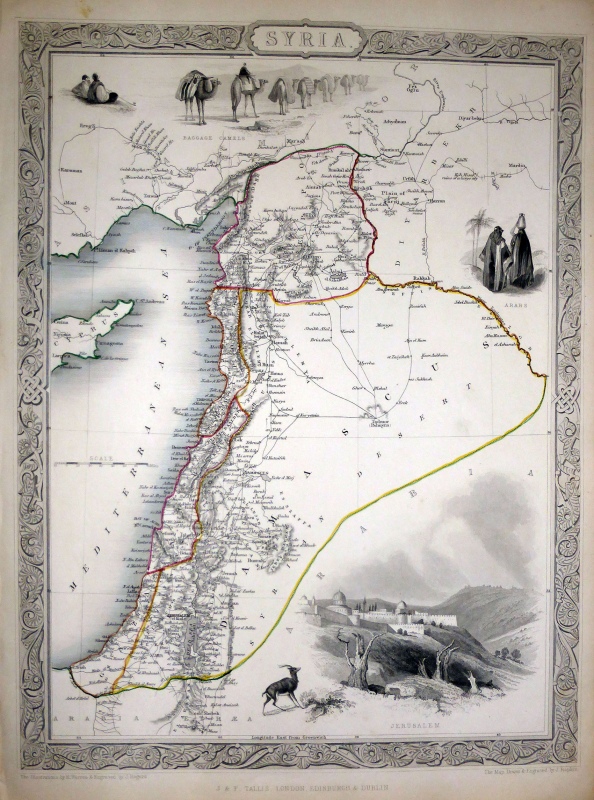
Syria engraving by John Tallis & J.Rapkin, c1851, showing wilayats of Aleppo,Tripoli, Acre, Beirut, Gaza (Diana Darke own copy)

To give an overview, I began the lecture by showing a series of historical maps of the region, starting from Ottoman times, when there were no physical borders, only administrative boundaries for tax purposes. The maps showed how, after World War I, what had been the Ottoman province of Syria gradually became smaller and smaller, losing Jerusalem, Gaza and Nablus to Britain in the south, losing Lebanon to a separate state created by the French, and losing the Sanjak of Alexandretta (Hatay) to Turkey in 1939. Syrian maps to this day still show Hatay as part of Syria, since the land transfer by the French was in clear breach of the terms of their Mandate.

Map of Syria drawn by N. Partamian in 1953, showing Banias in the Golan and Antioch within Syrian borders (Diana Darke, own copy)

Perhaps the least known historical map, and the one most relevant to today, is the one I discovered in the Institut Francais du Proche-Orient in Damascus, which shows the religious and ethnic groupings inside Syria and Lebanon. It was compiled by the French Mandate authorities ruling the region in 1935, and it marks the areas inhabited by Kurds along the Turkish border. These Kurds arrived after World War I as refugees from Mustafa Kemal’s new Turkish Republic. Non-Turkish minorities who stayed in Turkey were obliged to assimilate into a new all-Turkish identity and forgo their own cultural identities, so many left, either voluntarily or forcibly. The Kurds who crossed into Syria were later granted Syrian citizenship by the French Mandate authorities, only to have it taken away again by the Ba’athist government in 1962, which left 300,000 of them stateless, known as ‘bidoon’ (Arabic for ‘without’). President Assad of Syria hastily announced he would grant them citizenship in reaction to the 2011 uprising against him, but the UN estimates there are still 160,000 stateless Kurds inside Syria and that the remainder have mainly left the country.

Une_carte_des_communautés_religieuses_et_ethniques_de_la_Syrie_et_du_Liban_(1935)

This 1935 French map also clearly shows that the area in which Turkey has now created its ‘safe zone’, the stretch between Tal Abyad and Ras al-Ain, was historically a Sunni Arab and Turkmen dominated region, a fact well known to Turkey and which is why it chose to begin its ‘safe zone’ operation here. Kurds settled there only since 2012 during the Syrian civil war, often displacing the original Sunni Arab population, as part of their push for an autonomous Kurdish region here – what they call Rojava, meaning ‘Western Kurdistan’. These Kurds belong to the PYD, the strongest of the seven main Syrian Kurdish political parties, founded in 2003. Though it seeks to deny such links today, the Syrian PYD is so closely affiliated with the Turkish PKK Kurdish political separatist party that it was commonly referred to as its Syrian wing. When the Assad regime army quietly withdrew from these border regions in 2012, the PYD were quick, as the best organised Kurdish group, to take their place, and have also kept lines of communication open to the Syrian Assad regime, which continued to operate Qamishli airport and to pay local salaries for civil servants and teachers.   

Both the Syrian Kurdish PYD and the Turkish Kurdish PKK parties follow the ideology and teachings of the jailed Kurdish PKK leader Abdullah Öcalan, a fact that is made clear by his face appearing outdoors in flags on the battlefield and indoors in PYD office buildings. 

ocalan-1

In my lecture I considered the historic unity of the region, as revealed by the shared architecture of cities like Aleppo and Gaziantep built under the same Ottoman governor, shared trade, and the shared geography of the Fertile Crescent, where dams on the Euphrates have turned deforested plains into productive fields of cotton and wheat. Next I explained about the pockets of Christianity that straddle the border, looking at monasteries that have been newly established on old foundations by Syriac monks like Father Joachim of Mar Augen, on the ridge above Nusaybin in Turkey, looking out over Qamishli in Syria.

OLYMPUS DIGITAL CAMERA

Many Syriac communities and other minorities found refuge here after escaping from the Sayfo massacre by the Kurds in 1915. When I had first visited Mar Augen in the 1980s the ruins were being lived in by a Yezidi family.

Before the current Syrian war, the border was very open and easy to cross. There were no visa requirements for Syrians and Turks to cross into each other’s countries, and as a result, many Syrians holidayed in Turkey and vice versa. President Erdogan and President Assad even holidayed together, in a symbol of these close ties.

But this porous border became a problem once jihadi fighters of all nationalities, including Europeans, started crossing it to join ISIS in its newly-proclaimed caliphate based in Raqqa, on the Euphrates in eastern Syria from 2013 onwards. Assad saw Raqqa as a provincial backwater and ignored the rise of ISIS there. Erdogan also underestimated what ISIS would become and was accused of turning a blind eye.

The four-month battle for Kobane in September 2015 was the turning point, when US fighter jets teamed up with PYD Kurdish fighters on the ground to expel ISIS from the city – the US/Kurdish coalition was born. Erdogan protested loudly from the start about this alliance between America and the Kurdish separatists it has considered terrorists since the 1980s when the PKK first began a long-running guerrilla war against the Turkish army in which 45,000 lives were lost. The PYD, in an effort to legitimise themselves in the eyes of the outside world, formed the Syrian Democratic Forces (SDF) by recruiting some local Arab and Syriac fighters, but it was always Kurdish-dominated. To help understand, consider for example what would happen if Basque separatists, regarded as terrorists by the Spanish government, were to team up with the French army to defeat a group like ISIS. Spain would no doubt have been equally vocal about its displeasure from the outset.

In other words, the current problem that countries like France have with fellow NATO member Turkey’s actions against the PYD Kurds was foreseeable from the start. Turkey was willing to use its own army, but France and others in the US-led coalition against ISIS took the short term, expedient method of fighting ISIS using PYD Kurdish boots on the ground who were already there and only too willing to partner with the US and its allies. These PYD Syrian Kurds wanted to defend their Kurdish majority cities like Kobane and they knew it would play well to them and their image in the long-term, if they were seen to be reliable partners against ISIS.

They also showed themselves to be experts in PR, campaigning in Moscow, in Washington and in European capitals for support of their Rojava project – PYD offices abroad have opened in Moscow, Prague, KRG Sulaymaniyah, Stockholm, Berlin and Paris. Photo features on their Kurdish Kalashnikov-wielding female fighters have appeared so often in the western media that you could almost be forgiven for thinking the female fighters defeated ISIS single-handed. Rarely mentioned is that many of those female fighters were on the battlefront to escape patriarchal domestic dominance, notoriously prevalent in Kurdish society with its ‘honour killings’ and blood feuds. Some women have even set up all-female villages where they can live freely away from their controlling menfolk. Fighting ISIS offered an escape route.

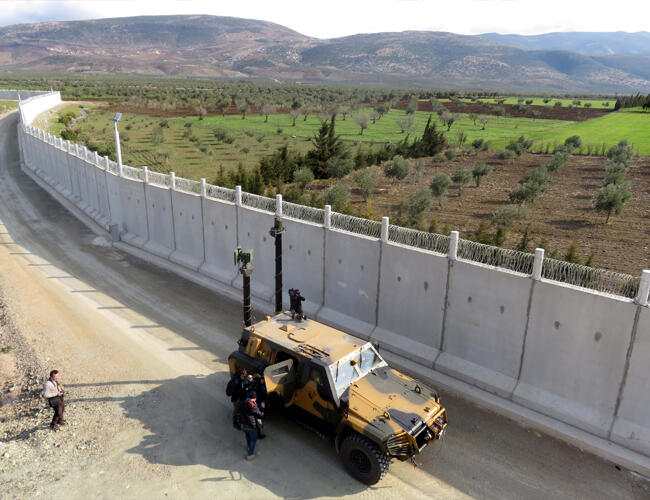
In this highly complex and combustible situation along the Turkey/Syria border, everyone is fighting for different reasons, driven by conflicting aims and beliefs. When it was first formed after the dismantling of the Ottoman Empire by the Allies, this new border between modern Turkey and Syria was porous and easy to cross, and remained so till very recently. But in late 2014, largely in response to European criticism that it was allowing ISIS fighters to cross into Syria without checks, Turkey began construction of an impenetrable 3m high concrete security wall along the border, topped with razor wire. The EU funded the construction, according to German Der Spiegel, keen to protect itself from ISIS.

Today it is complete, the third-longest wall in the world after the Great Wall of China and the US-Mexico border wall. The communities that once straddled it are now divided permanently, for the first time in their long and interwoven history. Such barriers, as has been amply demonstrated in the past, erected as short-term solutions to complex problems, have a way of creating long-term obstacles to peace as well as to people. NATO’s future is at stake, so a well-coordinated, long-term solution must be found.

Syria Turkey border wall

The heritage of Notre Dame – less European than people think

12314734-6925015-image-a-283_1555360722531 notre dame on fire

It was striking last night, as Paris’s landmark site of Notre Dame Cathedral burned before our eyes, how few seemed to know that Notre Dame’s architectural design, its twin towers flanking an elaborate entrance, its rose windows, its rib vaulting and its spire (la fleche) owe their origins to Middle Eastern predecessors.  Tributes flowed in from round the world, praising the cathedral’s status as an icon of our shared European heritage and identity. “All of us are burning,” declared President Macron to the French nation.

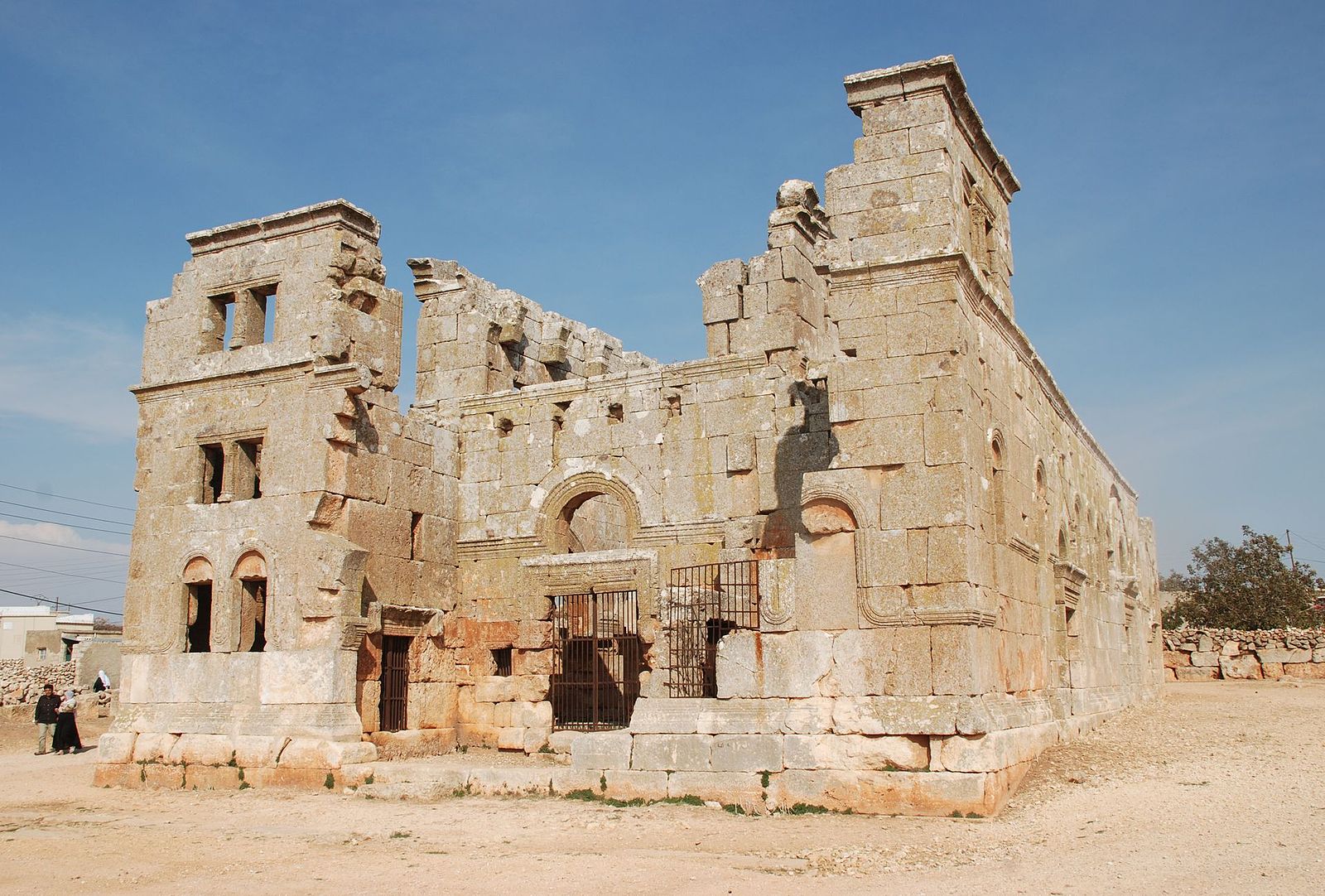
Let’s start with the twin tower design. The earliest example stands on a hillside in northwest Syria, in Idlib province, in a church built from local limestone in the mid-5th century. It’s called Qalb Lozeh (‘Heart of the Almond’ in Arabic) rightly praised as one of the best preserved examples of Syrian church architecture, a magnificently proportioned broad-aisled basilica, the forerunner of what came to be known as the Romanesque period.

Qalb Lozeh facade with twin towers (Attribution Bertramz, 2009)

When Gertrude Bell first saw it in 1905 she described its “towered narthex, the wide bays of the nave, the apse adorned with engaged columns, the matchless beauty of the decoration and the justice of proportion preserved in every part… this is the last word in the history of Syrian architecture, spoken at the end of many centuries of endeavour… the beginning of a new chapter in the architecture of the world. The fine and simple beauty of Romanesque was born in North Syria.” Later scholars like George Tchalenko, Georges Tate and Jean-Pierre Sodini conducted extensive surveys.

In belated recognition of its importance it was included in 2011 within a UNESCO World Heritage Site labelled Ancient Villages of Northern Syria. Locally they are known as the ‘Dead Cities’, clusters of nearly 800 Byzantine stone-built settlements with over 2,000 churches dating from the 4th-6th centuries. Their wealth was built on wine and olive oil production, with many stone presses still extant. They were renamed the ‘Forgotten Cities’ by the Syrian Ministry of Tourism before the war, and there were even hiking holidays under discussion, with planned homestays in the villages to bring income back to these remote rural areas.

Inside the church is divided into three, with a central nave, echoes of the Trinity everywhere in the design – the three aisles, three pillars on each side of the nave, three facade windows, three apse windows and three arches dividing the nave from the side aisles. The arches rest on squat square piers with strong capitals to bear the weight of the upper storey with its clerestory windows. The nave would originally have had a wooden roof, long since gone, but the vaulted dome over the semi-circular apse still survives.

Qalb Lozeh was thought to have been built as a pilgrim staging post en route to the famous St Simeon Stylites, some 35km to the northeast. Pilgrims, monks and merchants travelled constantly between Syria and Europe – influences were fluid, as were borders. Frankish (modern French) Crusaders saw these church designs (as well as local military architecture) in the 12th century, and brought many ideas back with them to Europe, where they were developed further.

What we today call the Gothic arch, prevalent in Notre Dame and in all the great cathedrals of Europe, was an architectural design first seen in the Ibn Tulun Mosque in Cairo and passed via Amalfi merchants to Sicily. With their advanced knowledge of geometry and the laws of statics Muslims developed both the horseshoe (also known as Moorish) arch (first seen in the Damascus Umayyad Mosque then further developed by the Umayyads in Andalusia in the Cordoba Mezquita) and the pointed arch to give more height than the classical arch. The first building to use them in Europe was the Abbey of Monte Cassino in 1071, financed by Amalfi merchants. It then moved north to the Church of Cluny which boasted 150 pointed arches in its aisles. The fashion quickly spread from these, two of the most influential churches in Europe, as this pointed ‘Gothic’ arch was stronger than the rounded arch used by the Romans and the Normans, so allowed the construction of bigger, taller, grander and more complex buildings like the great cathedrals of Europe.

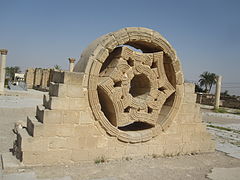
Other borrowings from Muslim designs, also to be found in Notre Dame, include ribbed vaulting (traced to the 8th century Abbasid Palace of Ukhaydar in Iraq and later entering Europe via the Toledo and Cordoba mosques in Muslim Spain), rose windows (first seen at the 8th century Umayyad palace of Khirbat Mafjar (Hisham’s Palace) in the West Bank near Jericho,

Hishams_Palace_window_Author_MDarter rose window

and the spire (which collapsed so spectacularly on Notre Dame as the timber roof gave way beneath it). The first known spire is on top of the northern Minaret of the Bride in the Umayyad Mosque of Damascus, built in the early 8th century.

070309_IMG_5405_Damascus-Umayyad-Mosque_999x with spire

In England the first ever spire was on top of St Paul’s Cathedral in 1221. It was destroyed in the Great Fire of London then rebuilt in 1710 by Sir Christopher Wren, an avowed admirer of Muslim architecture who conducted an extensive comparative study of Gothic, Moorish and Ottoman styles. “The Goths,” he said, “were rather destroyers than builders: I think it should with more reason be called the Saracen (Arab Muslim) style.” The combination of dome and tower in his masterpiece of St Paul’s, together with the structure of the domes in the aisles, shows this strong Muslim influence, also clearly visible in Notre Dame.

Related links:

https://www.bbc.co.uk/news/world-europe-47942786

https://www.bbc.co.uk/news/world-europe-47953795

Sources:

Monuments of Syria, Ross Burns (IB Tauris 1999)

The Origin of the Two-tower Facade in Romanesque Architecture, Herwin Schaefer (The Art Bulletin 1945)

Muslim Heritage in Our World, ed. Professor Salim Al-Hassani (Foundation for Science Technology and Civilisation 2006)

The Desert and the Sown, Gertrude Bell (Dutton 1907)

Discussion of the Islamic Origin of the Gothic Style (from Parentalia: or, Memoirs of the family of the Wrens, by Mathew Bishop 1750)

An Islamic History of Europe, Rageh Omar (BBC4, 5-19 August 2005)


New book ‘The Last Sanctuary in Aleppo’

9781472260574 (1)

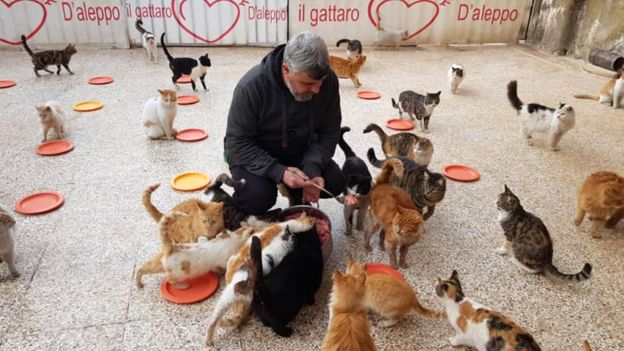
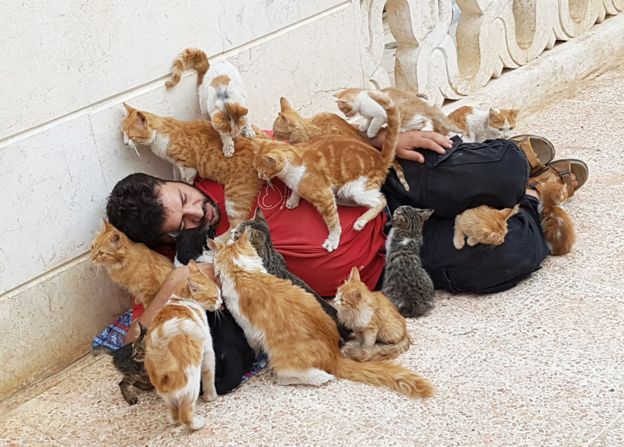
The cat man of Aleppo, Mohammad Alaa Aljaleel, touched the hearts of millions when his sanctuary featured in a BBC video in 2016. He had to leave the city when it fell to Syrian government forces, but he’s now back – in an area nearby – and helping children as well as animals.

My new book ‘The Last Sanctuary in Aleppo‘ is a joint venture telling his story in his own words, from his childhood growing up in Aleppo, loving cats, becoming an electrician, getting married and having children, till the war turned his whole life upside down and gave him the chance to do what he’d always dreamed of. He is still inside Syria, so we used WhatsApp to communicate, me sending him questions, him replying orally in voice messages. He only speaks Arabic, which is why the publishers approached me, as they needed an Arabic speaker with extensive background knowledge of Syria. After collecting all the information, I wrote the book very fast, 80,000 words in two months. The intensity helped me to turn myself into him, so I could write in the first person, which was the publishers’ brief! A trusted Syrian refugee couple, Raida Mukarked and Ammar Hasan, who used to live in the upstairs flat of my house in Damascus, but who are now displaced to Beirut, helped me collect the information and we have now all become good friends with Alaa, a real team.

Just weeks after the BBC video was filmed, Mohammad Aljaleel (known to everyone as Alaa) watched helplessly as his cat sanctuary was first bombed, then chlorine-gassed, during the intense final stages of the siege of Aleppo.

Most of his 180 cats were lost or killed. Like thousands of other civilians he was trapped in the eastern half of the city under continuous bombardment from Russian and Syrian fighter jets.

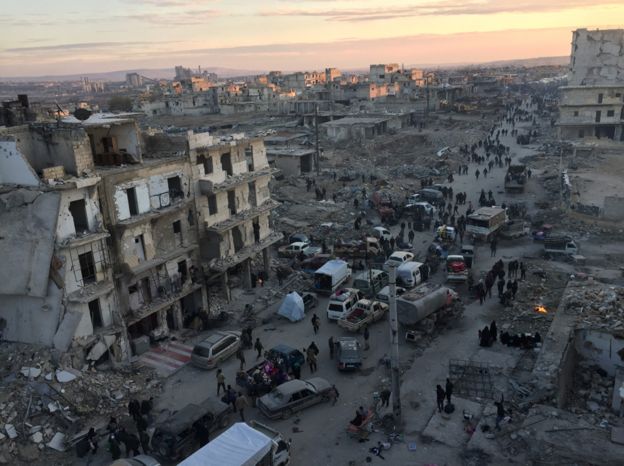
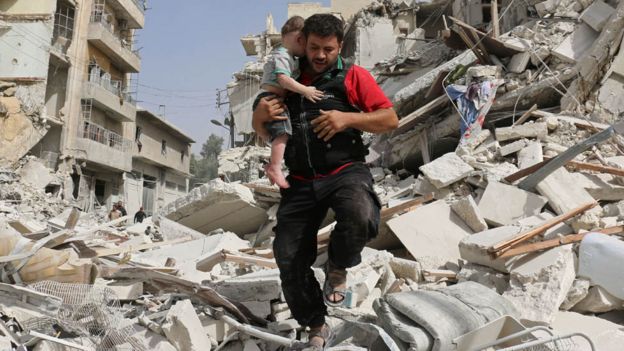
As the siege tightened, he was forced from one Aleppo district to another, witnessing unimaginable scenes of devastation. Yet throughout, he continued to look after the few surviving cats and to rescue people injured in the bombing, driving them to underground hospitals.

The evacuation of east Aleppo, December 2016GETTY IMAGES
The evacuation of east Aleppo in December 2016

When the city fell in December 2016, he left in a convoy, his van crammed full of injured people and the last six cats from the sanctuary.

“I’ve always felt it’s my duty and my pleasure to help people and animals whenever they need help,” Alaa says. “I believe that whoever does this will be the happiest person in the world, besides being lucky in his life.”

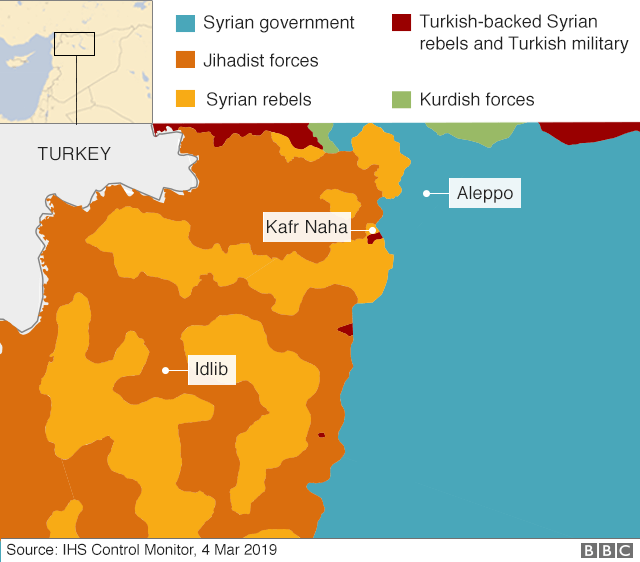
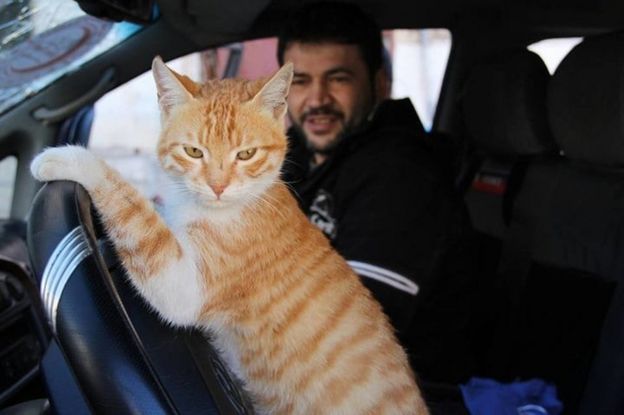
After a brief recuperation in Turkey, he smuggled himself back into Syria – bringing a Turkish cat with him for company – and established a new cat sanctuary, bigger and better than the first one, in Kafr Naha, a village in opposition-held countryside west of Aleppo.

Map

Using the same crowdfunding model employed successfully in east Aleppo, funds were sent in by cat-lovers from all over the world via Facebook and Twitter.

But Alaa has always worked for the benefit of the community, as well as the cats themselves.

In Aleppo, he and his team of helpers bought generators, dug wells and stockpiled food. Even at the height of the bombing, they ran animal welfare courses for children, to develop their empathy. They also set up a playground next to the sanctuary where children could briefly escape from the apocalyptic events taking place all around them.

Alaa and Ernesto
Alaa and a cat called Ernesto

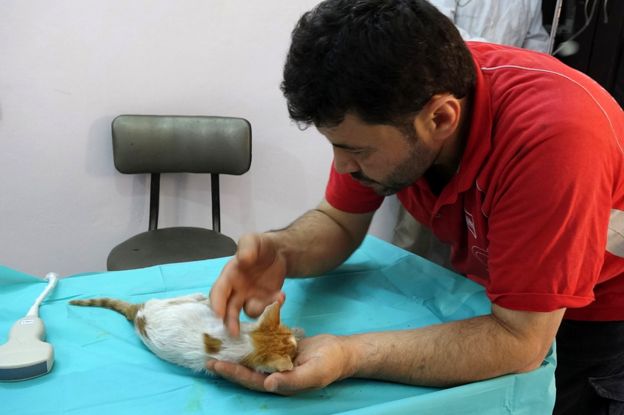
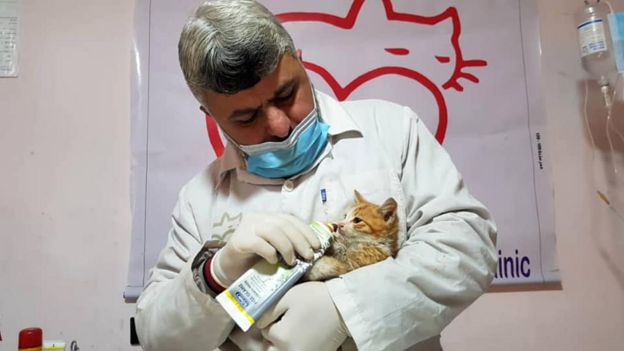
The new sanctuary has expanded to include an orphanage, a kindergarten and a veterinary clinic. Alaa and his team resemble a small development agency, providing services that government and international charities cannot or will not. He strongly believes that helping children to look after vulnerable animals teaches them the importance of kindness to all living creatures, and helps to heal their own war traumas.

“Children and animals are the big losers in the Syrian war,” he says. “It’s the adults who so often behave badly.”

Alaa rescues a child in 2016GETTY IMAGES
Alaa rescues a child from rubble in Aleppo in 2016

As a boy growing up in Aleppo, Alaa had always looked after cats, spurring his friends to do likewise, even though keeping cats and dogs as pets is not customary in Syria or the rest of the Arab world.

He started working aged 13, as an electrician, but also turned his hand to many other jobs – painter, decorator, IT expert, satellite-dish installer… he even traded toys between Lebanon and Syria.

Alaa and a kittenGETTY IMAGES

He worked hard and he learned how to get things done. “May the dust turn to gold in your hands, Alaa,” his mother used to say.

His dream was to become a fireman like his father and work in search and rescue, but such jobs were handed out only to those with connections, and the connection through his father was not enough. So for years his applications were rejected.

The sanctuary's vet, Dr Youssef
The sanctuary’s vet, Dr Youssef

“Of course I would never have wished for a war in order to make my dream come true. I wish I could have achieved these things without the suffering I have seen,” he says.

“God blessed me by putting me in a position where I could help people by being a rescue man, but in my worst nightmares I never imagined a war like this for my people or for my country, or even for a single animal.”

During the siege in Aleppo he used to visit both Christian and Muslim old people’s homes, distributing food. Extremist groups such as al-Qaeda-affiliated Jabhat al-Nusra regularly chided him, calling him a kaafir, an unbeliever, but he continued regardless.

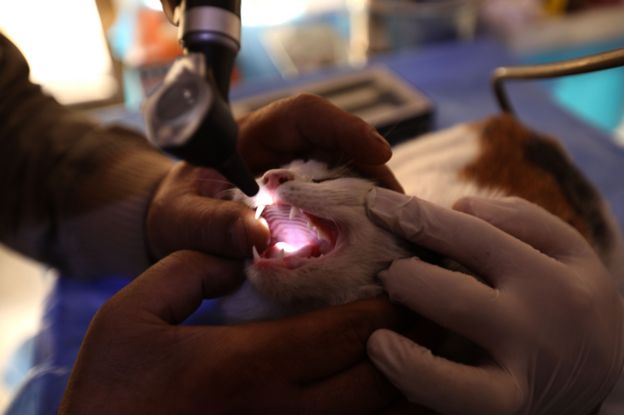
Vet checking cat's mouthGETTY IMAGES

“Our Prophet Muhammad was good to everybody. He spoke with all Christians and Jews. I believe in Moses, Jesus and Muhammad, because all of them had a noble aim. I’m a Muslim, but I am not a fanatic. I just take from religion everything that’s good and that I can learn things from,” Alaa says.

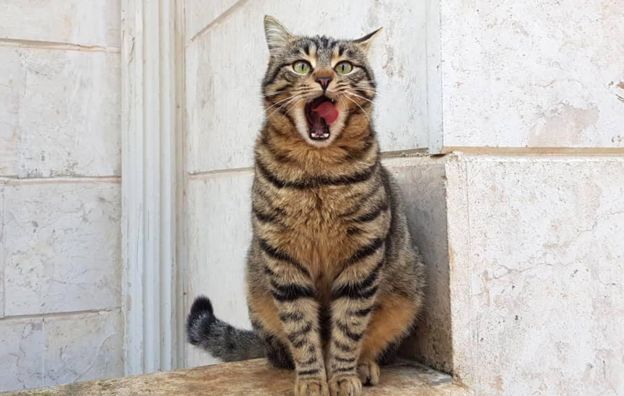
Despite the difficulties he has endured, Alaa has always maintained a wicked sense of humour. At the new sanctuary, a tabby called Maxi the Marketing King is chief fundraiser, soliciting “green kisses” in the form of dollar bills via social media accounts.

Maxi, aka King Maxi
Maxi, chief fundraiser

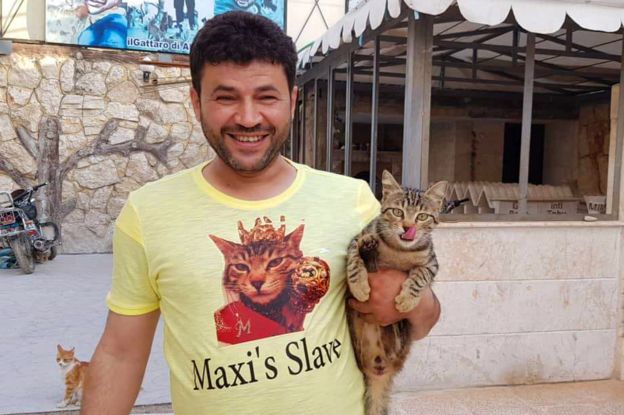
Alaa wears a T-shirt with “Maxi’s Slave” written on it, and gets ticked off for smoking too much or for not cooking gourmet meals. He admits his shortcomings. “We submit to Maxi’s authority as the ruler of his kingdom. But even with Maxi’s leadership it wasn’t easy to launch the new sanctuary,” he says.

Maxi's "slave"

This is an understatement. The rebel-held area where Alaa now lives is semi-lawless and when powerful gangs realised he was receiving funds for the sanctuary, they attempted to kidnap him. He was no longer being bombed, but his life was still at risk.

As well as cats, the new sanctuary has dogs, monkeys, rabbits, a chicken that thinks it’s a cat, and an Arabian thoroughbred horse.

“There are so few thoroughbred horses left inside Syria now that I worry about finding him a mare to breed with. I plan to perform the role of a traditional Syrian mother and try to find him a wife, so that he can have children and start building up the population of thoroughbred horses in Syria again,” Alaa says.

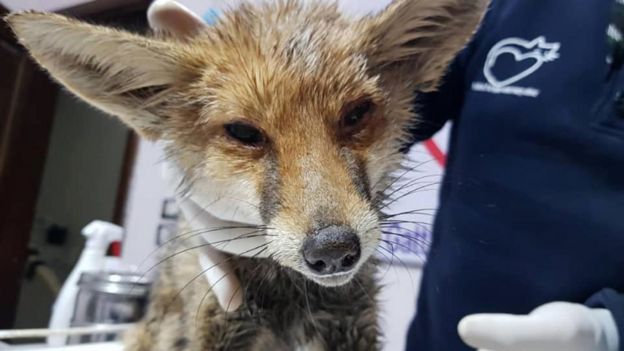
Fox at the sanctuary
An injured fox, rescued by the sanctuary…

All the animals have names, generally awarded by Alaa. An aggressive black-and-white cat who came to the sanctuary, stole food and terrified all the other cats was nicknamed al-Baghdadi, after the Iraqi leader of Islamic State (IS).

“Of course, this cat was a million times better than that evil murderer al-Baghdadi, but this name came to mind because his presence in the sanctuary coincided with the arrival of IS gangs in Aleppo,” Alaa says.

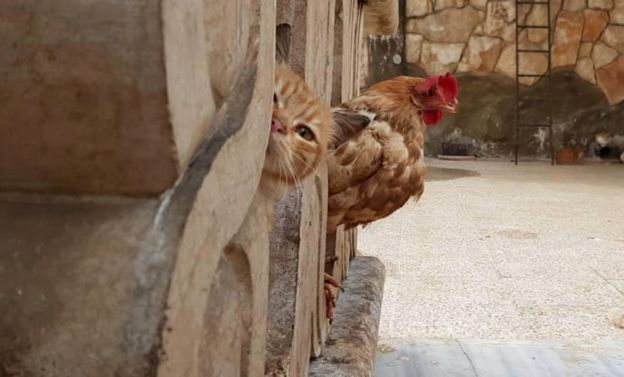
Cat and cockerel
… a cockerel that behaves like a cat…

A large ginger tomcat was given a Trump hairstyle and christened The Orange President of the Sanctuary. A pair of speedy acrobatic cats were called Sukhoi 25 and Sukhoi 26, after Russian fighter jets.

“They’re old planes, but effective enough for the job required of them in Syria. We always knew when the Russians were coming to bomb us because of their very loud engine noise. We’d shout: ‘Watch out! A Sukhoi is coming!'”

Alaa’s reputation inside Syria has travelled far and wide, and the government is well aware of his activities.

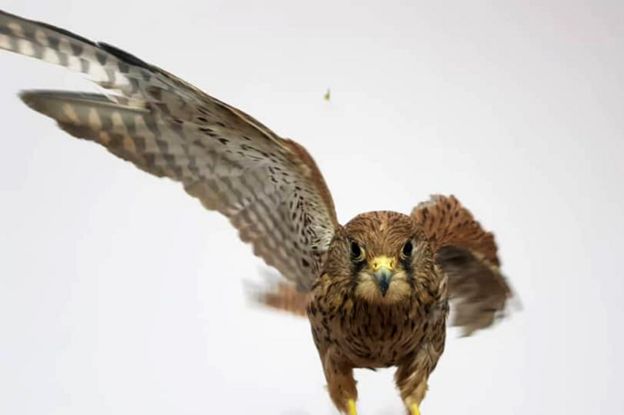
A hawk
… and a resident bird of prey

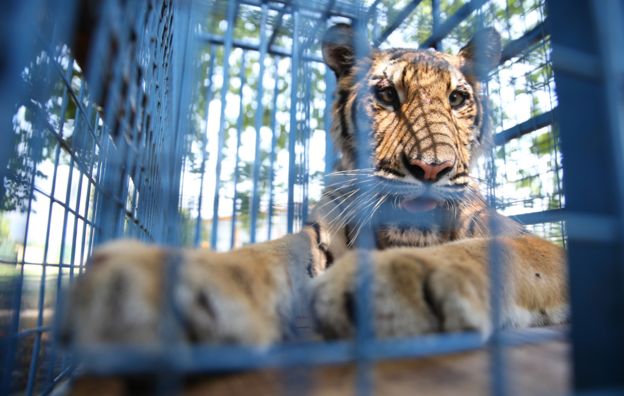
In 2017 he was called by the Magic World Zoo, south of Aleppo, which asked desperately for his help to feed the neglected lions, tigers and bears – which he did, despite the dangers of the journey which involved passing through Jabhat al-Nusra checkpoints. While there, he discovered he had been recommended by the Syrian Ministry of Agriculture.

“It was funny that the ministry knew about us and was handing over responsibility for the zoo animals to us,” he says. “The Magic World Zoo gave me a lot of headaches.”

Alaa was eventually able to negotiate a solution for the animals with a charity called Four Paws, which arranged for the animals that hadn’t died to be transported out of Syria to new homes in Belgium, the Netherlands and Jordan.

A rescued tiger from the Magic Zoo, in transit through TurkeyGETTY IMAGES
One of the rescued tigers, in transit through Turkey

In the new sanctuary he looks after 105 children, of whom 85 are “orphans” (in Syria the word covers children who have lost a breadwinner, as well as those who have lost both parents). Only 11 children actually sleep in the orphanage at present, because it isn’t finished, but all receive education, food and clothes, for which Alaa pays 25 euros per month.

The biggest risk is the instability in the region. Clashes break out periodically, as it’s close to the border with Idlib province, which is controlled by rebel groups who often fight each other. No-one knows what will happen next to that part of Syria and who will end up in charge.

Feeding time at the sanctuary

“I blame all fighting parties equally – no matter who they are or why they say they’re fighting – for the killing of civilians,” Alaa says.

“We are rebuilding our communities and my role in that is to rebuild my sanctuary for cats. Friendship between animals is a great thing and we should learn from them. I’ll stay with them no matter what happens.

Alaa covered by cats

“It seems the world cannot solve wars and conflicts these days. That’s why there are now so many refugees around the world, but especially here in the Middle East.

“I do not want to be a refugee. I want to stay in my country, in Syria. I want to help people in any way I can.”

Related links:

My BBC Breakfast TV interview with Naga Munchetty about the book:

https://www.bbc.co.uk/news/stories-47473772

  • House of Cats Ernesto (official website)

Warlords v. conservationists: one of Syria’s new battles

Compare and contrast these two scenes: in Berlin, a team of highly qualified Syrian architects under the auspices of the Museum of Islamic Art carefully builds a digital archive of Aleppo’s historic monuments to help with future restoration. In Aleppo, a gang of semi-illiterate thugs under the auspices of “The Tiger” – Russian President Vladimir Putin’s favoured Syrian warlord, General Suheil al-Hassan – takes credit for ineptly restoring the same ancient mosques it helped to destroy.

While a third of Syria’s housing stock is estimated to have been destroyed during seven years of war, the new battle is between armies of frustrated conservation experts outside the country and armies of looters acting with impunity on the ground.

In Aleppo, a new poster hangs from buildings in “liberated” areas back under regime control, reading in grammatically incorrect Arabic: “Together it will come back more beautiful.” It is tellingly ambiguous about exactly who will bring Syria back more beautiful; an unsavoury mix of gangs and shabiha thugs calling themselves the “Tiger’s Men” are currently claiming that role.

img-20181208-wa0000

Poster displayed in Aleppo square “Together it will come back more beautiful.”

Turning a blind eye

Their most recent trophy, Al-Akhal Mosque, dating to 1485 in the Jdeideh quarter, now bears garish, green-painted mortar.

img-20181208-wa0008

Al-Akhal Mosque, dating to 1485, now bears garish, green-painted mortar

YouTube video lauds their achievement, calling them the “White Hands”, perhaps meant to portray angelicness or innocence. They rebuilt the nearby Al-Fadila school and erected a plaque to ensure posterity knew it was them.

No one asked to see their permissions, according to a local source. Corruption is rampant throughout the city as gangs of shabiha (literally “ghosts”, the word used to describe armed militias loyal to President Bashar al-Assad) run the show. Hated by many Aleppo residents, they are predominantly Alawites and Mardinli Turkmen.

But the government does not want the communities to reconstitute themselves. On the contrary, it wants society to remain fractured. A broken society is easier to control

The Assad regime seems unwilling -or unable- to rein them in, turning a blind eye to their looting of local residents’ houses. “There’s a hierarchy for the booty,” said an Aleppo resident who asked to remain anonymous. “The TVs are for the officers, the fridges and washing machines are for the middle ranks, and the wood and wiring pulled out of people’s abandoned homes is for the lower ranks. It’s disgusting.

“We see the trucks loaded up with booty being driven off openly in broad daylight. They don’t need to do it in secret … It’s their reward for their loyalty. We’re living in medieval times.”

Whole swaths of central and eastern Aleppo have been destroyed by a combination of Russian and Syrian aerial bombardment and rebel tunnel-bomb explosions. All parties to the conflict share blame for the destruction of Syria’s chief trading city. Its status as a Unesco World Heritage Site afforded it no protection once the war arrived in 2012, a year later than in Damascus.

Today, the only official restoration underway is for the Great Mosque of Aleppo, a flagship project paid for by the Chechen president, a friend of Putin’s.

me examining the sun dial still under protection in the courtyard of the great aleppo mosque 18 april 2018 pamela

Courtyard of the Aleppo Umayyad Mosque, April 2018, me examining the medieval sundial, the only item still protected from 2013 when rebels controlling the mosque built this wall round it. See https://www.thenational.ae/world/mena/is-reconstruction-of-aleppo-s-grand-mosque-whitewashing-history-1.728715

The city’s churches and cathedrals have already been largely restored, thanks to well-connected priests and patriarchs close to the regime. Funds from wealthy Christian donors have somehow found their way in, despite financial sanctions.

Some individual homeowners engaged local labour to repair their damaged houses after the city fell in late 2016 – but then state structures started reasserting themselves. “It’s worse now than it was before the war,” said a resident from Aleppo. “At least back then, there was only one authority you had to get permission from. Now there are five, and each one wants his cut. The opportunities for corruption have multiplied.”

A government that genuinely cared about its people and its communities would clamp down on the shabiha thugs and their mafia-style gangs

Ordinary residents in Aleppo did what they could after the city fell. The streets of Jdeideh, a frontline in the conflict, were full of rubble from the debris of aerial bombardment and underground explosions. Volunteers painstakingly cleared the streets, a process for which the government was quick to take credit.

On 28 September, the government even staged an international tourism day in al-Hatab Square, that was filmed by Al-Mayadeen, a pro-Syrian regime TV channel, and a Russian state TV channel, to show the world how Aleppo was returning to normal after the reassertion of regime control. But it takes a long time to loot a city of more than three million people, and as long as there is money to be made from the illicit plunder, it will continue.

Bureaucratic inertia

In such an atmosphere, there is currently no scope for the repair of hundreds of Aleppo’s monuments. Local residents watch while their neighbourhood mosques, formerly the centres of their community, slowly disintegrate.

aleppo city centre 25 april 2014

Aleppo city centre

Winter months are the hardest, when rainfall can cause severe damage to buildings already in a precarious state. Domes with cracks or sections missing collapse, turning what would have been a relatively simple and inexpensive repair into a costly exercise that could take years.

The danger is that such buildings may even become too difficult and expensive to restore, simply because they have been neglected – victims of the bureaucratic inertia that is crippling all aspects of reconstruction in Syria. In many cases, all that would be required would be some plastic sheeting to cover the roof and make the building watertight – an exercise that would take only days and cost very little.

But the government does not want the communities to reconstitute themselves. On the contrary, it wants society to remain fractured. A broken society is easier to control.

Shared heritage

A government that genuinely cared about its people and its communities would clamp down on the shabiha thugs and their mafia-style gangs. It would have the vision to provide microfinancing to small-scale businesses and to harness cultural heritage for sustainable development, encouraging employment and the revival of traditional crafts.

This shared heritage could foster a strong Syrian identity across religious and ethnic divides, becoming part of a nationwide reconciliation process. It could empower women, now outnumbering men by four to one in the workforce, and help them rebuild the destroyed foundations of their country.

Earlier this month, reports surfaced on the internet of two metric tons of looted antiquities discovered in The Tiger’s Damascus home. Is this how Syria comes back more beautiful?

Berlin’s team of Syrian architects – like everyone outside Syria, including Unesco – is powerless to intervene. All they can do is hope and pray that, when the day comes that Syria can finally benefit from their digital archive, something remains of Syria’s cultural heritage to be saved.

aleppo room

The Aleppo Room in Berlin’s Islamic Art Museum, dated 1600-1603, shipped to Germany in 1912 from Beit Wakil in Al-Jdeideh, a part of Aleppo that suffered heavy destruction between 2012 and 2016.

A version of this article appeared in Middle East Eye on 14 December 2018:

https://www.middleeasteye.net/columns/syria-s-newest-battle-we-re-living-medieval-times-1350119160

Post Navigation