dianadarke

Syria and Turkey commentary

Archive for the tag “Syria”

Damascus ‘neighbourhood militias’ being trained in Russia

Detail of an Ottoman painted ceiling in the Old City of Damascus

Detail of an Ottoman painted ceiling in the Old City of Damascus

Members of the ‘neighbourhood militias’ who now man the checkpoints in the Old City of Damascus have been receiving training in Russia, I am reliably informed. Training in what, you may ask? How to spy on your neighbours?

No, training in how to use weapons, how to fire guns, Many of the militia members are very young indeed, still teenagers. But if you are unemployed and your university/school education has been interrupted by war, the attractions of a stable job, paid for by the regime are obvious. The overwhelming majority are young men, but a few are women, some of whom – especially those stationed at the Bab Touma and Bab Sharqi checkpoints, are even wearing hijab headscarves, which is surprising.

The ordinary residents of the Old City have noticed the change, and the increase in armed patrols and checkpoints, but far from feeling safer, they are worried that these militias will increase the volatility of the Old City, hitherto a relatively safe bubble away from the fighting. What will happen next is anyone’s guess, but the residents feel highly manipulated by the presence of these militias whom they have had no say in choosing.

A rare insight into Damascus

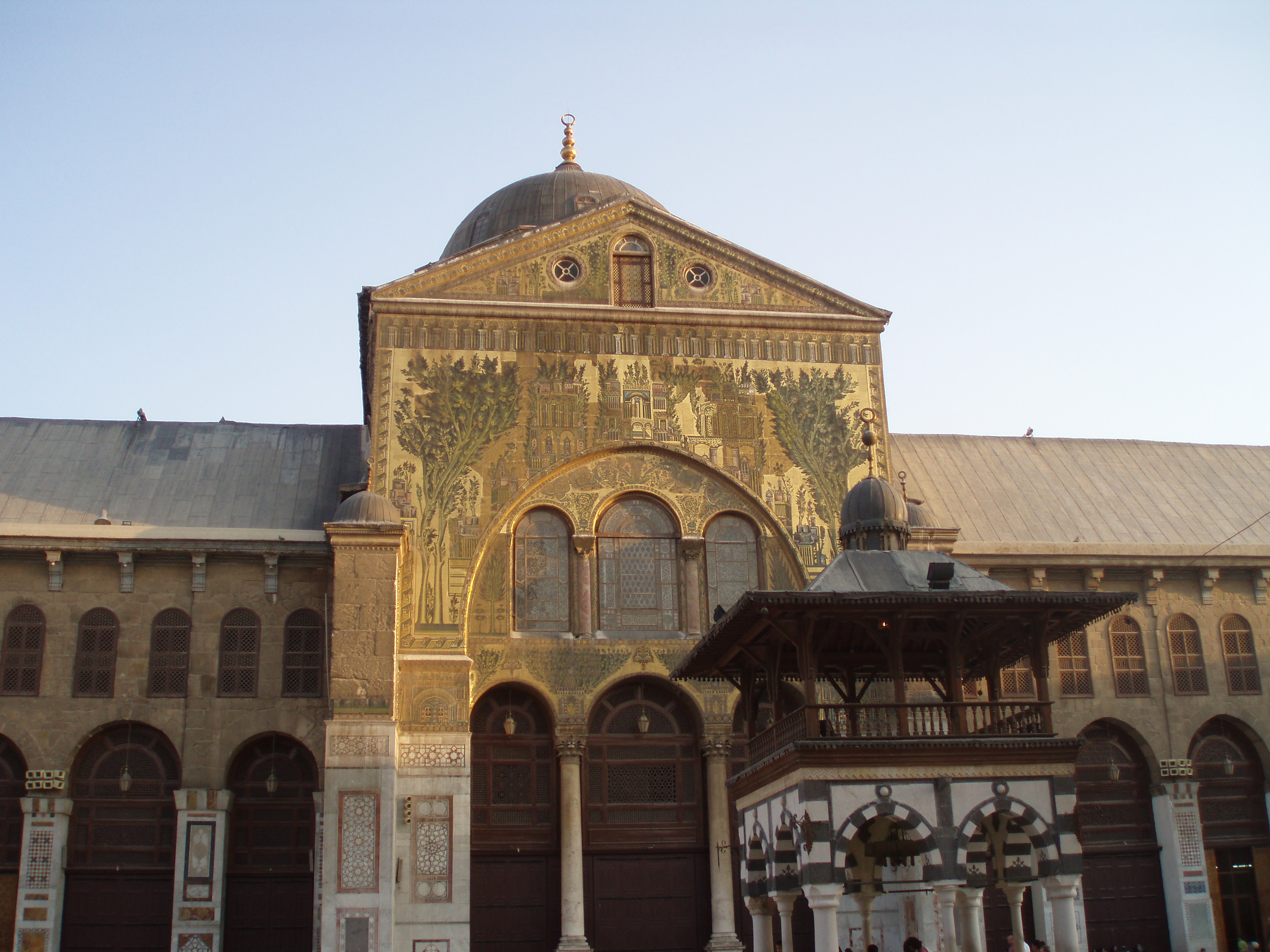
The priceless mosaics with scenes of Paradise, Damascus Umayyad Mosque

The priceless mosaics with scenes of Paradise, Damascus Umayyad Mosque

It is rare in current reporting on Syria to find anything that goes beyond sensationalist headlines about Islamic extremists, massacres, battles won and lost. Horror stories about cannibals compete with more horror stories about rape as the international perception of Syria and its people spirals ever downwards.

But the New York Times’ recent reporting by Anne Barnard bucks the trend, showing the complexities of life in Damascus while at the same time exposing some of the regime’s ploys to control the Old City of Damascus. Barnard and her interpreter were taken by their government minder to attend one or two of the so-called ‘reconciliation’ committee meetings held in Maktab Anbar, the Ottoman palace which serves as the headquarters of the Old City’s municipal offices. But even though they were shown these meetings as examples of how the communities are cooperating to protect their neighbourhoods, they were able to see through the charade and identify many of the same attendees as members of the armed ‘neighbourhood militias’ and observe that ‘security’ was the main topic rather than ‘reconcilation’. If only more media reporting was as perceptive.

http://www.nytimes.com/2013/07/21/world/middleeast/enlisting-damascus-residents-to-answer-assads-call.html?pagewanted=all

http://www.nytimes.com/2013/07/29/world/middleeast/a-link-straight-to-syrias-ancient-past-endures-as-war-creeps-closer.html?_r=0

http://www.nytimes.com/slideshow/2013/07/29/world/middleeast/29damascus.html#1

Media’s unhelpful role in Syria

English: South facade of Church of Saint Simeo...

English: South facade of Church of Saint Simeon Stylites, Syria Français : Façade Sud de l’église de Saint-Siméon le Stylite. Syrie (Photo credit: Wikipedia)

Jon Snow at the BAFTA's

Jon Snow at the BAFTA’s (Photo credit: damo1977)

Billboard with portrait of Assad and the text ...

Billboard with portrait of Assad and the text God protects Syria on the old city wall of Damascus 2006 (Photo credit: Wikipedia)

English: View of the main (and oldest) buildin...

English: View of the main (and oldest) building of Deir Mar Musa al-Habashi or Monastery of Saint Moses the Abyssinian, Syria Français : Vue du bâtiment principal (et le plus ancien) du monastère de Mar Mousa, Syrie (Photo credit: Wikipedia)

English: Columns in Palmyra, Syria, 2009.

English: Columns in Palmyra, Syria, 2009. (Photo credit: Wikipedia)

With the notable exception of today’s Guardian focus on Syria and its refugee crisis, the UK media’s role in covering the Syrian crisis has been largely unhelpful, seeking out sensationalist but essentially peripheral aspects of the ongoing civil war. Their goal is evidently to sell more newspapers/get higher viewer/listener figures than their rivals, treating the war as a commodity for sale.

Particularly disturbing on this front was the recent coverage by Channel 4 News of British jihadi women in Syria. By showing these women, fully veiled in black except for eye slits, Kalashnikovs slung over their shoulders, going to support the war against the Assad regime by marrying and looking after extremist foreign rebels, and then focusing on them as the first item in their hour-long news programme, Channel 4 gave prominence to a small group of women who are entirely insignificant on the ground in Syria. The main effect of this news item will have been to make most British people feel even more anti-Muslim than they already are, subconsciously or consciously associating veiled women on the streets of London with terrorism. Inside Syria these women are an irrelevance.

Another example is the ‘heart-eating cannibal’ story, pure sensationalism which has done great damage to the cause of the Free Syrian Army because of the way it has been covered. The BBC was culpable on this story, by giving prominence to such a one-off event, again irrelevant on the ground inside Syria. They even allowed it to run and run, with their further feature entitled ‘Meeting the heart-eating cannibal’ by Paul Wood.

Its main effect has been worldwide outside Syria to give the public an entirely misleading picture that all Syrian rebels must be barbaric savages, encouraging people like Boris Johnson to dismiss the idea of arming the rebels as tantamount to arming a bunch of lunatics and cannibals. On the strength of damaging labels such as these, the Free Syrian Army is in despair, feeling the world is against them, and that they are losing the PR war.

Sadly in today’s media dominated world, only perception matters, not reality. Meanwhile, while we enjoy our sensationalist stories and allow ourselves to be entertained by them, a country is being destroyed and thousands of lives are being lost. Is this entertainment?

Syria

Syria (Photo credit: Zachary Baumgartner)

English: Protests in Damascus by women demonst...

English: Protests in Damascus by women demonstrators against Turkeys annexation of the Sanjak of Alexanderetta in 1939. One of the signs reads: “Our blood is sacrificed for the Syrian Arab Sanjak.” (Photo credit: Wikipedia)

Beware Damascus neighbourhood militias posing as ‘reconciliation committees’

On 21 July 2013 the New York Times published an article  http://mobile.nytimes.com/2013/07/21/world/middleeast/enlisting-damascus-residents-to-answer-assads-call.html?from=world which confirms the point I made in my recent ‘From Our Own Correspondent’ piece, first broadcast 4 July http://www.bbc.co.uk/iplayer/episode/b0368kp4/From_Our_Own_Correspondent_A_House_in_Damascus/ – ie that neighbourhood militias composed of loyalists (often no more than teenagers) armed by the Assad regime, are posing as ‘reconciliation committees’ or ‘popular committees’.

Such a PR stunt is typical of the Assad regime and illustrates well how skilled it has become in projecting its own cause. Rafiq Lotof, a Shi’ite Syrian-American, is a convincing advocate of the ‘committees’, frequently appearing on Syrian state TV as part of a very successful PR campaign, telling ordinary Syrians how, starting from what they call the ‘model’ of the ‘peace zone’ of Old City of Damascus, they will begin rolling out this scheme of ‘people’s committees’  (Arabic ‘lijaan sha’abia’) across the country.

Meanwhile the regime is being given a helping hand by the international media, who are increasingly focussing on rifts in the opposition. As a result public opinion is turning against them, starting to think of them as cannibals, maniacs and extremists, when only a tiny proportion are extremists, around 5-10% – yet all the media focus is on them as they make good stories.

It is a tragic situation and the Syrian people deserve far better. The regime will never give anything up voluntarily. It is dug in to the death and has been from day one. The FSA knows this and that is why it knows the military approach is the only way to get rid of the regime. Attempts at dialogue are futile, as the last 2 years have shown, and the regime simply pretends to go along with these attempts, then finds reasons to obfuscate, while pursuing its own goals.

My worry is that it may well now be too late to arm the rebels, and that events on the ground are simply beyond anyone’s controlling. In my view it should have been done over a year ago, if not earlier. Thanks to the disarray and inertia of the international community, the extremist elements have the perfect climate in which to grow, risking an escalation of this conflict in ways we can hardly begin to imagine.

The Syrian Arab Red Crescent (SARC) – a microcosm of Syria?

Billboard with portrait of Assad and the text ...

Billboard with portrait of Assad and the text God protects Syria on the old city wall of Damascus 2006 (Photo credit: Wikipedia)

English: View of the Umayyad Mosque, Damascus,...

English: View of the Umayyad Mosque, Damascus, Syria Français : Vue de la Grande mosquée des Omeyyades, Damas, Syrie (Photo credit: Wikipedia)

English: A volcano called Syria

English: A volcano called Syria (Photo credit: Wikipedia)

8

8 (Photo credit: Syrian Red Crescent)

In war scum rises to the top, and in Syria, as my friends inside the country tell me regularly, there is a lot of scum.

Take the Syrian Arab Red Crescent (SARC) for example. One friend applied for a job as project manager in the Damascus branch, hoping to play a useful role in helping civilian casualties caught up in the fighting. He went through several stages of rigorous assessment, and was finally offered the job. Delighted, he arrived on his first day full of enthusiasm, and was shocked to find the office full of young people sitting around doing remarkably little. It became clear very quickly that they were there thanks to their family connections – waasta in Arabic – and had no experience of project management. His job description kept changing and he was not given a contract of employment. ‘If you work here,’ his boss told him, ‘you cannot ask questions. You must just do what I say.’

The crunch came when he was handed some paperwork and told to sign it off by his boss. He read it first, something that was evidently not part of his job description. With rising horror he saw that by signing it, he would be giving his consent to blood and medical supplies being sold to an unnamed third party. He refused to sign and quit the job. He had been in it less than two weeks.

His boss tried to persuade him to stay. ‘You cannot leave,’ he said, ‘you are the only one here who knows anything about project management. We need you.’ He left anyway and is still unemployed today, wondering how he will support his young family.

The Damascus branch of SARC is run by a businessman with close ties to President Bashar Al-Assad. It is controlled by the regime, as are all official charities inside Syria, and hence an extension of the Assad clan’s vast business empire. The aid it does distribute is channeled overwhelmingly to regime-dominated areas.

That said, there are within parts of SARC many highly committed individuals doing their best to help their country, regularly putting themselves at risk, working within opposition-held areas. Many young SARC volunteers try to remain staunchly neutral, concentrating only on helping their fellow Syrians, whoever they may be.

SARC is perhaps a symbolic microcosm of Syria – it has neutral elements that  refuse to take sides – decent people who just want to get on with their lives and jobs and to work towards peace. They probably constitute the vast majority. Then it has people who actively help the opposition-held regions, thereby putting themselves and their families at risk – most have been detained at some point by the regime. And then it has evil corrupt elements which see Syria’s chaos as an opportunity to enrich themselves – and they, tragically, continue to hold the reins of power, both within SARC and within Syria.

The scum is sitting comfortably on top of the cleaner water. It will stay there till someone either scoops it off, giving the cleaner elements below a chance, or until someone pulls the plug, at which point all elements, good and bad, will be lost down the drain.

Flag of the Red Crescent

Flag of the Red Crescent (Photo credit: Wikipedia)

No appetite for war in Eastern Turkey – except with Israel

My research trip to Eastern Turkey over the last couple of weeks yielded some unexpected discoveries. The trip was designed to update my Bradt Eastern Turkey guide for its second edition, but I kept finding myself sucked towards the Syrian border.

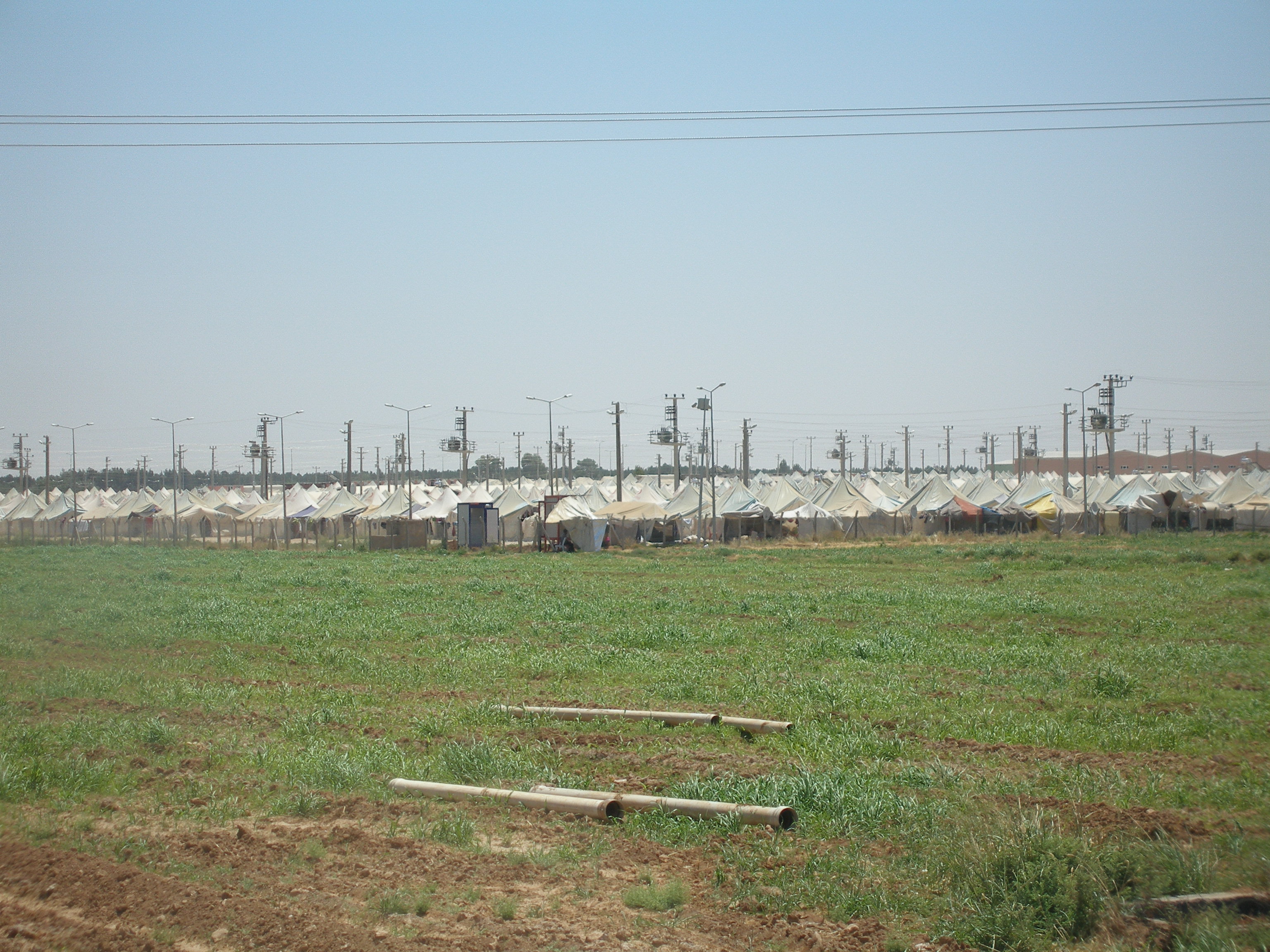
After revisiting Urfa’s Balikli Gol, the sacred fish ‘Pool of Abraham’ in temperatures of 40C, I drove 45km south to Harran to inspect its famous termite-like beehive houses, relics of biblical living, and its ancient university on the site of a pagan moon temple. All was quiet and exactly as I remembered it, so I drove on just 15km kilometres further south to Akcakale, the border town with Syria where five civilians were killed in October 2012 by shells fired from inside Syria. All quiet now, but on the edge of town I was startled to see a heavily crowded tent city, hemmed in by barbed wire fence. Its misery was palpable even from a distance. Designed to house 23,000 Syrian refugees, I later learnt it was now home to 36,000, a figure that defied belief. How could so many possibly live in such conditions in such stifling heat – let alone in Ramadan, due to start in a few days’ time?

I drove back and forth along the main road in front of the camp, feeling helpless, passing  several families hitching lifts, wondering if I should stop for them, but fearful in case I was in turn stopped by the Turkish authorities and in some way implicated for my involvement. Stories had reached me about how some Syrians were starting to run away from the camps, desperate to lead something closer to a normal life, after months of confinement.

In the end I decided my most useful contribution would be to give my food away – my picnic lunch plus two bags of nuts I had bought in Gaziantep market a few days earlier. Driving slowly, I pinpointed two small boys returning towards the camp who were carrying nothing at all. When I stopped and got out of the car to offer them the food, they were visibly startled and frightened, and required some coaxing to take the bags from me. They spoke neither Turkish nor Arabic and I wondered afterwards if they might have been Kurdish, since the area around Tell Al-Abyad across the border was a heavily Kurdish part of Syria. When I looked in the rear view mirror after driving off, I saw they had quickened their pace, hurrying back to the camp with their unexpected gift. It was an image that has stayed with me since.
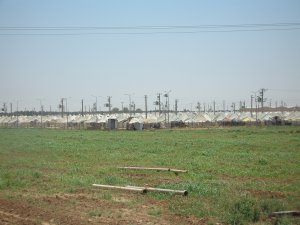
Syrian refugee camp at Akcakale, south of Harran, Turkey (DD)
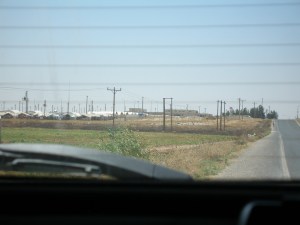
Syrian refugee camp at Akcakale, south of Harran, Turkey (DD)

The road past the front of Turkey's Akcakale camp for Syrian refugees (DD)

The road past the front of Turkey’s Akcakale camp for Syrian refugees (DD)

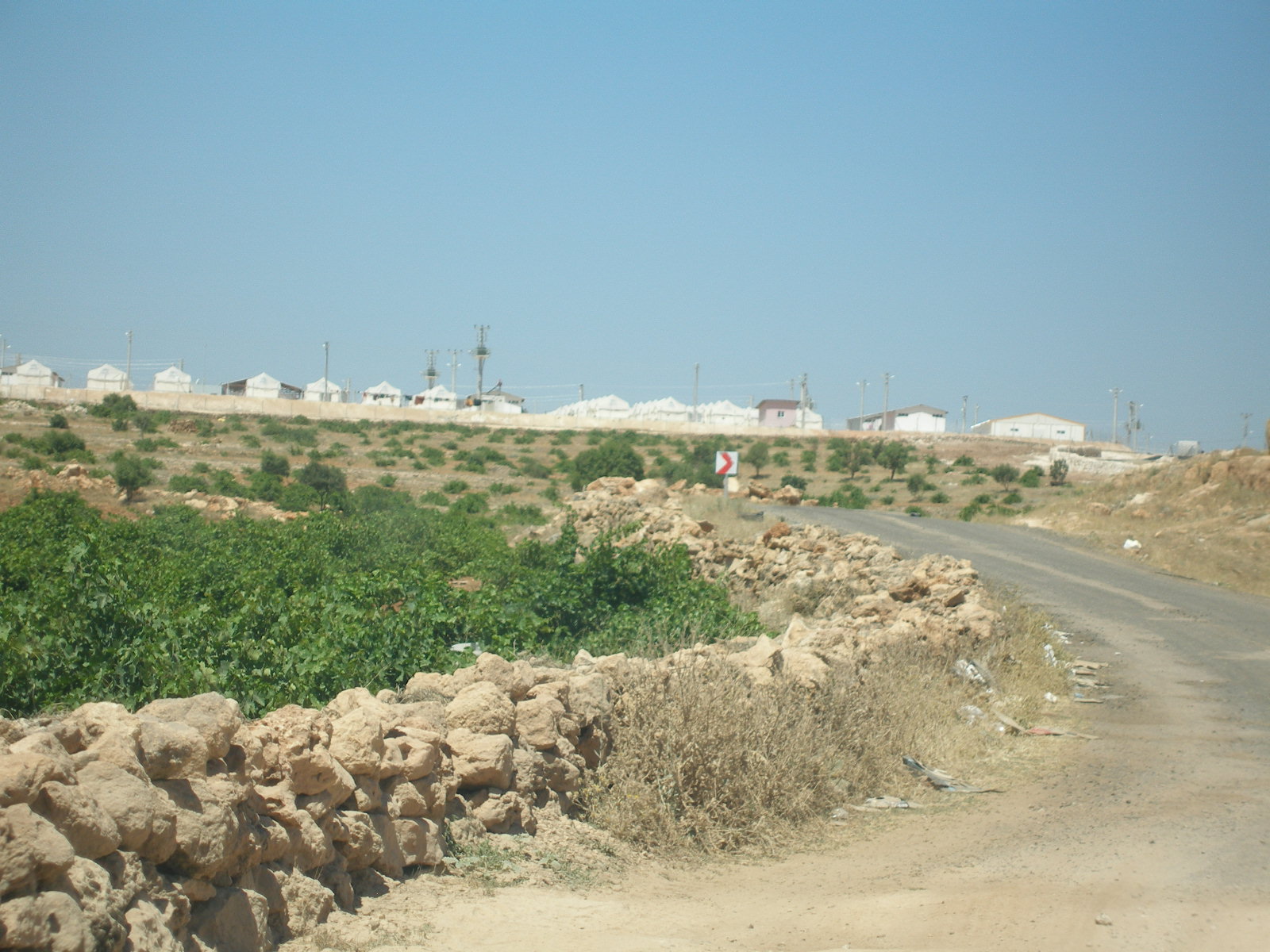
A few days later in Midyat on the way to visit the Syriac Orthodox Monastery at Gulgoze (Syriac name Ainwardo), I stumbled on another refugee camp. In contrast to the camp at Akcakale, this one was spacious and well-appointed, with cabins rather than tents, and numerous bathroom blocks similar to a European camp-site. Far from being overcrowded, it seemed largely uninhabited.

My subsequent enquiries explained why – the camp had only been built about three months ago, on land donated by a wealthy Syriac businessman, and was only for use by Syrian Christians.

Refugee camp for Syrian Christians in Midyat's Turkey (DD)

Refugee camp for Syrian Christians in Midyat’s Turkey (DD)
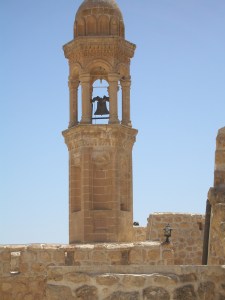
Syriac Monastery of St Cyriacus at Gulgoze, south of Midyat

Syriac Monastery of St Cyriacus at Gulgoze, south of Midyat (DD)

‘We feel very sorry for the people of Syria, and of course we have to help them when they come across the border to us. But we don’t want our government to go to war against the Syrian regime. We have problems of our own in Turkey, and our government should concentrate on those, not get involved in a difficult war next door.’

But a handful of people, Sunni Turks to a man, went one step further. ‘We don’t want war with Syria. But if this war grows and  becomes a war against Israel, that would be different. For that we would be ready…’

Echoes of Aleppo in Gaziantep

English: Caravanserai in Aleppo

English: Caravanserai in Aleppo (Photo credit: Wikipedia)

English: Bawabet al-Yasmeen alley at the Chris...

English: Bawabet al-Yasmeen alley at the Christian quarter of Jdeydeh, Aleppo. (Photo credit: Wikipedia)

Gaziantep Castle

Gaziantep Castle (Photo credit: Turkish Travel)

gaziantep_fabric

gaziantep_fabric (Photo credit: unionpearl)

Photographs from Gaziantep

Photographs from Gaziantep (Photo credit: Wikipedia)

Photographs from Gaziantep, Turkey.

Photographs from Gaziantep, Turkey. (Photo credit: Wikipedia)

Eastern Turkey’s ‘Paris of the East’ as it now likes to be known, Gaziantep (just Antep locally), is remarkably close to Aleppo in so many ways, historically, culturally and even in its famed cuisine based on the pistachio. It has at its heart a fortified citadel, its Christian quarter is being gentrified, with boutique hotels and cafes, just as Aleppo’s was a few years ago, but many of Aleppo’s have now been destroyed by the fighting. The Governor of Aleppo in medieval times built many of Antep’s mosques and hans (caravanserais), testimony to the shared trading links and thriving commercial traffic across the centuries.

Here today the links go even deeper. There are many Syrian refugees who are living on the charity of the governor, given soup and allowed to sleep in the mosques. The language problem is an issue for them, as most Turks here do not speak Arabic or English. The commercial links between this part of southeastern Turkey and northern Syria are stronger than ever though, with more trucks crossing the Bab Al-Hawa border than before the war, taking in food and various commodities to Syria, where the factories have to a large extent stopped functioning. Wandering round the souks of Gaziantep with their brimming sacks of spices and nuts, it is only the chatter of the Turkish merchants that force you to remember you are not in Aleppo.

Photographs from Gaziantep

Photographs from Gaziantep (Photo credit: Wikipedia)

Who or what was the target of the Damascus Old City bomb?

The destroyed Christian quarter of Damascus, 1860.

The destroyed Christian quarter of Damascus, 1860. (Photo credit: Wikipedia)

English: Ancient Roman triumphal arch (Al Khar...

English: Ancient Roman triumphal arch (Al Kharab) on Street Called Straight, Damascus, Syria Français : Arc de triomphe romain (Al Kharab) sur la Rue Droite à Damas, Syrie (Photo credit: Wikipedia)

English: A greek Orthodox Procession

English: A greek Orthodox Procession (Photo credit: Wikipedia)

The world’s media is distracted by the build-up to Egypt’s 30 June showdown, so an important event was given only scant and even misleading coverage. On 27 June the BBC website reported what it called a blast from a suicide bomber in the Christian Quarter of Damascus’ Old City:

http://www.bbc.co.uk/news/world-middle-east-23086213

The BBC commentary went on to assume that the target was the Christian community, specifically the Greek Orthodox church of the Virgin Mary which was close to the blast, and then talked about how Christians have been targeted before and are being drawn into the conflict.

But the Greek Orthodox church of Miriamiye as it is known, is not really in a Christian part of the Old City, but beside the Roman Arch on Straight Street which marks the rough boundary between the Christian, Muslim and Jewish quarters. The church is directly opposite Naranj, a classy restaurant right beside the Roman Arch, known to be one of Bashar Al-Assad’s favourite dining places and often used by regime figures.

Closer examination of the facts reveals that the bomb in fact exploded not outside the church, but 50 yards away outside a Muslim charity where the suicide bomber was said to be queuing up for food with other residents. Four people were killed, many more injured and nearby shops damaged. But Lebanon’s Al-Mayadeen newspaper put forward another theory – that the target was a nearby post of the National Defence Forces, a regime paramilitary force fighting the rebels.

About three hours after that blast, two mortar shells landed in nearby Al-Amin street, a mainly Shi’a area, wounding a number of people.

No one has claimed responsibility for these blasts, and local residents are confused. Was the target Christian, regime, rebel or Shi’a? No one knows except those who perpetrated the acts.

It tragically sums up what is happening increasingly now in Syria’s civil war – that very often no one knows anymore who is doing what to whom.

Roman arch, Straight Street, Damascus.

Roman arch, Straight Street, Damascus. (Photo credit: jemasmith)

Echoes of Syria in Sidon’s Eshmoun Temple?

English: Base of a column from a temple dedica...

English: Base of a column from a temple dedicated to Hadad at the Eshmun temple in Bustan esh Sheikh, near Sidon, Lebanon (Photo credit: Wikipedia)

Sea castle in Sidon, Lebanon

Sea castle in Sidon, Lebanon (Photo credit: Wikipedia)

English: Astarte's throne at the Eshmun temple.

English: Astarte’s throne at the Eshmun temple. (Photo credit: Wikipedia)

Half-buried in undergrowth beside  Lebanon’s Awali River lies the world’s best preserved Phoenician site, the Temple of Eshmoun. The guardian sits proudly in his hut, expecting anything but visitors – the FCO Travel Advice website has ringed Sidon in potentially dodgy ‘orange’ in recent months. Erratically signposted and hard to find,  the site sits on the northern outskirts of Sidon,  and a visit involves crossing the city’s first checkpoint. But everyone seemed friendly enough despite their guns, when I passed through a couple of weeks ago.

Known locally as Bustan Al-Shaikh, the Orchard of the Shaikh, the state of this 7th century BC site, surrounded by citrus groves, is shockingly neglected. A visit to the semi-swampy areas of the temple, with its ritual basins, bulls-head shrines and sacred pools, is like hacking your way through the Amazonian jungle. Your reward is to sit on the gigantic Throne of Astarte, Phoenician goddess of fertility,carved from one monumental piece of granite, flanked by sphinxes and hunting reliefs. Her consort, Eshmoun, was a Beirut hunter whom she transformed into a reborn healing god, later identified by the Greeks with Asklepios, god of Medicine. A gold plaque found here carried the snake coiled round a staff motif that still serves today as the symbol of the medical profession.

Even more shocking is the evidence of looting that clearly took place during the 15-years of the Lebanese Civil War. Whole sections of later Roman mosaic floors, including the beautiful Four Seasons mosaic, have been stolen, the missing sections now replaced with a plaster mix. After hostilities ended, and Israel retreated from southern Lebanon, UNESCO in 1996 inscribed it on the World Heritage ‘Tentative’ list, a bit late, as everything small worth lifting has gone. Thankfully the Throne of Astarte is protected by its sheer size, as it would require a crane to lift it.

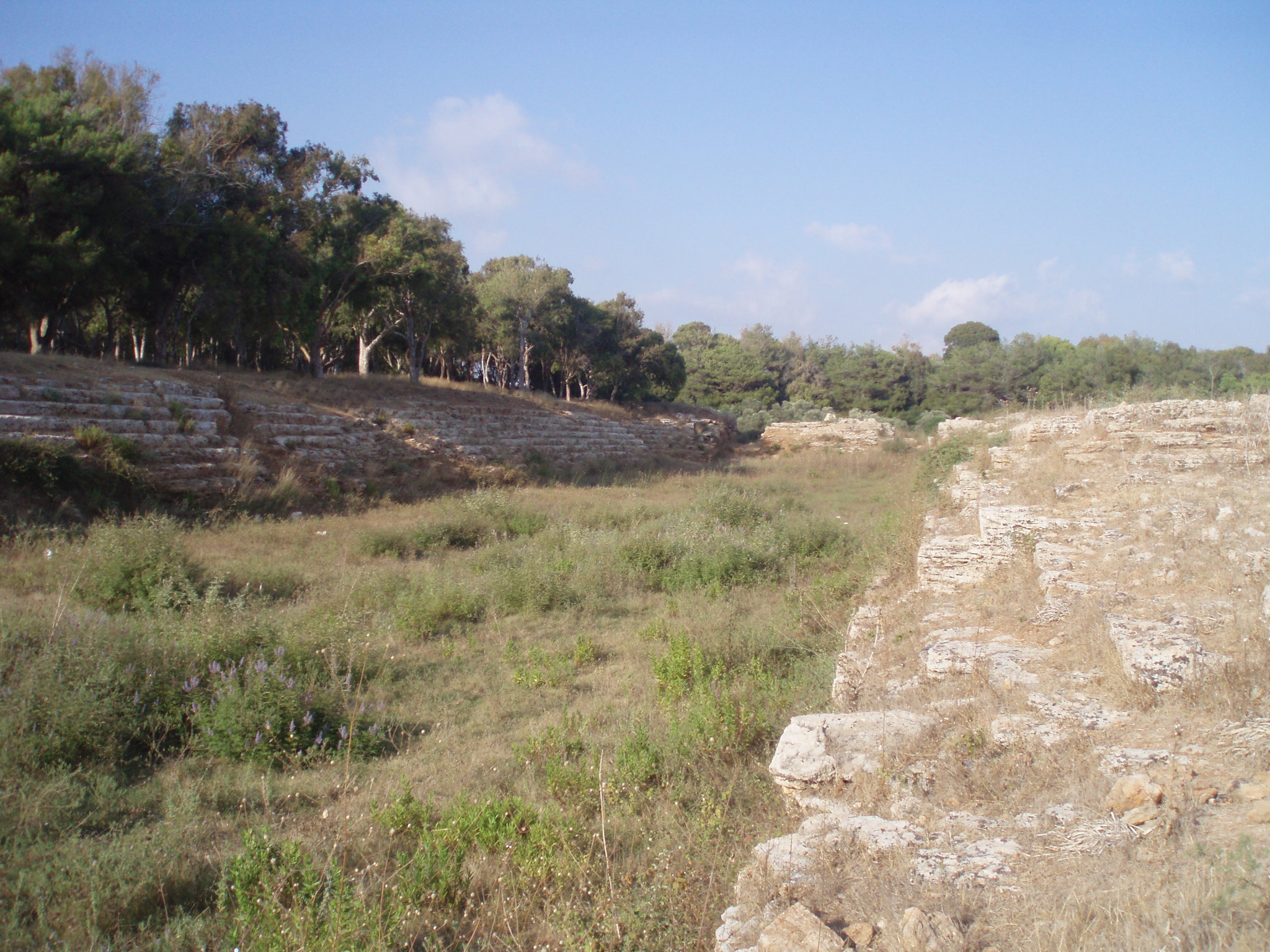
Echoes of Syria again? Its remarkable Phoenician site of Amrit south of Tartous has a similar sanctuary with  sacred pool and central altar. Beside it is a large rock-carved stadium, site of the world’s first competitive sports games, predating the Olympics by several centuries. What will Amrit look like by the time Syria’s civil war has ended?

Phoenician Temple of Melqhart, Amrit, Syria

Phoenician Temple of Melqhart, Amrit, Syria (2010, Diana Darke)

Phoenician rock-cut stadium, Amrit, Syria

Phoenician rock-cut stadium, Amrit, Syria (2010, Diana Darke)

Echoes of Syria in Lebanon’s Beiteddine Palace

Mir Amin Palace Hotel, in Lebanon's Chouf Mountains

Mir Amin Palace Hotel, in Lebanon’s Chouf Mountains

Swimming pool terrace of the Mir Amin Palace Hotel, Beiteddine, Lebanon

Swimming pool terrace of the Mir Amin Palace Hotel, Beiteddine, Lebanon

High in the Druze mountains of the Lebanese Chouf sits the magnificent palace of Beiteddine, where the Beiteddine Festival 2013 is currently in full swing. It is just a 40 minute drive south from Beirut, and people will be flocking out to see the Chinese National Acrobatic Circus performing over the next few days. Later fixtures include ‘Echoes from Syria’ with clarinette virtuoso.

Echoes from Syria resonate here in more ways than one. For a start the palace itself is like Damascus’s superb Azem Palace, dating from the same period, and composed likewise of its three courtyards – the largest public one for receiving guests, the inner private one for the women, always the most lavishly decorated, and the smaller servants courtyard. Today they are both museums open to the public, and in their heydays they were both residences for the ruler.

Built between 1788 and 1818 with the help of Damascus craftsmen, the Emir Bashir ‘the Great’, lived here till his death in 1840. Born a Sunni Muslim, he later converted to Maronite Christianity, and his palace boasts both a mosque and a chapel.

Beiteddine is a peaceful spot with beautiful, immaculately kept gardens and distant views of the sea, a spot that encourages lingering. When I was here the other week in a quiet patch before the Festival, we were almost the only guests in the Mir Amin Palace, a mini-version of Beiteddine built by Emir Bashir for one of his sons.

Admiring the quality of the restoration work, a subject dear to my heart after my experiences with my own Damascus ‘mini-palace’, my eye was caught by a series of plaques on the wall. The first announced that the President of the Republic Charles Helou undertook the restoration in 1969, and the second that the hotel was opened 21 July 1974 by Suleyman Franjieh – just months before the start of Lebanon’s civil war. What terrible timing.

The last plaque announced the re-restoration and re-opening of the palace in July 1987 under the auspices of the Minister of Tourism, one Walid Junblat. Bad timing again, as the war did not end till 1990.

When I asked the hotel manager if he was worried war might come once more to Lebanon, he laughed and shrugged his shoulders. “If it does, we have space for more plaques on the wall!”

The Lebanese are nothing if not resilient – more echoes of Syria, I hope.

English: Courtyward at the Beiteddine Palace i...

English: Courtyward at the Beiteddine Palace in Lebanon. Français : Une cour intérieure dans le Palais de Beiteddine au Liban. (Photo credit: Wikipedia)

Post Navigation