Notre-Dame, Trump and the new Syria
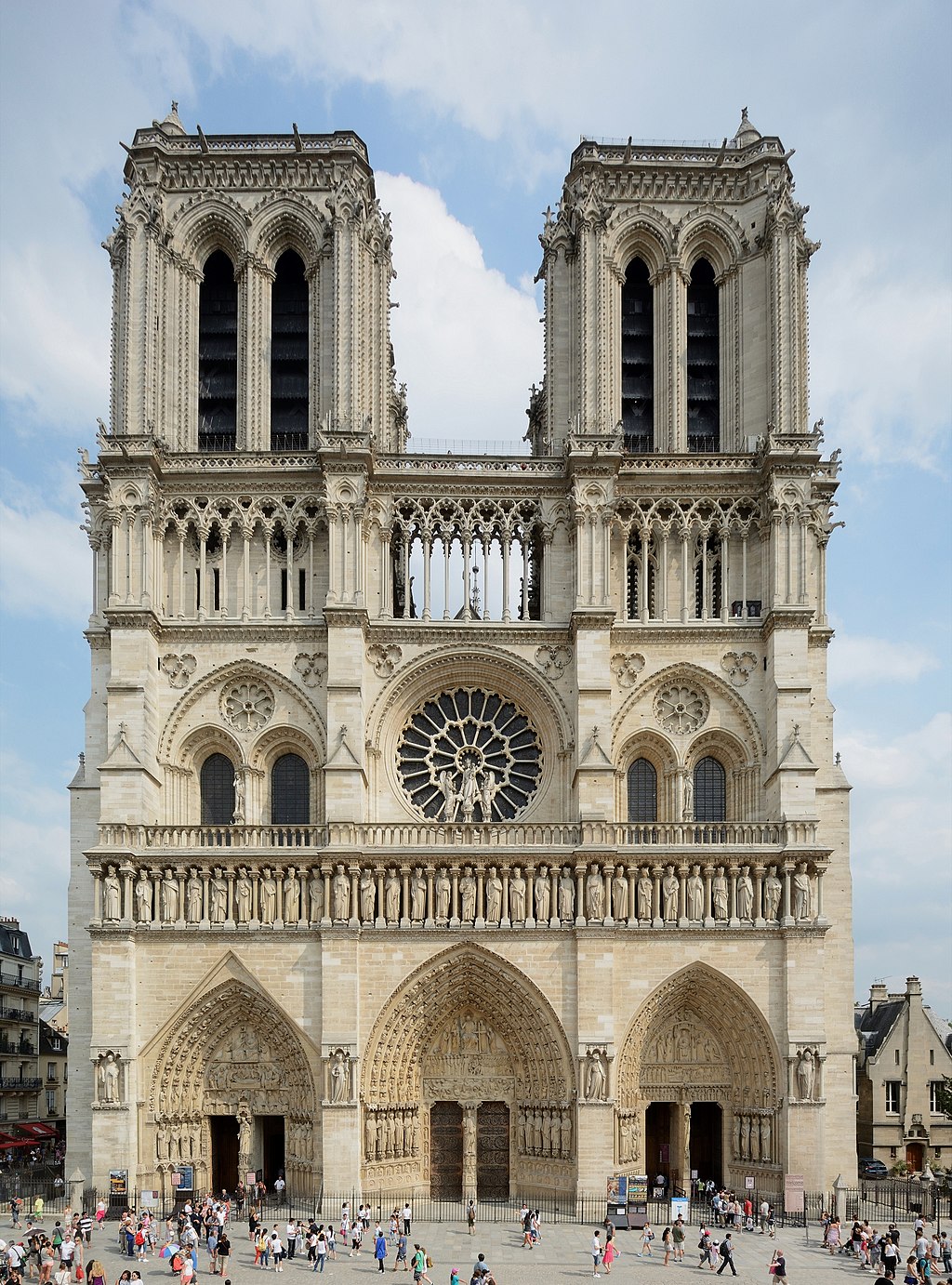
In a surreal twist of timing, President-elect Donald Trump was the guest of honour at Notre-Dame’s special reopening service on 7 December, at the very same time that the rebel offensive in Syria was reaching its whirlwind climax. Hours later, on Sunday 8 December, the world woke up to find that the Assad regime had vanished, following Bashar al-Assad’s night-time escape to Moscow, and that Notre-Dame was fully open to the public, following its intensive five-year restoration after the 19 April 2019 fire.
Syria too has been burning for the last 13 years. ‘Assad or we burn the country,’ was the message scrawled on walls across the country by his much-feared shabiha (secret police), along with slogans like ‘There is no god but Bashar’ and ‘Do not kneel for God, kneel for Bashar’.

Syria and Notre-Dame now both face a new future simultaneously. Restoring a fire-damaged medieval cathedral to a tight deadline was a huge challenge, one that many people thought impossible. Rebuilding an entire country, restoring its social fabric, regenerating its decimated economy after so many years of war is, of course, a challenge of an entirely different order, one that is almost beyond conceiving, a challenge that will involve many difficult steps and take many decades to achieve. But it is doable, with the right backing.
Did Trump give a single thought to Syria as he sat through the cathedral service? Probably not. Arriving in Paris that morning, he had dismissed the country, posting on his Truth Social network: “Syria is a mess, but is not our friend,” then adding “THE UNITED STATES SHOULD HAVE NOTHING TO DO WITH IT. THIS IS NOT OUR FIGHT. LET IT PLAY OUT. DO NOT GET INVOLVED!”
The very next day, however, the dynamics on the ground inside Syria had suddenly changed in a way no one had thought possible. In less than a fortnight the Islamist rebels from Idlib had swept out from the north, taking charge of Aleppo, Hama and Homs, while Druze rebels from Suweida in the south surged up to take the capital Damascus just in advance of them.

Despite his determination not to get involved, Trump may yet find himself, once in office on 23 January 2025, wrestling with decisions about the new Syria that will affect America directly – what to do about the US troops still stationed there, whether or not to support the Kurdish-led SDF (Syrian Democratic Forces) in Syria’s oil-rich northeast, whether to use them to clamp down on a resurgent ISIS and above all, whether to lift the sanctions and the rebels’ terrorist designation in order to allow the country to rebuild. Speed is of the essence, as with Notre-Dame’s rebuilding, so that everyone believes in the project and its feasibility.
Notre-Dame’s Connections to ‘Stealing from the Saracens’ and ‘Islamesque’


Notre-Dame has played a crucial role in my own recent work – it was the April 2019 fire and the world’s reaction to it that triggered my book ‘Stealing from the Saracens: How Islamic Architecture Shaped Europe‘ in 2020. Its sister volume ‘Islamesque: The Forgotten Craftsmen Who Built Europe’s Medieval Monuments‘ has just been published, coincidentally, a few days ahead of the cathedral’s 2024 reopening. To mark the occasion I wrote an article for Middle East Eye pointing out how Europe’s great medieval cathedrals, like Notre-Dame, owe much to highly skilled Arab master craftsmen.
‘Islamesque’ is a revolutionary piece of research, challenging the European art history world and its use of the architectural term ‘Romanesque’. The book has garnered a starred review in Publishers Weekly, an honour awarded to books ‘of exceptional quality and distinction’. Yet while my attention would ordinarily have been focused on ‘Islamesque’, I have found myself instead consumed by the new developments inside Syria, following every twist and turn, even asked to give media interviews by outlets like the BBC. My Syrian friends, both inside and outside the country, are ecstatic about the demise of the Assad regime. The ones inside said it felt unreal, as if they were watching a movie, with events all around them unfolding so quickly. After 54 years of milking the country like their own private farm, the old regime, its posters of Bashar so omnipresent, just melted away overnight. Their illusion of strength and invincibility was, in my view, always hollow, held in place by little more than fear and by the terrible tentacles of the Assad security and intelligence branches, all seventeen of them, modelled on East Germany’s monstrous STASI, a network that reached into all corners of society, leading people to believe that even the walls had ears. Such fear does not breed loyalty – it used to annoy me when commentators said that Assad still had a lot of support among Syrians inside the country.
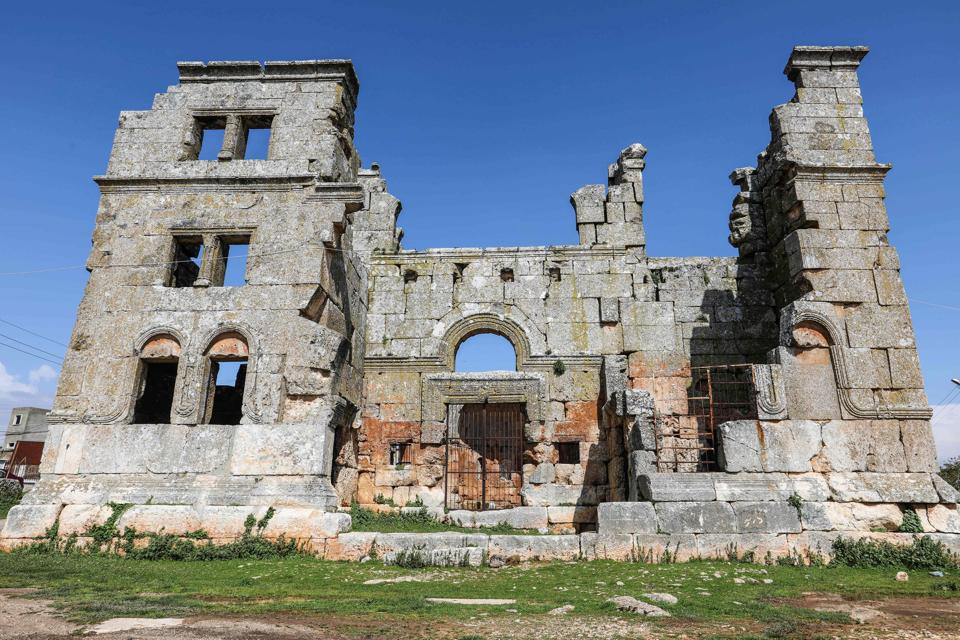
Syria and Notre-Dame also share many connections. For example – and you will find no mention of this in any of the overwhelmingly Europe-focused documentaries, books and articles written about the cathedral’s restoration – the structure’s sturdiness can be traced back to early fifth, sixth and seventh century archetypes of the twin tower model still extant in Syria’s northwest, where stonemasonry skills are literally as old as the hills. The three limestone massifs of Jebel Zawiya, Jebel Barisha and Jebel Ala formed the local building material for all Syria’s early churches. Close to two thousand such structures remain scattered among the ruins of some eight hundred settlements in the rebel-held Idlib Province, despite the Assad regime’s and Russia’s aerial bombardment of the last decade and despite the heavy earthquakes that have afflicted this region of northwest Syria since time immemorial, . These Byzantine settlements, known as the Forgotten Cities, were designated a UNESCO World Heritage Site in June 2011, just three months after the start of the Syrian war.
Trump is almost certainly unaware of these and the many other cultural connections between Notre-Dame and Syria, let alone how the Gothic or ‘Saracen’ elements in Notre-Dame cathedral then found their way across the Atlantic, into cathedrals like Washington DC’s National Cathedral, the spiritual home of America, into Gothic campuses like Yale University and even into the heart of American democracy, Washington DC’s Capitol Dome, with its ‘Saracen’ Islamic double dome.

Whether or not he knows or cares about this architectural backstory of so many American monuments, Trump has the power to transform the new Syria. He could, in an act of faith and leadership similar to that which enabled Notre-Dame to be rebuilt in five years, have the vision to do a deal with Turkey’s President Erdogan on the Kurdish PKK elements within the Kurdish-led Syrian Democratic Forces (SDF) that also allowed the 2000 US troops to go home to America, and to then lift the US sanctions that were imposed against the old Syria in recognition that the new Syria deserves a chance to rebuild itself from the inside. In my dreams, this would enable the country to rise from the ashes and shine like a beacon in the region surprisingly speedily. It could even be a vital part of Trump’s legacy – to help create a new Syria – and as a by-product, even to eradicate Islamic terrorism from the globe forever. Once peace and stability are restored in the Middle East, extremist outfits like ISIS would find no more drivers for recruitment. Their base support gone, they would simply melt away, as surely as the Assad regime melted away once its ideological hollowness was apparent to all.
[end]
 dianadarke