dianadarke

Syria and Turkey commentary

Archive for the tag “ISIS”

Chink of Light in #Syria?

Aleppo citadel at night, July 2010 [DD]

Aleppo citadel at night, July 2010 [DD]

The speed at which things can happen once there is international consensus is remarkable. UN Chemical Weapons inspectors are already in Syria just days after the UN Security Council agreed unanimously last week to dismantle the country’s chemical weapons arsenal. They are working to a strict timetable and have just till November to complete their work.

Seven out of the 19 chemical weapons sites which they will be inspecting are, according to the Syrian government (which provided the list of sites) in rebel-held or contested combat zones. Here is the possible chink of light.

Ceasefires will have to be negotiated to enable the UN inspectors to pass through these combat zones to reach these seven sites to verify them and make assessments. The wording of the new UN Resolution makes it clear that action will be taken against anyone – regime or rebels – found to be obstructing the UN inspectors’ work. Such a situation forces compliance and cooperation on all sides and may be the start of a new dynamic on the ground.

So what if consensus can be achieved now, not just on chemical weapons, but on another issue of pressing concern – the need to expel from Syria the recently-formed foreign extremist Islamist groups? Parties involved in the conflict – both inside and outside the country – are increasingly concerned about the rise and rise of such foreign-funded, foreign-composed extremist groups such as ISIS (Islamic State in Iraq and Shaam), which are intent on imposing their vision of an Islamic state on Syrian citizens the overwhelming majority of whom do not want this. Many feel their revolution has been hijacked by these Islamist groups. Some who began by supporting them because they were better funded and better organised than other rebels, now regret their early enthusiasm. After experiencing the reality of life under such radical groups in places like Ar-Raqqa and around Aleppo, they now want to distance themselves and return to something more moderate. 99% of Syrian citizens don’t want them, the Assad regime doesn’t want them, the moderate opposition groups don’t want them, the US, Russia, Israel and European countries don’t want them, seeing them as a greater threat to world stability than either the Syrian regime or the moderate Syrian rebels – it’s beginning to look like another consensus.

On that basis, with the political will, a ceasefire could even be agreed in time for the upcoming Eid Al-Adha on 14 October, marking the end of the pilgrimage season. Over-optimistic perhaps, given it will take time to drive out the extremist fighters even if the regime and the moderate groups were to unite to achieve it. But once there is consensus, remarkable things can happen very quickly, as we have just witnessed.

Related articles

#Syria’s opposition groups – do their ever-changing dynamics matter?

Young and old arm in arm in Damascus {DD}

Young and old arm in arm in Damascus {DD}

Arguments will rage about numbers of fighters belonging to this or that group in Syria’s opposition rebels and about who is allied to whom. But does it really matter?

Western analysts are obsessed with putting rebel groups into boxes and labelling them. Are they linked to Al Qa’ida is always the first question? Are they jihadis?  What is their ideology? How Islamist are they? But it has become increasingly difficult to determine accurate numbers, as allegiances are shifting all the time,  new groups are emerging or blending with others. The IHS Jane’s analyst Charles Lister thinks there are up to a thousand rebel groups who together make up a body of some 100,000 opposition fighters. He categorises only 30-40,000 of them as moderates. Other sources put the figures higher, at 120-150,000 opposition fighters, with around 50,000 of them categorised as Free Syrian Army fighters. By these sorts of reckonings something between a third and a half of the fighters are moderates, which means that something between two thirds and a half are labelled extremists.

But how meaningful are these distinctions? As more and more stories come out via journalists who spend time embedded with various rebel groups, a common thread is emerging. Many moderate fighters in the so-called extremist groups like Jabhat An-Nusra are fighting to free Syria from the Assad regime. They will join whichever group is the most effective and best-funded to achieve that end. If that means growing a beard and adopting Islamist names and slogans, so be it. There is also the important fact that these extremists groups in the north have seized much of the country’s oil, gas and grain supplies in Syria’s northeast  Jezira region and can therefore distribute them to ‘loyal subjects.’ But such allegiances are temporary and are based on the economics of war. Very few such fighters and local residents are likely to remain ‘extreme Islamists’ after the objective has been achieved. The vast majority will revert to their previous moderate positions once a charade of extremism is no longer necessary.

The most interesting development of recent days has been the increasingly vocal rejection by the Syrian Coalition and by other opposition fighters inside Syria of the behaviour and ideology of ISIS, the Islamic State of Iraq and Shaam, the new extremist group which emerged in spring this year. Its summary executions, seizing of churches as military headquarters and random slaughter of anyone who is not like them are drawing more and more criticism, not just from international commentators abroad, but also from Syrian opposition figures inside and outside the country.

All these developments lead me to hope that, in some future democratic system of free elections inside Syria, Syrians will finally be free to speak out against Islamic extremism and expel it from their country. By having a taste of the reality of an ISIS-led Islamic state in areas around Aleppo and Raqqa, Syrian citizens have seen for themselves how it works on the ground.

As for the recent announcement by the 11/13 rebel groups rejecting the leadership of the Syrian Coalition in exile, that too may be less significant than it first seems. The ever-shifting dynamics among rebel groups on the ground are clearly impossible for outside powers to control, but by the same token are equally difficult for the Assad regime to control, forcing it to realise it cannot win this fight. And that makes the chances of a UN-sponsored peace agreement infinitely more hopeful than before.

Related articles

One year since Father Paolo’s abduction by ISIS

Father Paolo 2 download

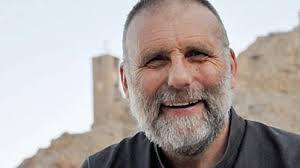
Father Paolo in front of his beloved Mar Mousa Monastery

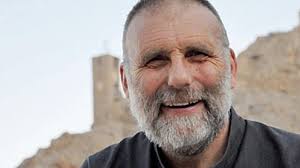
On 29 July 2013 Father Paolo was abducted by ISIS in the Syrian city of Raqqa. There have been occasional rumours of his death at the hands of ISIS, most recently by an ISIS defector who said Paolo was shot 14 times and his body thrown into a well, but the Vatican so far has refused to confirm or deny such rumours. Until any news is definite, I will therefore keep this piece in the present tense, reissued in remembrance of a remarkable man.

Father Paolo does not fit the mould. He is not a man of conventions and has always pushed at the boundaries of what both Muslims and Christians consider acceptable. An Italian Jesuit priest, he went against the rules of his Jesuit community and set up an ecumenical monastery in the mountainous desert between Homs and Damascus.

OLYMPUS DIGITAL CAMERA

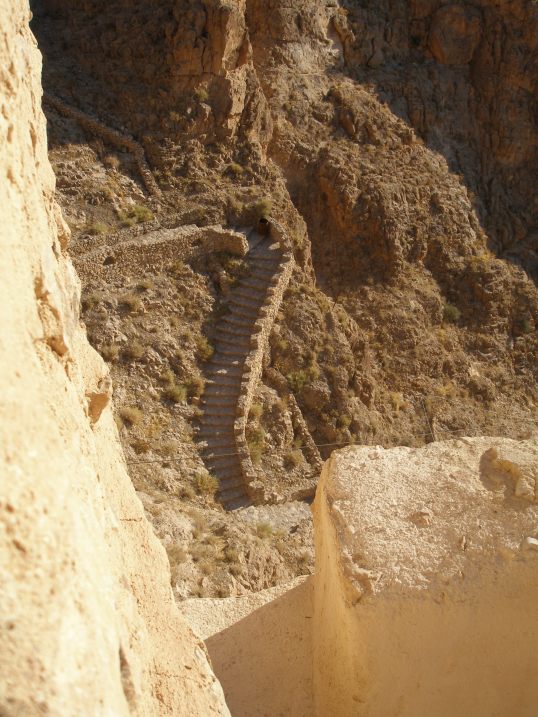
Steps leading up to the Monastery of Mar Mousa, steps which Father Paolo himself helped to build.

It represents his entire life and there is no doubt he would be prepared to die for it, for Syria and for his beliefs.

What are his beliefs? For him it does not matter whether you are Muslim or Christian, as long as you are close to God. He rejects the strict concept of ‘orders’ as very occidental: “Orders come from the West,” he always said. “In the east there are no orders.” He also felt it does not matter if you are a man or a woman, as long as your commitment to God is deep and sincere. He has always rejected what he sees as narrow-minded criticism of his allowing both monks and nuns at his community of Mar Musa. Most unusual of all though, is his conviction that he has been called to bring Islam and Christianity closer to each other. This is the whole purpose of his monastery, where masses were attended by Muslims and Christians alike. “We are here for the Muslims and for Islam”, he said. “We must not be against them. We are here for them.”

This is what he said to everyone who visited, and before the revolution up to 50,000 visitors a year came, mostly Muslims. He said it to Marius Kociejowski, who devoted a chapter to Father Paolo in The Street Philosopher and the Holy Fool, and he said it to me when I last visited him in November 2011, eight months into the Syrian Revolution when almost no foreigners came any more to Mar Musa.

On that occasion, six months before he was expelled from Syria for his outspoken criticism of the Assad regime and equally outspoken support of the Syrian Revolution, he spoke animatedly about his fears for the country. He foresaw the partition of the country and all the old divisions he was fighting so hard to dispel, resurfacing in ugly ways. He was disappointed in the position that some of his fellow Christian churchmen and women were taking in the struggle, trying to exclude themselves from the fight.

To imagine that he would stay out of Syria after his expulsion was always unrealistic. A man like Paolo could never be a bystander and watch from the sidelines. He knew the risks he took in going into Raqqa, in trying to speak to militarized extremists. The risks would not have mattered to him. What mattered was that he at least tried to negotiate, tried to reason with them not to fight against Kurdish groups. He believed in sacrificing personal happiness in pursuit of a greater goal.

“For me there is no East or West,” he said. He rejected the mould. May his philosophy never die.

Father Paolo 2 download

Related links:

http://english.al-akhbar.com/node/20110

http://www.ibtimes.co.uk/syria-jesuit-priest-paolo-dall-oglio-killed-498510

Jesuit Priest Father Paolo Dall’Oglio Shot 14 Times by Syrian Freedom Fighters (Video)


Post Navigation